
The 131-year-old mystery was solved during building work in 2010
The discovery was made in Sir David Attenborough’s back garden(Image: Dave Benett, Dave Benett/Getty Images)
In 2009, celebrated British broadcaster and natural historian Sir David Attenborough bought a home in the leafy suburb of Richmond, South West London. During renovation work on October 22, 2010, builders made a grisly discovery when they uncovered a human skull in the back garden.
Police naturally began an investigation, which soon indicated the skull belonged to Julia Martha Thomas – a widow who had been murdered by her housemaid in 1879. After extensive analysis, investigators confirmed that it was indeed Julia’s remains that had been found.
The tale of this gruesome Victorian murder is just as shocking now as it would have been back then. On January 29, 1879, Julia Thomas recruited Kate Webster, an Irish immigrant with a history of petty crime, as her domestic help. Webster had caught her prospective employer’s eye after briefly standing in for an ill colleague whilst cleaning for Miss Loder in Richmond.

The discovery was made in Richmond, South West London(Image: Thomas Faull via Getty Images)
During their meeting, Julia immediately hired Kate without investigating her past, suggesting she was likely unaware of her maid’s criminal history, reports Devon Live.
Merely weeks after starting work, the relationship between the two women began deteriorating, resulting in Julia dismissing Kate on February 28. Kate convinced her employer to keep her on for another three days, a decision that would ultimately determine the widow’s destiny.
On March 2, Julia turned up at church looking visibly “agitated” after an argument with her maid, before returning to her home, where she confronted Kate about her poor standards of work.
In her confession, Kate described the altercation: “She had a heavy fall, and I became agitated at what had occurred, lost all control of myself, and, to prevent her screaming and getting me into trouble, I caught her by the throat, and in the struggle she was choked, and I threw her on the floor.”
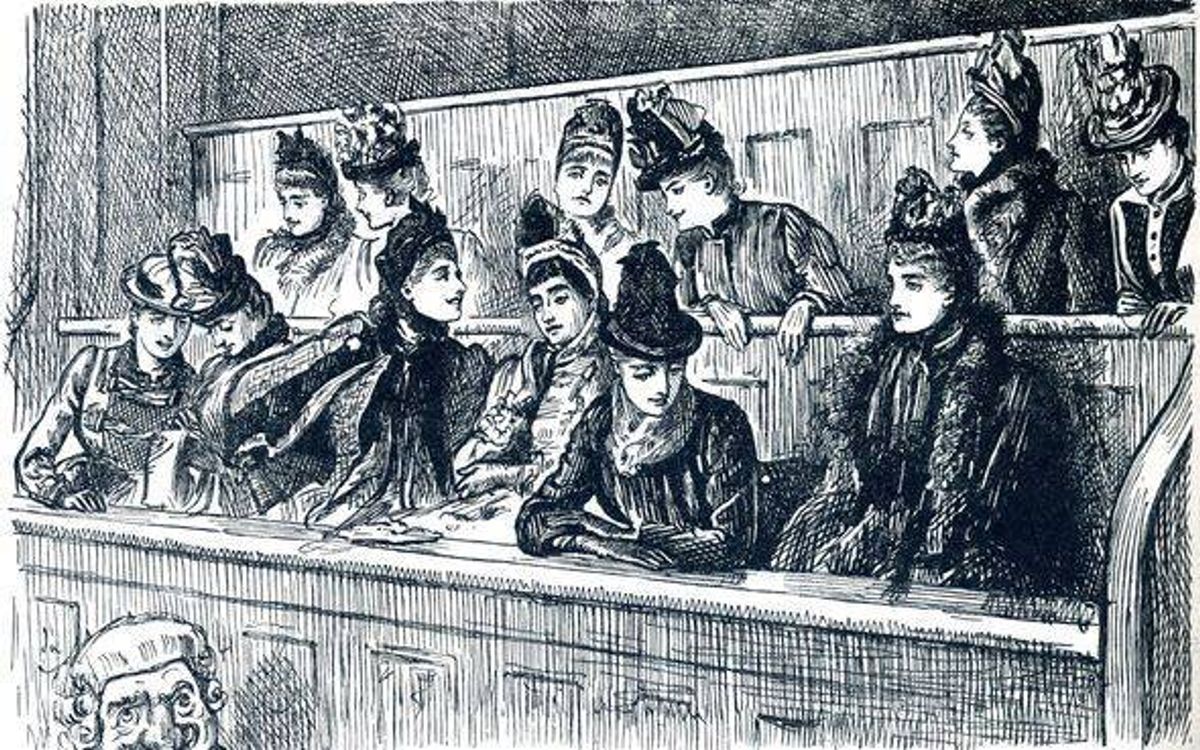
The murder resulted in a rather high-profile court case(Image: Getty)
Subsequently, she disposed of the body by dismembering it, boiling the pieces in the laundry copper and burning the bones in the fireplace. She then threw the remaining fragments into the River Thames, with early theories suggesting the missing head had been among those remnants.
Claims emerged that Kate gave away the rendered fat from the corpse to the local pub, neighbours and children in the street, presenting it as dripping and lard. However, she never confessed to this behaviour, and it remains unproven.
Throughout the two weeks following the murder, Kate posed as her dead employer before fleeing to Ireland once her pretence was uncovered and body parts began washing up along the Thames banks. She was eventually captured after detectives traced her to her uncle’s farm at Killanne, near Enniscorthy.
Kate’s trial drew enormous interest throughout both England and Ireland, with the future King Gustaf V, then Crown Prince of Sweden, even observing one day of the hearings. She ultimately confessed to the offences, though she attempted to avoid execution by claiming to be pregnant.
On July 29, Kate was executed by hanging amid the cheers of crowds gathered outside Wandsworth Prison. Whilst the killing was solved within weeks, the mystery concerning the location of Julia Martha Thomas’s head would remain unresolved for 131 years.
Don’t miss out on the biggest local stories. Sign up to our MySouthLondon newsletter HERE for all the latest daily news and more