Pakistan’s decision to boycott the India game at the 2026 T20 World Cup didn’t arrive out of nowhere. It’s the end-point of a month-long chain reaction that began with one franchise flashpoint, snowballed into a Bangladesh–ICC standoff, and then led Pakistan into a “participate, but protest” compromise.
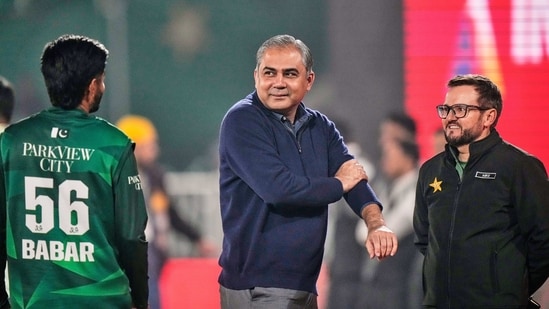
 Pakistan’s Interior Minister and Chairman of Pakistan Cricket Board Mohsin Naqvi. (AP)
What looks like a single fixture call is really the latest episode in a tournament that’s spent January fighting fires off the field as much as on it.
How it started: one player, one franchise, one diplomatic spark
Early January: The chain reaction begins around Mustafizur Rahman and the Kolkata Knight Riders. The episode becomes a talking point far beyond IPL roster churn because it is framed in Bangladesh as a safety-and-security trigger for travelling to India.
That’s the moment the story changes shape: from
“a player situation” to “we don’t feel safe travelling,” and from a bilateral undercurrent to an ICC tournament governance problem.The ICC draws a line: schedule stays
January 21: The ICC holds a board meeting and announces it will uphold the published match schedule for the Men’s T20 World Cup 2026. Bangladesh’s request to move its games out of India is rejected. The ICC’s position is essentially this: security assessments do not support a relocation, and rewriting fixtures this close to the tournament would create a dangerous precedent.
In plain terms: raise concerns, sure — but you don’t get to re-script the tournament calendar at will.
Bangladesh out, Scotland in: the flashpoint becomes a fracture
January 24: The ICC takes the hardest step — Bangladesh are replaced by Scotland after Bangladesh refuse to participate under the published schedule. That’s the moment the standoff turns into a rupture, because it signals that “we won’t play” is no longer leverage; it’s a decision with consequences.
This matters to Pakistan immediately. Once Bangladesh are replaced, any boycott threat stops being a pressure tactic and starts looking like a self-inflicted loss — points, prize money, broadcast optics, and a likely disciplinary mess.
Pakistan’s dilemma: withdraw, comply, or split the difference
Late January: Pakistan’s internal debate sharpens around three options:
1. Withdraw from the tournament entirely as a political protest.
2. Back down and play all matches, including India, to avoid ICC sanctions and financial fallout.
3. Play the tournament but refuse the India fixture — the “split the difference” route that keeps Pakistan in the World Cup while delivering a symbolic statement.
Reports through the week suggest the third option rises because it carries a political message without burning the whole tournament entry — and because full withdrawal would isolate Pakistan in cricket terms far beyond one month.
Signs of a compromise: planning continues, protests float aroundJanuary 29–31: Two signals appear in the public noise.
First, reports indicate Pakistan are still doing practical planning around travel and logistics, which usually happens only when participation is the baseline assumption. Second, “symbolic protest” ideas — like armbands and formal letters — begin getting mentioned alongside the bigger boycott talk.
Then comes a telling micro-moment: a planned kit/jersey event is reportedly cancelled amid uncertainty, adding to the sense that the decision is now in the hands of the government, not just the cricket board.
The final turn: “We’ll play the World Cup… but not India”
February 1: Pakistan’s government is reported to have confirmed participation in the tournament hosted by India and Sri Lanka, but with an exception: Pakistan will not take the field against India in Colombo on February 15.
That’s the end of the timeline, but it’s also the start of the next mess. Because boycotting a single match isn’t just a moral stance — it’s a points-table event, a broadcast event, and a tournament-integrity headache. The ICC, the organisers, and the tournament’s commercial ecosystem don’t just lose a fixture; they lose the marquee fixture.
And Pakistan, by choosing “participate but boycott India,” essentially attempts the tightrope walk: stay inside the World Cup, but keep the political theatre alive — even if the tournament now has to figure out what “not playing” actually means in competitive terms.