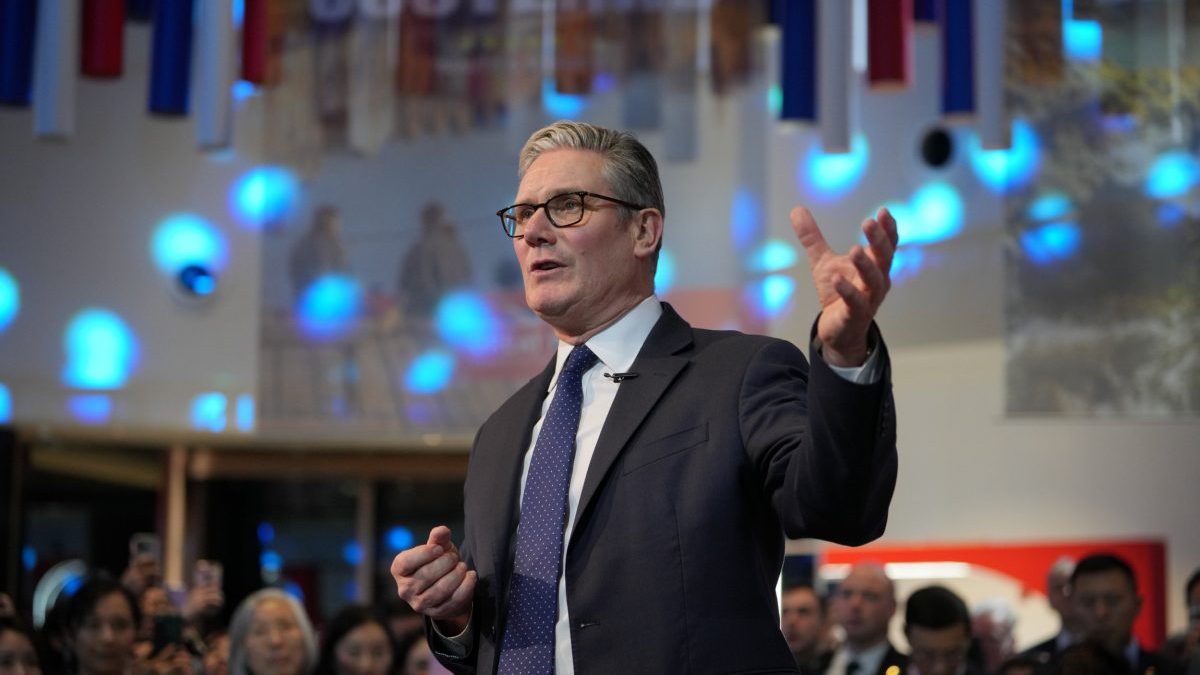
Keir Starmer says it ‘makes good sense’ for the UK and EU to collaborate on military spending
Britain will make another effort to join the EU’s fund for pooled defence spending, Sir Keir Starmer has signalled as he prepares the next stages in his “Brexit reset”.
Speaking on his trip to China and Japan, the Prime Minister said it “makes good sense” for the UK and EU to collaborate on military spending against the backdrop of the Ukraine war and global instability partly caused by Donald Trump’s mercurial behaviour.
The Government held months of talks with Brussels about the possibility of signing up to Security Action for Europe (Safe), a fund to procure weaponry jointly for EU member states and others.
But the negotiations collapsed in November after EU countries – in particular France – insisted that Britain would need to pay billions of pounds to take part.
Asked whether the UK would apply to enter the second round of Safe funding in the coming months, Starmer said: “Europe, including the UK, needs to do more on security and defence. That’s an argument I’ve been making for many months now with European leaders.
“We’ve got to step up and do more. It’s not only President Trump who thinks Europe needs to do more but other presidents as well. I think the same.”
He added: “I do think on spend, capability and co-operation we need to do more together. I’ve made the argument and that should require us to look at schemes like Safe and others to see whether there is a way in which we can work more closely together.
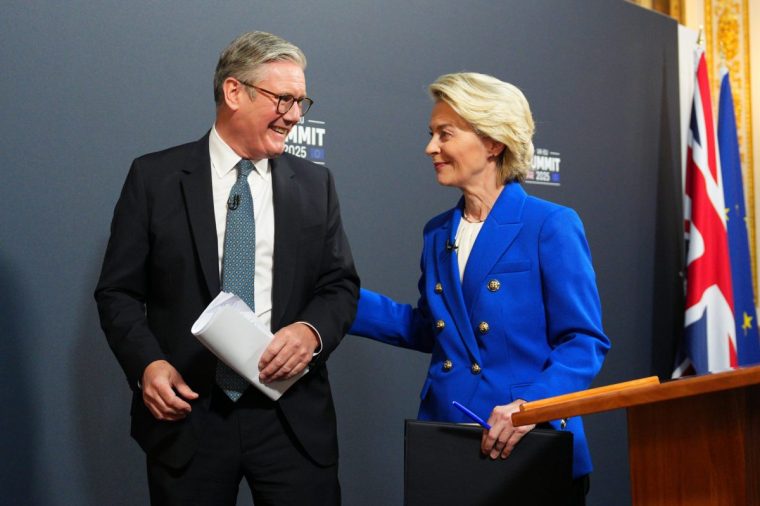 Keir Starmer and President of the European Commission Ursula von der Leyen (Photo: Carl Court/Getty)
“Whether it’s Safe or other initiatives, it makes good sense for Europe in the widest sense of the word – which is the EU plus other European countries – to work more closely together.
“That’s what I’ve been advocating and I hope to make some progress on that.”
Talks with Brussels collapsed in November over a demand for the UK to contribute €2bn to “pay to play”.
Despite this being lowered from an initial demand of up to €6.5bn, Nick Thomas-Symonds, the UK minister for EU relations, concluded that this would not represent good “value for money”.
It is understood that the UK felt a contribution “in the hundreds of thousands” was better suited.
France has denied being responsible for the breakdown in talks, despite allegedly pushing to make the UK’s involvement in Safe conditional on participating in a second defence programme.
Sources told The Guardian, however, that tensions remain between EU member states, with others including Germany reportedly keen for the UK to join Safe “as soon as possible”.
With the backdrop of Donald Trump claiming the US has “never needed” Nato and his threats to take over Greenland, there may well be greater appetite for a deal this time.
However, that doesn’t mean talks won’t be difficult. The EU is often reluctant to offer particularly attractive deals to the UK – likely in a bid to avoid incentivising others to leave the bloc.
Thomas-Symonds is set to hold talks in the coming weeks with his EU counterpart, Maroš Šefčovič, on how to deliver on the agreements struck at a summit in May last year – which include a deal to align regulations on food standards and set up a UK-EU energy network.
Diplomatic sources have suggested that the UK is keen to discuss restarting negotiations with the EU on defence as soon as possible.
Your next read
radio_button_checked
LIVE
Starmer said that “red tape” had hampered businesses trying to trade with the continent, blaming Nigel Farage and the Conservatives for damaging the economy with the Brexit campaign which successfully fought the referendum almost a decade ago.
He told reporters: “It is absolutely clear the botched deal we got from the last Government has caused damage to our economy which is why we have reset that relationship and do want to get closer on defence and security, on energy, on emissions and trade.”