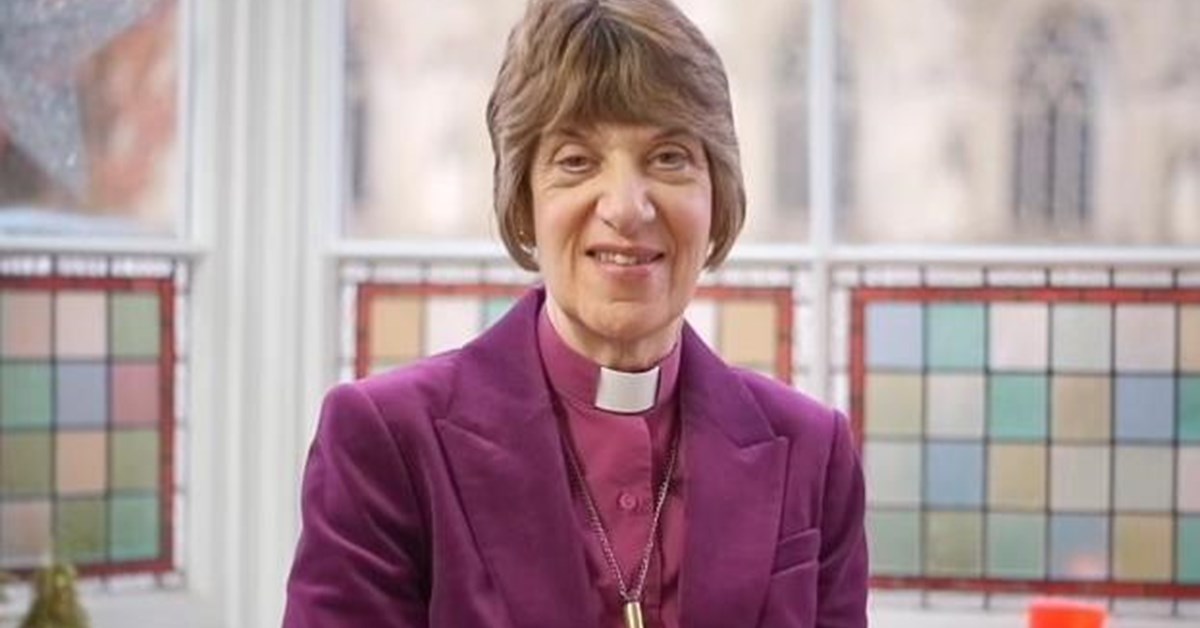
THE British Government is “complicit in the occupation” of the West Bank, and sanctions are needed to send a “strong message”, the Bishop of Gloucester, the Rt Revd Rachel Treweek, has said.
“This is about human dignity for all people,” she said, emphasising that there was “no place for anti-Semitism”.
Bishop Treweek specifically referred to the Government’s lack of response to the International Court of Justice (ICJ) ruling that Israeli settlements in the occupied West Bank and East Jerusalem violated international law (News, 26 July 2024).
She made the remarks in an interview with the Church Times last Friday, after returning from a joint visit to Palestine and Israel with the Bishops of Chelmsford and Norwich, Dr Guli Francis-Dehqani and the Rt Revd Graham Usher.
In 2024, Bishop Treweek was the first bishop in the Church of England to describe Israeli policies in the West Bank publicly as “apartheid”. Last November, the Archbishop of York, after visiting the region, used the same term. He also spoke of “ethnic cleansing” in the West Bank and Israel’s “genocidal acts” in Gaza (News, 18 November 2025).
Israeli strikes killed 32 people on Saturday, according to the Gaza health authority. Seven of those killed were from one displaced family living in Khan Younis, BBC News reported. A statement from the Israel Defense Forces (IDF) said that the strikes targeted terrorist infrastructure.
Since its agreement last October, the ceasefire in Gaza has often seemed to be hanging by a thread, with both sides accusing the other of violations of its terms (News, 29 October 2025).
On Monday, the Rafah crossing between Gaza and Egypt was reopened, after lengthy negotiations between Israel and Egypt. A limited number of Gazans who left during the war will be allowed to re-enter, while more are expected to be allowed to leave for medical treatment.
“WE’VE used some words, but words are not enough,” Bishop Treweek said last Friday, in reference to international pressure on Israel.
As part of the trip, the three bishops planted olive trees in the al-Makhrour valley, near Bethlehem, in collaboration with Palestinian farmers, and Rabbis for Human Rights, an Israeli advocacy group that also uses the language of apartheid and ethnic cleansing about the West Bank.
“We don’t want your prayers — we want your action,” people there told Bishop Treweek, and she said that she had returned to the UK with renewed determination to raise their cause — and with some measure of hope.
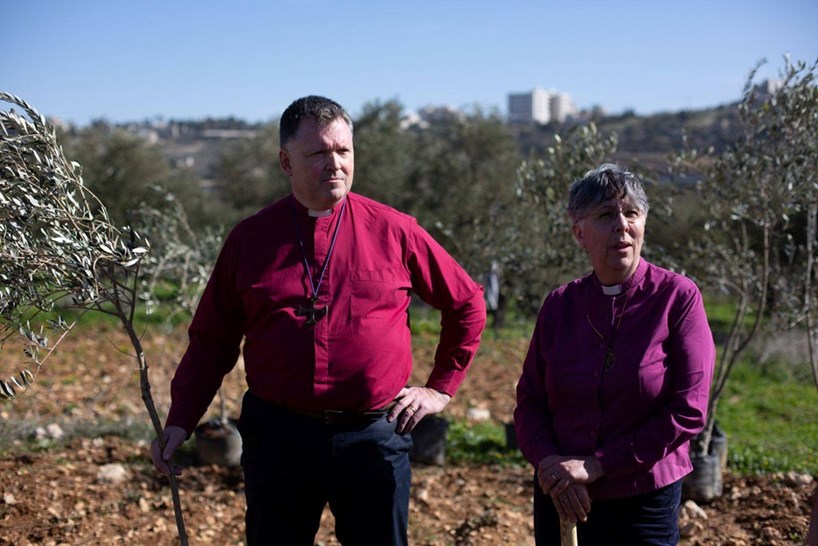 Rabbis for Human RightsThe Bishops of Norwich and Chelmsford plant olive trees in the West Bank
The situation “gets worse and worse”, even in comparison with her previous visit in June (News, 6 June 2025), she said. But, in spite of this, the act of planting trees was done “with hope for the future, and just praying that not only would those trees bear fruit, but also this active resistance might bear fruit, standing against the Israeli government, standing against the settlers, standing against occupation.”
The Bishop, who is the Church of England’s lead bishop for prisons, compared the West Bank with “one enormous prison”. Western visitors like her can move relatively freely, although when Archbishop Cottrell visited in November, his vehicle was blocked in by armed settlers, and he was later ordered by Israeli police to leave the South Hebron Hills (News, 8 November 2025).
In the city of Hebron, riven with military checkpoints, there were so-called “sterile areas” that Palestinians could not enter, Bishop Treweek said. Restrictions on movement around the West Bank made trade more difficult, exacerbating the economic impact of land-theft and settler attacks on the olive crops on which many Palestinian famers rely.
The Government “hides behind” the description of Israel as a “rules-based democracy”, the Bishop said on Friday. For Palestinians in the West Bank, however, the only rule was “about those who have power showing you their presence, but that they’re not going to protect you: justice is not going to be done”.
Bishop Treweek condemned proposals currently being considered by the Israel’s parliament, which human-rights campaigners say would have the effect of introducing the death penalty for Palestinians who are found guilty of terrorist attacks on Israelis — but not vice-versa.
The death penalty not only offended “human dignity and the sacredness of life”, she said, but was about “stopping the continuation of life for the next generation”, and therefore amounted to another example of ethnic cleansing.
The proposal was still under consideration, she said, but even “the discussion of the death penalty by those who have power against those who have no power is abhorrent.”
Young people growing up in the occupied West Bank were “absolutely traumatised”, she said. On visits to educational institutions run by the Anglican diocese of Jerusalem, Bishop Treweek had been struck by “a sense of adults’ not being able to promise a really optimistic future”, but, none the less, being “committed” to education — in culture, as well as other subjects.
“One thing I said when I was there was that the Israelis can take away from you your land, they can take away your property . . . they can try and take away your dignity, but they cannot take away your identity,” she said.
And one way in which people in the UK could support Palestinians, she said, was by going on pilgrimage. Bishop Treweek recommended that pilgrims stay at St George’s College, the Anglican centre in East Jerusalem. Her words echoed those of the Archbishop in Jerusalem, Dr Hosam Naoum (News, 21 November), and the College’s Dean, the Very Revd Canon Richard Sewell (Comment, 19 December).