Levent Kenez/Stockholm
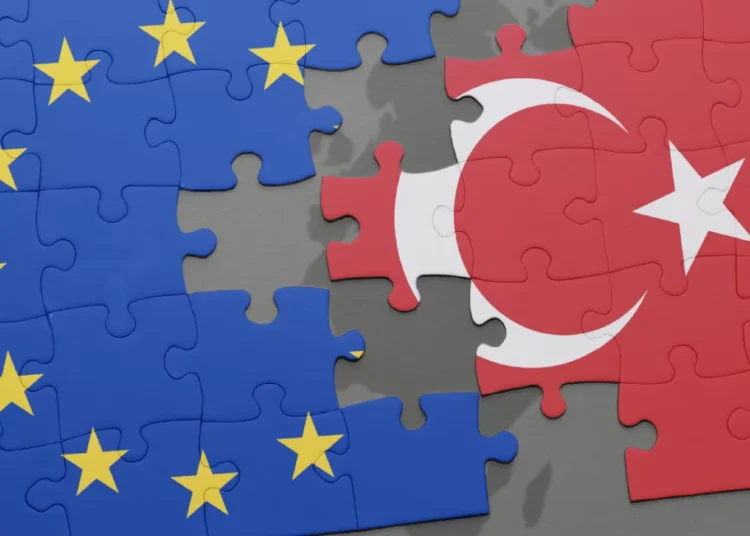
The European Union’s free trade agreement with India, concluded in January 2026 and expected to enter into force in 2027, is reshaping trade incentives across Europe and South Asia while exposing longstanding structural weaknesses in Turkey’s trade relationship with the EU. Although Turkey is deeply integrated into the EU market through the customs union, it is excluded from the preferential access granted under the EU–India deal, a gap that economists and trade data suggest could translate into lasting competitive losses for key Turkish industries.
The EU–India agreement covers goods and services representing more than 96 percent of bilateral trade by value. Once fully implemented, the deal will remove or sharply reduce tariffs on industrial products, machinery, chemicals, pharmaceuticals and vehicles while easing regulatory barriers and expanding market access in services. The EU estimates the agreement will increase EU exports to India by more than 50 percent in five years and save European companies roughly €4 billion annually in duty. India, whose economy exceeded $3.7 trillion in 2025, gains preferential access to a market of 450 million consumers with a combined GDP of more than €16 trillion.
Despite being part of the EU customs union since 1996, Turkey does not benefit from these concessions. Under the customs union, Turkey applies the EU’s common external tariff to third countries but does not automatically gain reciprocal access when the EU signs free trade agreements. As a result Indian goods entering the EU under the new agreement can circulate freely into Turkey while Turkish exports continue to face India’s standard tariff regime. This asymmetry, long criticized by Turkish exporters, becomes more pronounced as the EU accelerates trade agreements with major global economies.
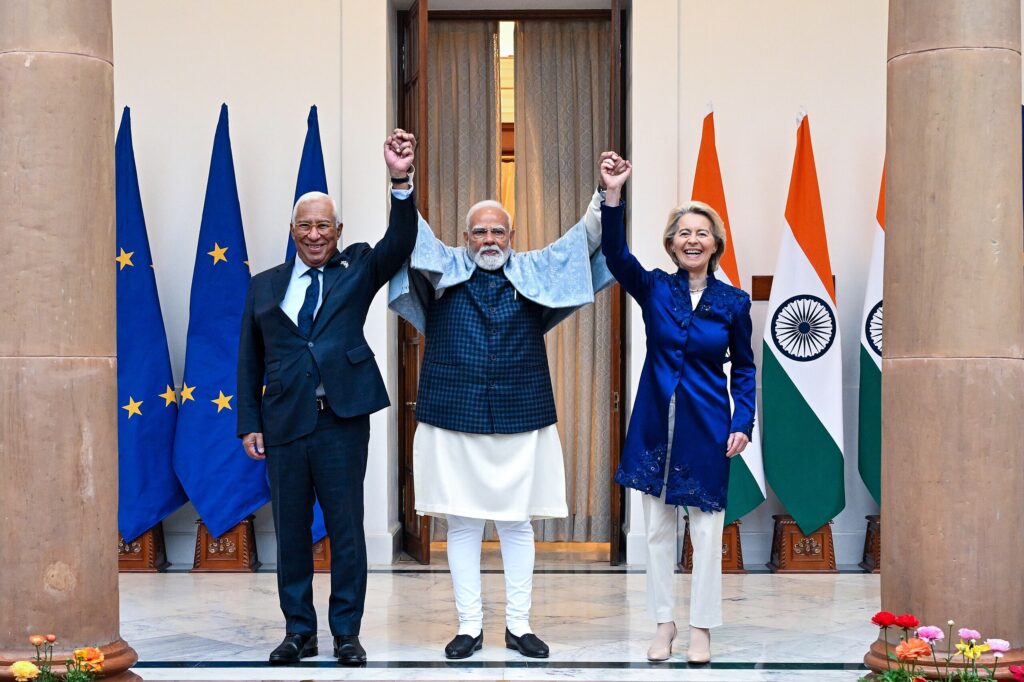 President of the European Council António Costa (L), Indian Prime Minister Narendra Modi and European Commission President Ursula von der Leyen signed the EU–India free trade agreement in New Delhi on January 27, 2026.
Trade figures illustrate the imbalance. The EU is Turkey’s largest trading partner, accounting for about 41 percent of Turkish exports and 32 percent of imports in 2024. Turkey exported approximately $104 billion worth of goods to the EU last year, dominated by automotive products, machinery, textiles and chemicals. India, by contrast, absorbed less than $1.3 billion of Turkish exports in the same period, while Turkish imports from India reached nearly $9 billion. Without preferential access, Turkish exporters face average Indian tariffs of 10 to 15 percent on industrial goods and over 20 percent on many consumer products, compared with near-zero duties for EU companies under the new agreement.
The structure of the customs union means Turkey must open its market to Indian goods via the EU without securing equivalent access for its own producers. Economists describe this as trade deflection: Third-country goods benefit from EU preferences and enter Turkey duty free, while Turkish companies compete abroad under less favorable conditions. With the EU pursuing new agreements not only with India but also with the South American regional trade bloc Mercosur and Indo-Pacific partners, the cumulative impact on Turkey’s competitive position is expected to grow.
Textiles and apparel are among the most exposed sectors. According to projections used by EU and Indian trade authorities during negotiations, India’s textile and apparel exports are expected to accelerate sharply once tariff barriers into the EU are removed. With preferential access, India’s total textile and apparel exports are projected to approach $100 billion annually by 2030, up from roughly $44 billion in 2023. Indian manufacturers combine lower labor costs with large-scale production capacity and, under the agreement, duty-free or near duty-free entry into the EU market.
Turkish textile exporters, who currently supply around 10 percent of the EU’s apparel imports and generated more than $30 billion in export revenue in 2024, face the risk of price undercutting without gaining reciprocal access to the Indian market, where tariffs on apparel for non-preferential partners remain above 20 percent.
The automotive sector faces a different but equally significant adjustment. Under the EU–India agreement, Indian tariffs on passenger vehicles imported from the EU, currently among the highest globally at around 110 percent, will be reduced gradually to approximately 10 percent over a five-year period of transition. This change is expected to substantially increase EU automotive exports to India and encourage European manufacturers to deepen production and sourcing ties directly with Indian suppliers. Turkey exported more than $35 billion in automotive products in 2024, much of it integrated into EU supply chains. As EU producers expand preferential production networks linked directly to India, Turkish component manufacturers risk losing relative importance in certain segments, particularly in cost-sensitive parts where tariff advantages play a decisive role.
Machinery and chemicals, two of Turkey’s higher value-added export categories, are also affected by the agreement’s tariff structure. India has committed to eliminating or significantly reducing duties on a broad range of EU-origin machinery, mechanical equipment and chemical products, where tariffs previously ranged between 7.5 and 15 percent. EU producers are expected to expand exports to India and use the country as a regional manufacturing and distribution hub for South Asia. Turkish exporters, who shipped approximately $28 billion in machinery and $31 billion in chemicals globally in 2024, do not benefit from equivalent cost reductions. Analysts warn this could gradually erode Turkey’s position in regional markets where it competes indirectly with EU companies.
The impact is not limited to goods. The customs union excludes services, agriculture and public procurement, sectors that together account for more than half of Turkey’s GDP. While the EU–India agreement opens pathways for deeper cooperation in services and regulatory alignment, Turkey remains outside these frameworks, reinforcing concerns that the customs union no longer reflects the structure of modern trade.
Although Turkey retains a natural advantage in geographic proximity to the European market, analysts say that edge could diminish without parallel improvements in transport and logistics. India is expected to leverage lower production costs and economies of scale alongside preferential access to the EU market, positioning itself as an alternative supply hub. As a result the EU’s reliance on Turkey could gradually decline, eroding the privileged status created by the customs union. India could emerge as a more attractive base for EU capital and technology than Turkey, raising the risk that foreign direct investment and supply chains shift toward South Asia.
Political constraints complicate the picture. Efforts to modernize the customs union have stalled for nearly a decade amid broader tensions between Ankara and Brussels. While both sides acknowledge the economic rationale for updating the agreement, progress has been limited by disputes over the rule of law, migration and foreign policy. In the absence of reform Turkey’s trade policy remains reactive, forced to absorb the consequences of EU trade decisions without a seat at the negotiating table.
Nordic Monitor has previously reported that the challenges shaping Turkey’s trade relationship with the European Union go beyond asymmetries in preferential market access and point to deeper structural and governance problems that may limit the country’s ability to benefit from broader trade reforms. A study published in March 2025 by the Brussels-based Institute for Diplomacy and Economy finds that modernizing the Turkey-EU customs union, a step that could support economic growth and help reduce Turkey’s trade imbalance with the bloc, remains unlikely without substantial improvements in the rule of law, regulatory transparency and compliance with European standards of governance. The report cautions that without such reforms, Turkey is likely to face continued difficulty in attracting long-term foreign direct investment and fully integrating into evolving EU trade frameworks, suggesting that political and legal uncertainty may increasingly shape Ankara’s economic outlook.