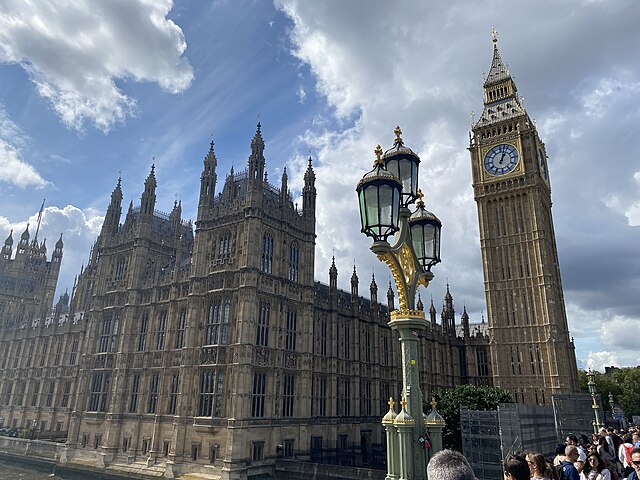
The House of Commons today held a Westminster Hall debate on the Government’s proposals for an “earned settlement” model and wider reform of indefinite leave to remain (ILR), including plans to double the standard qualifying period from five to ten years. The Government’s proposed changes would apply not only to future applicants but also retrospectively to migrants already in the UK who have not yet secured ILR.
Opening today’s debate, Labour’s Tony Vaughan said the proposed changes would ‘move the goalposts’ for migrants who had come to the UK under the expectation of a five-year route to settlement, warning that retrospective reform would amount to a breach of trust. He noted that many had built their lives in the UK on the basis of the existing rules and that changing them mid-way would undermine fairness and damage key sectors already facing recruitment shortages.
Vaughan told MPs: “The Government are now considering doubling the wait for settlement from five years to 10, and up to 15 years for care workers. One of the most contentious elements of the consultation is that that will apply to people who are already here. I fundamentally oppose that rule change. Migrants entered this country on a contract, and the deal was simple: if they came to work in the sectors where we needed them, obeyed the law and paid their taxes, they could stay. Changing the terms of that contract after people have spent years building a life here is not just bad policy but a breach of trust. It makes Britain look unpredictable and like a country that does not keep its word. We cannot talk about earning settlement if we keep moving the goalposts after the game has started. In my view, retrospectivity is un-British and undermines our sense of fair play.”
Numerous MPs spoke in agreement during the three-hour debate, urging the Government to abandon its plans for retrospective changes to ILR. As Tony Vaughan noted, every backbencher who spoke opposed retrospectivity. Many MPs emphasised the impact on their constituents, describing the uncertainty and anxiety the proposals had caused for individuals and families already living in the UK.
Labour MP Barry Gardiner highlighted the financial impact of the proposals, warning that “[r]etrospectivity and arbitrary or subjective criteria make for bad law, precisely because they destroy clarity and certainty”. He cited the case of a family in his constituency who had already paid £28,726 in visa fees and charges under the existing rules, and who could ultimately face costs exceeding £43,000 if required to continue on an extended pathway to settlement, with no guarantee that the rules would not change again in the meantime.
Speaking for the Government at the end of the debate, the Minister for Migration and Citizenship, Mike Tapp, indicated that the Government intends to implement the earned settlement model, saying that it will not continue with the status quo in light of the numbers expected to seek settlement. At the same time, he clarified that while some rule changes are firm, much of the reform – including transitional arrangements for those already partway to settlement – is still subject to the public consultation launched in November and closing this month. On that point, he told MPs: “The petition also touches on transitional arrangements, and whether the proposals will apply to those already halfway to settlement. … We have asked for views on that in the consultation, and I hope Members will understand that while I acknowledge their keen interest and the concerns of many individuals, I cannot say anything that could prejudge the outcome of the consultation. The consultation will be published when it closes.”
The key sections from the minister’s speech (minus the many interventions from MPs) follow below:
The Parliamentary Under-Secretary of State for the Home Department
(Mike Tapp)
[…]
Both petitions relate to the earned settlement proposal set out in ‘A Fairer Pathway to Settlement’, the Command Paper that the Home Secretary introduced to Parliament on 20 November. The proposed reforms represent the most fundamental change to the settlement system in decades and are currently subject to an ongoing public consultation that ends in 10 days, on 12 February. We recognise how important this issue is to Members—we have seen that here today—as well as to their constituents and of course to migrants across the whole country. We will listen, and are listening, to what is being said.
Some of the rule changes that we will introduce are firm, and that will be laid out today in my speech. Much of the proposal—for example, transitional arrangements—is very much being consulted on. Of course, that will be listened to. If there are any further questions when I finish, I ask Members to please intervene nearer the end.
We will provide further details on how the new settlement system will work in due course after the consultation closes, but I hope hon. Members will appreciate that, while the consultation is ongoing, I am somewhat restricted in what I can say. I will endeavour to be as helpful and fulsome as possible in my response.
The Government recognise and value the long-term contribution of migrants to the UK. The proposal is not a deportation policy. Multiculturalism absolutely makes us great. However, settlement here is a privilege, not a right. It cannot be simply a measure of how long someone has been in the UK, but rather of the contribution they have made. If someone wants to settle in this country, they must contribute, integrate, follow our laws and learn our language. Those are the principles that underpin a fair immigration system that the British public could have confidence in.
Net migration ballooned under the previous Government, and we are now faced with the prospect of 2.2 million people being eligible to settle between 2026 and 2030. Around one in every 30 people in this country arrived between 2021 and 2024. Those numbers are staggering. That is not what people voted for. I am surprised that this has not been raised during the debate today.
Such numbers jeopardise our public services, our economy, the whole housing market and cohesion in local communities. Doing nothing is simply unacceptable. Around 1.34 million people are currently on our social housing waiting list […] which has increased by 200,000 since 2020. Combining that with a potential 2.2 million people becoming eligible for settled status between 2026 and 2030 would put a massive strain on our public services. We have already set out plans to increase the standard qualifying period towards settlement from five to 10 years.
The earned settlement model will allow people to earn reductions for positive behaviour, such as working in a public service role and volunteering. We want to encourage that behaviour, which underlines the substantial contributions that many migrants make to our country.
People have spoken very well in this debate about stability within the country and the prospect of ‘moving the goalposts’, as some have framed it, taking that stability away, but I want to stress that people who are here waiting to settle have access to education, healthcare and rent. They can buy a house, work and travel in and out of the country, and have access to financial products.
As I said at the beginning of my remarks, this process is not about deporting people; it is about creating a system that is based on contribution and integration, and people who are not committing crime. That is what the public expect. However, the new model will also impose penalties on people who claim public funds or who have breached immigration laws. Those are not punitive measures; they are deterrents for those who are thinking about choosing a life of benefits when they can work, or who fund criminal gangs in order to cross the channel on small boats, endangering their own lives in the process.
This Government will not continue with the status quo, considering the huge numbers that we face. It is right that we implement a system that is fair and that rewards people who work to make this country a better place to live.
As I am sure hon. Members are aware, the proposals that are not subject to consultation are five-year discounts for two groups of people. The first group is partners, parents and children of British citizens, reflecting our commitment to treating our citizens fairly and their right to be in a relationship with whoever they choose, regardless of nationality.
The second group that will receive the discount is British national overseas visa holders. We remain committed to the people of Hong Kong and the hundreds of thousands of people who have uprooted themselves and rebuilt their lives in the UK. Prior to this debate, I was at the APPG on Hong Kong discussing exactly that. There are complex questions around income, family income, and assets over income; we are currently consulting on those and, when a decision is made about them, it will be announced.
It is vital that migration enriches our economy, but it is most vital that it enriches our local communities. The measures set out in the earned settlement model promote integration by raising the level of English required and by demanding strict adherence to our laws. We will encourage integration and strengthen communities.
[…]
Turning to the subject of the first petition, people who come to the UK to take up a job make an important contribution to our economy and our public services, filling essential skills and labour market gaps, but for too long sectors have become reliant on them to fill those gaps and have not invested enough in our domestic workforce. The reforms we set out in the immigration White Paper last year redress that balance. We are reversing the long-term trend of an over-reliance on recruitment from abroad, and instead increasing investment in skills and training for those in the UK.
We implemented the first of those reforms in July last year, raising the skills threshold back to RQF—regulated qualifications framework—level 6, or roughly degree-level occupations, leaving a shortlist of medium-skilled occupations deemed critical to our industrial strategy and critical infrastructure. That restored the purpose of the skilled worker route and meant a reduction of more than 100 occupations. In December, we then raised the immigration skills charge by 32%. We are currently considering the Migration Advisory Committee’s review of salary requirements before making further changes, and will consider its upcoming review of the medium-skilled temporary shortage list in the summer.
[…]
The petition also touches on transitional arrangements, and whether the proposals will apply to those already halfway to settlement. As we have seen in this debate, this is a hugely important issue. We have asked for views on that in the consultation, and I hope Members will understand that while I acknowledge their keen interest and the concerns of many individuals, I cannot say anything that could prejudge the outcome of the consultation. The consultation will be published when it closes.
Some strong points were made around family income, the gender pay gap, those who are more vulnerable, those who are disabled, those who have university fees, and of course those on armed forces concessions. All of that is being considered within the consultation, and there will be more detail to come. I can only apologise that I cannot give more detail on that today. I assure Members that we will listen to what people tell us in the consultation before deciding how earned settlement will work.
Turning to the second petition, we are considering whether benefits should only be available to British citizens and not, as is the case now, to those with settled status. I know Members have concerns about this issue. The Government have a responsibility to British taxpayers to ensure their money is spent in a fair and equitable way. It is therefore right that we reassess the point at which migrants can access public funds.
We know the challenges that the country faces, and that this Government have inherited. One of the most significant challenges is a serious lack of social housing. We are taking steps to tackle the challenge, but we must be realistic. I have already set out the number of people who are expected to apply to settle over the next five years under our current system. All of those people could be eligible for benefits and social housing. I am sure that many of us in the Chamber will have constituents who have spent years on the waiting list for social housing. Continuing to add to that list will not solve the problem.
[…]
We would like to hear people’s views on the measure, so I encourage anyone who is interested in providing those views to do so before the consultation ends. I am conscious of time, so before I finish, I want to again express my thanks to my hon. and learned Friend the Member for Folkestone and Hythe and to all Members who have contributed today. These are sweeping reforms, and I understand the strength of feeling toward them. I have heard the points that have been raised here, which will all feed into the important consultation. It is important that everyone who may be affected by the proposals has a fair and equal opportunity to make their voice heard.
As I have set out, the consultation is currently open to all until 12 February, and further information on how to respond and provide views can be found on the Government website. We want to ensure that any decision taken has a robust evidence base and a clear understanding of how people may be affected, and that is why this may be unclear to some of our constituents at this point.
Clearly, these are issues of great significance, not only in the context of the immigration system, but for our nation itself. I say to colleagues here and across the House that we understand the importance of our task, we are determined to get this right and, as I have set out, we are proceeding with the seriousness and care that the public and Parliament rightly expect.