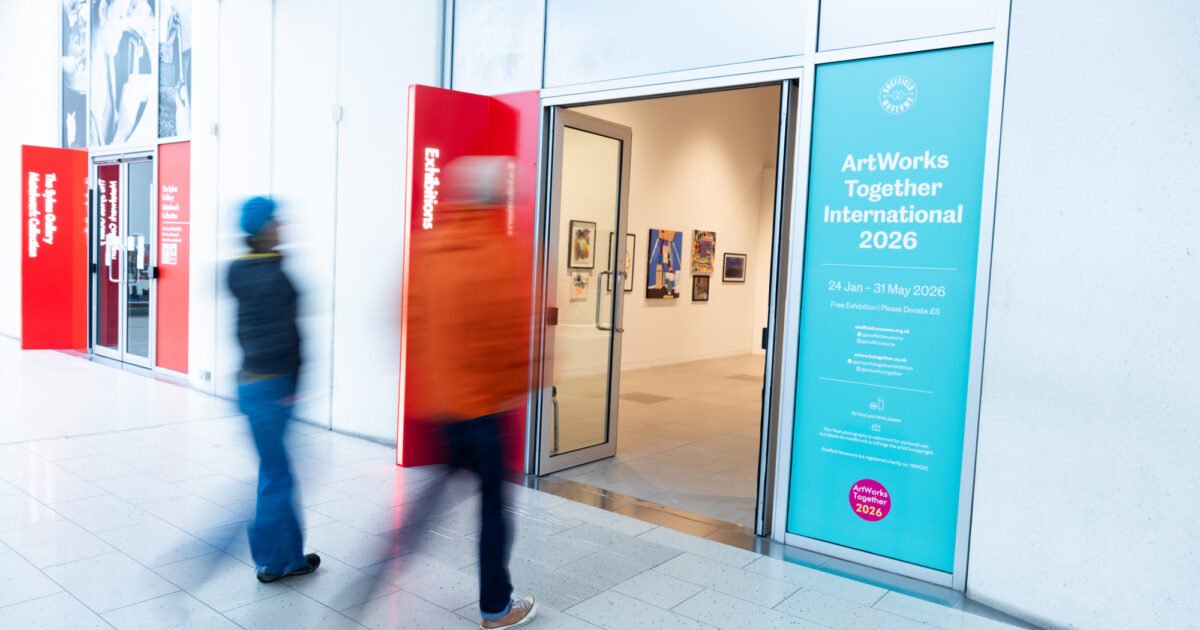
ArtWorks Together features work by more than 70 artists with autism or learning difficulties.
Adam Galliford.
A diverse range of work from more than 70 artists with autism and learning disabilities is now on display in Sheffield.
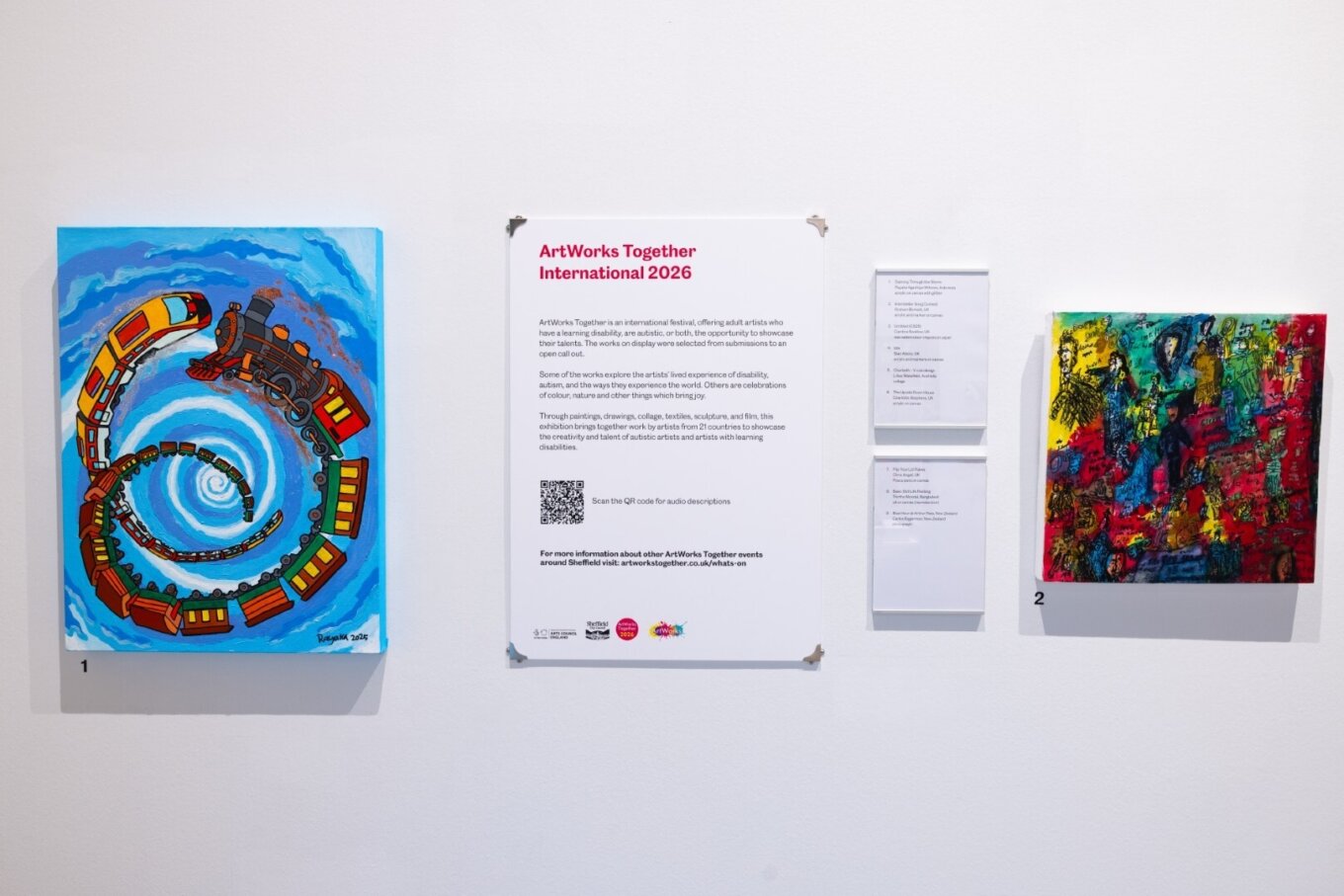
ArtWorks Together is an international art festival that is currently hosting a free exhibition at Millennium Gallery, involving artists from 21 countries around the world spanning from South Yorkshire to South Asia.
The art spans a range of mediums, including painting, photography, sculpture, mixed media, film and more, and aims to bring attention to artists who are significantly underrepresented within visual arts.
Some of the work on display comments on the artists’ experiences with learning disabilities or autism, and other pieces draw inspiration from heritage, traditions or the places the artists have lived. The artwork is submitted into a competition, and the winners will be announced in February.
One of the artists is Alice Bulmer, whose work, titled Oh, There Is Thunder In Our Hearts, is an oil painting depicting a floating woman looking upwards.
Commenting on her piece, Alice said, “The title comes from a line in the Kate Bush song ‘Running Up That Hill’, which centres around the imbalance of power, gender and struggle – trying to live in a neurotypical world as an autistic woman and the desire to swap places to allow others to understand our struggles.
“I’m late diagnosed autistic so I wasn’t aware how my autism affected my ability to get on in the art world”, Alice told Now Then.
“Now I understand why I found it so difficult networking or knowing any clear path to get my work shown by galleries. It’s a really difficult world to be respected in and it’s not related to your artistic talents but more to do with who you know and there’s a really unclear structure to it from the outside. It’s quite elitist and when you’re autistic those hierarchies don’t make any sense.
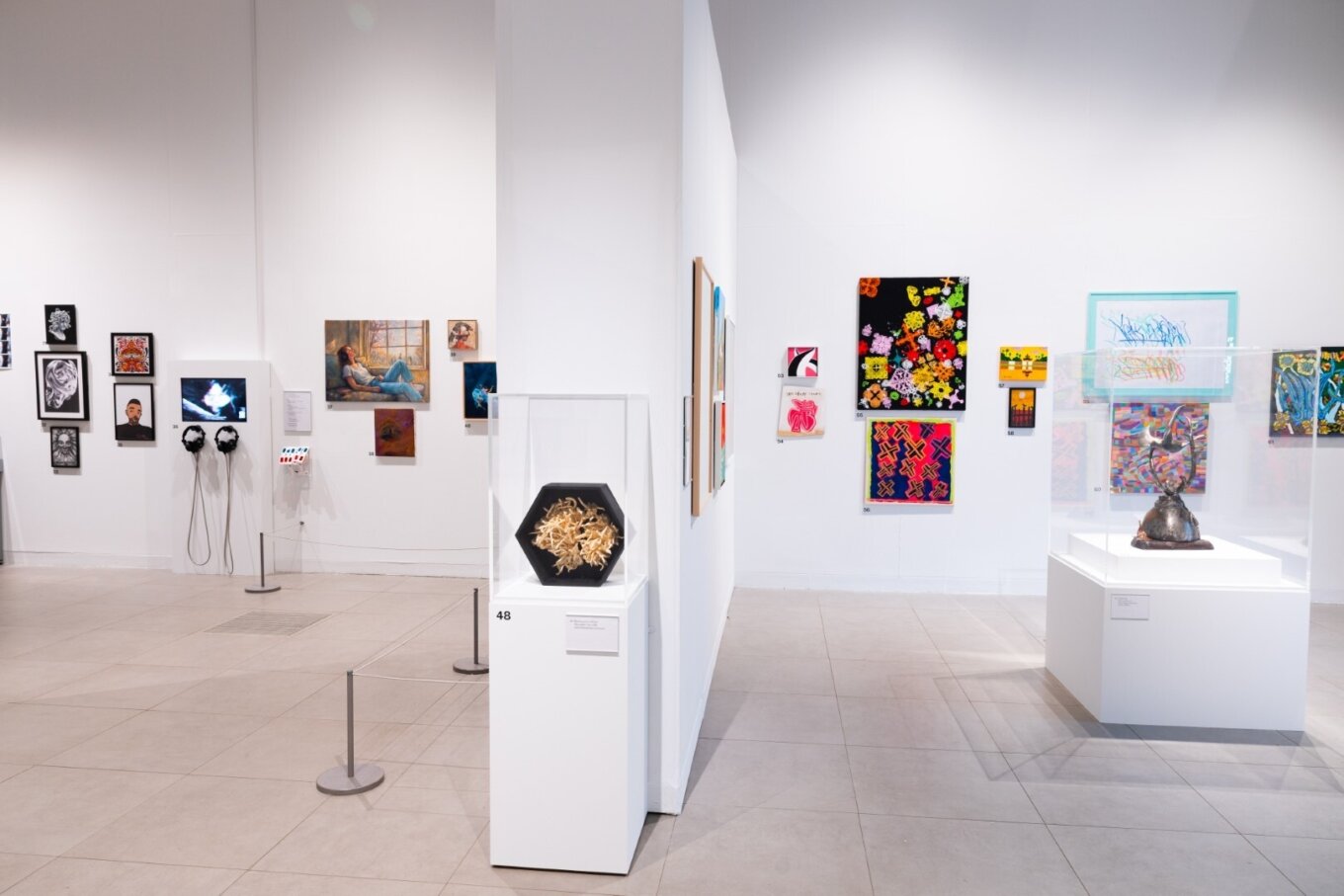
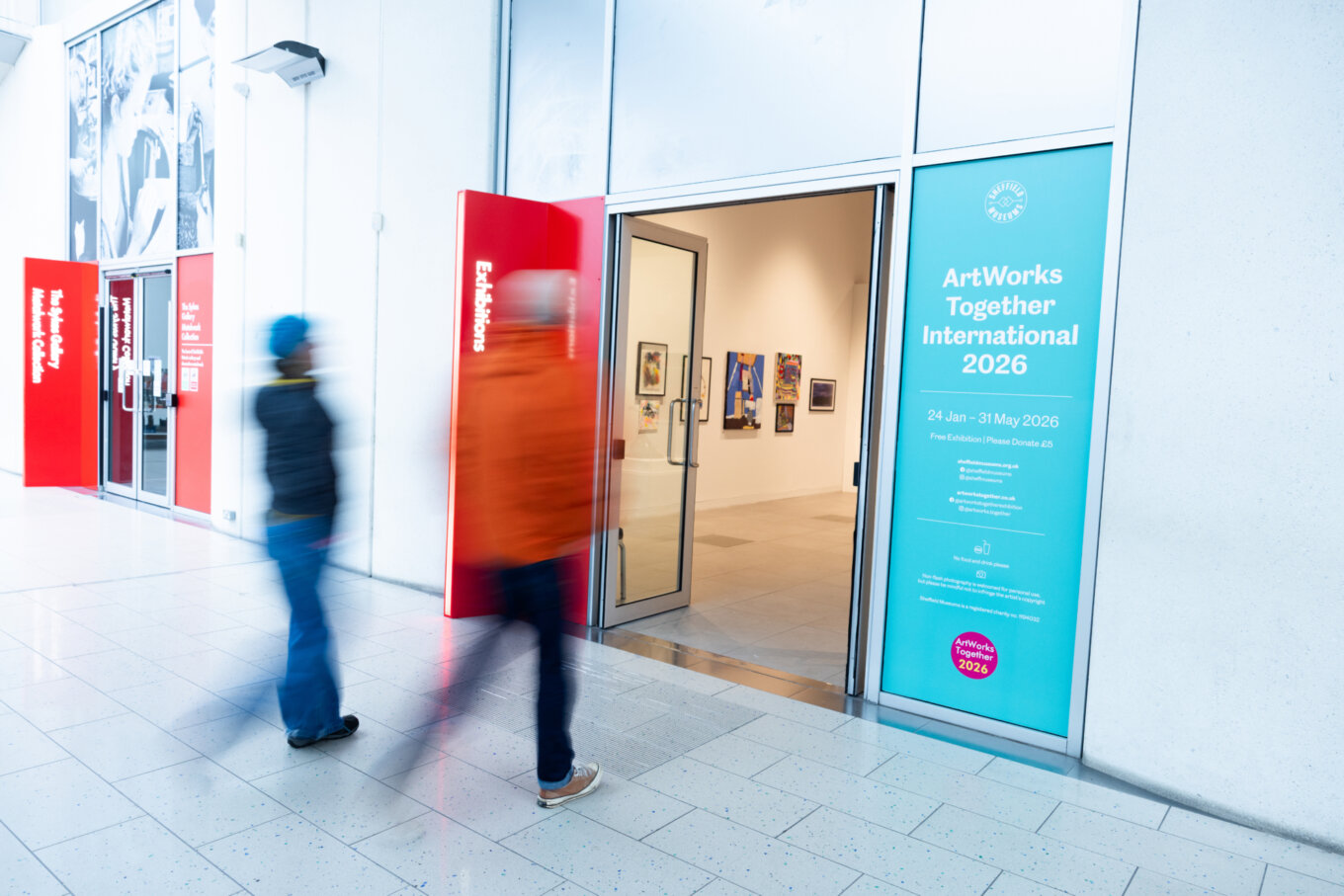
ArtWorks Together is open at Millennium Gallery until 31 May.
Adam Galliford.
“My portraits and figures are painted or drawn with an exact realism. The accuracy is important to me. The clear structure to realistically representing something is comforting and gives me clear boundaries. It gives me order in a world that isn’t ordered.
“My art has always been my sanctuary. It gives me quiet satisfaction to make something beautiful with my own hands.”
Another artist on display is Rhia Janta-Cooper, whose acrylic painting on linen is particularly striking. Red Road to Skye depicts an impression of Balmacara, a “charming spot” near Kyle of Lochalsh and the bridge to the Isle of Skye. The vibrant red road is her own artistic take. She mostly paints from recollection, which she describes as a “liberating” process.
“The images become filtered through emotion and memory rather than literal documentation”, Rhia told Now Then. So far, Rhia has had a solitary and private artistic journey – this is the first time her work has been featured in an exhibition.
Artists who have a learning disability or who are autistic belong in our most prominent cultural spaces
“I’m deeply drawn to landscapes, especially dramatic skies and the stark contrasts found in nature.”
“The beauty I experience in nature creates an almost irresistible compulsion to paint. It’s not a choice, really – it’s more like an urgent need to respond, to translate what I’ve witnessed into something tangible. Those fleeting moments of awe and wonder demand to be expressed, and painting is the only way I know how to honour them in my way.”
Cecile Jeanne Fraeye from France is the artist behind another oil painting featured in the exhibition.
“La Fête portrays the unique way an autistic person experiences celebration. Outside the window, movement, noise, and social excitement pulse with energy. But inside, a woman stands in her own quiet festivity – one made of soft light, gentle colours, and peaceful perception.”
“I had an awakening to art in front of a painting by Gainsborough at the age of 14, in an art book I was contemplating. Since then, this feeling that something expands in me when I paint has not left me: art makes something bigger in me, more alive, and my inner intensity is expressed as an obvious thing. Painting is like a spiritual path.”
Cecile told Now Then how her art represents her life experiences. “I work on [the themes of] silence and women, and on the relationship to time and space”, she said. “Autism leads me to observe a lot of what surrounds me and to feel in a strong and isolated way an inner world that is constantly in suspension. The desire to meet ‘the other’, and the difficulty in taking part in the movement of the world.”
She said “like many women”, she discovered her autism later in life (she was diagnosed at 41). She has also lived through breast cancer, so taking a place in the art world and fulfilling her childhood dream gives her “hope and courage”.
Though varied, a theme carried through the exhibition is the challenging of assumptions about who artists are and whose voices are valued.
Not everyone will be encouraged at school to imagine they could become a professional artist in the first place
The final submissions will be judged by a selection panel and winners will be announced at a ceremony at the Mercure St Paul’s Hotel on Thursday 12 February.
One of the panel is George Webster, the first TV presenter with Down’s syndrome to appear on Cbeebies.
“Celebrating the arts created by people with disabilities is very important,” George said. “We all need to be seen and our voices need to be heard.”
The exhibition and competition is aiming to champion artists with learning disabilities, autism, or both, by creating a platform where every artist can be seen and celebrated on an international stage.
In 2021, Neuk Collective, a neurodivergent artists’ collective in Scotland, conducted research into the experiences of neurodivergent artists. They found that financial insecurity, social difficulties and difficulties with the administrative tasks associated with a career in the arts are the most commonly shared barriers to the art world.

Oh, There Is Thunder In Our Hearts by Alice Bulmer.
Alice Bulmer.
They also discovered that many neurodivergent artists were very worried about making and selling work, or receiving funding to make work while on disability benefits, and felt trapped by the inflexibility of the benefits system. Many artists they heard from expressed frustration at being classed as ‘disabled artists’ and felt that ‘disability art’ is siloed and treated with less respect than mainstream art.
“Artists who have a learning disability or who are autistic belong in our most prominent cultural spaces,” said Kayleigh Cruickshank, founding director of ArtWorks South Yorkshire. “Their work is valued for its quality, ambition and relevance.”
“Getting into the art world is not easy if you have a learning disability or are autistic”, Kayleigh told Now Then. “The pathways may not be clearly defined or communicated, getting your work considered might ask for softer skills like networking and relationship building, and gallery environments are not necessarily designed with sensory issues in mind so operating in those spaces can be really challenging.
“Not everyone will be encouraged at school to imagine they could become a professional artist in the first place.
Adam Galliford.
“The more we can learn from people who have lived experience of the systemic barriers, the more we can make things work better. This exhibition, taking place in a high-profile venue, with the backing of a cultural institution as important as Sheffield Museums, is a really positive step forward. We’re genuinely excited about the opportunities that can come from this.”
ArtWorks Together 2026 opened at Millennium Gallery on Saturday 24 January and continues until Sunday 31 May.
It’s part of a wider festival programme, which includes workshops at Millennium Gallery and Cambridge Street Collective, and an installation at Sheffield railway station.
Learn more
ArtWorks Together is open at Millennium Gallery until 31 May. Entry is free.