Photo by Getty
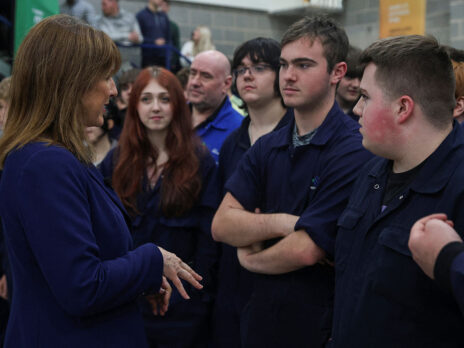
When Keir Starmer ditched Labour’s 50 per cent university participation target in favour of an ambition for two thirds of young people to enter higher-level learning, he framed it as an attempt to end further education’s status as a “Cinderella service”. For decades, FE has been overlooked. Why? As Starmer put it bluntly, “politicians’ kids don’t go there”.
The new target reflects a growing recognition that Britain’s skills system is not working for many. The expansion of university places has delivered clear benefits (graduates still enjoy higher salaries) but has not delivered broad-based social mobility. Instead, this system offers roughly half of young people a credible route to progression, while leaving the rest far behind.
This imbalance sits at the heart of Britain’s broken social contract. Education was meant to be the great leveller, yet it has become a dividing line. Labour’s support among low-income voters has plummeted, and it is now more popular with the privately educated than the state educated. Education is now a stronger predictor of voting behaviour than class, with support for Reform closely tied to whether someone went to university.
Starmer is right to stop ignoring further education: Britons view vocational education positively, often more so than universities. Yet FE has barely featured in the national conversation. Higher education receives twice as many mentions in major newspapers, and MPs speak far more often about universities.

New year, new read. Save 40% off an annual subscription this January.
Fixing the skills system matters not just for skills shortages but to create credible pathways for those who don’t want to follow an academic track. These are voters more likely to feel disenfranchised, increasingly sceptical that hard work pays off and drawn to populist politics, and who the centre ground needs to win back over.
But delivering this will be hard. Years of neglect left deep scars: FE has experienced deeper real-terms funding cuts than any other part of the education system. Lecturers earn £10,000 less than schoolteachers, despite teaching the same subjects. Colleges struggle to recruit industry experts, unable to compete with private-sector salaries, particularly in areas facing skills shortages. Even the successes reveal these constraints: degree apprenticeships offer a powerful social mobility pathway, but they are expensive, difficult to scale and often highly socially exclusive, with some now more competitive than Oxbridge.
And even if these barriers were overcome, skills alone cannot fix Britain’s economic malaise. We can’t copy the German or Swiss vocational models. Both offer lessons on issues including funding and training quality but also rest on large manufacturing bases and strong employer institutions. Britain’s economy is skewed towards service industries, with many working-class people employed in retail, hospitality and social care. Creating credible higher-level pathways for the economy we actually have, in the jobs people actually do – not the jobs we nostalgically imagine – is critical.
There is also a cautionary lesson from universities. The growing debate over whether a degree is “worth it” isn’t because they failed, but because we promised too much from it. Every country that expanded higher education saw graduate returns decline. That was predictable: employers pay more for what is scarce, and less for what is common. The mistake wasn’t expansion but presenting university as a passport for social mobility without aligning the wider economy to absorb a more educated workforce.
We shouldn’t set up further education to repeat that mistake. Fixing our skills system is necessary to renew social mobility – but it cannot bear the full weight of economic renewal on its own. Over-promising what FE can deliver would only push today’s problems down the road, leaving a new group of young people feeling misled.
Content from our partners
Related