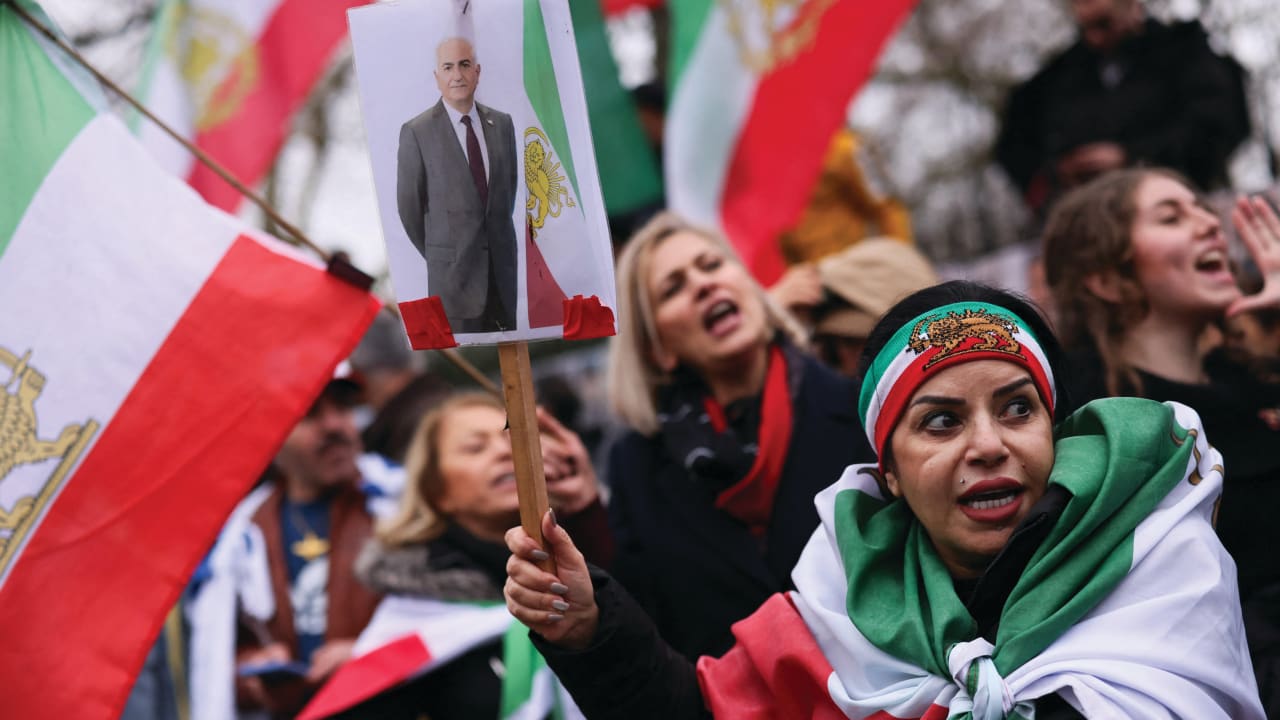
The Iran Freedom Congress (IFC) convened for the first time in London last week, weeks before the meeting had originally been planned, to organize a plan of governance that the United Nations could back once the Islamic regime falls.
The meeting had originally been scheduled for March 28 and 29, but the sudden American and Israeli attacks on the Islamic regime saw tens of activists immediately travel to the United Kingdom for the meeting, to urgently address the issue of Iran’s future governance.
Mehrdad Marty Youssefiani, who served for nearly two decades as chief strategic counselor to exiled Iranian crown prince Reza Pahlavi, told The Jerusalem Post that hopes were high that the current war against Tehran would deal the final deathblow to the Islamic regime, and establishing a viable alternative would help cement international confidence in the US-Israeli operation.
“Every time there have been waves of protests, everybody has always felt, ‘Oh, this is it. This is a time. This is a moment…” he said, describing the disappointment at the lack of change which came from the Women, Life, Freedom protests that followed the murder of 22-year-old Mahsa Amini, and the student uprising after the re-election of former president Mahmoud Ahmadinejad. “So every wave has always ended by this hope dying through some sort of a deal…”
“Iranians have learned to fear, be fearful. The regime is clever, they’re going to cut a deal to save their necks,” Youssefiani said, sharing his understanding that US President Donald Trump is using “gunboat diplomacy” to force Tehran to make a deal, not to overthrow the regime.

“It’s high time for democracy in Iran and peace in the region,” said Shahryar Ahy, an advocate for democratic transition in Iran. “The Iranian people have paid the price for forty-seven years. They have called on Iranians to organize, and we feel compelled to answer.”
IFC says lack of unity risks Iran’s regime survival
The temptation to allow the regime to survive with another deal is why the IFC is such an important development, Youssefiani explained.
“The global powers may not have the deep confidence in the alternative being viable and real… I think this is a challenge. I think if they’re convinced that they have a firm, viable alternative, the decision would have been made easy,” he continued. “But I think everybody worries that the perfect alert alternative may not be at hand, and we are trying to provide a more complete package by saying the package needs to be inclusive and pluralistic.
“We believe whatever the alternative is, it needs to have a big ‘P’ in front of it. ‘P’ in this case has Pahlavi in many people’s minds, but Pahlavi plus pluralism, I think that’s, that’s the answer. Pluralism includes Pahlavi. Pluralism includes everybody else,” he said.
Asked then about reports of fractures within the opposition movement, after comments made by Pahlavi about Kurdish separatist groups, Youssefiani made clear the pluralist ethos of the congress would not extend to separatist groups.
“In recent days, several separatist groups – some of whose records include collaboration with both [Ruhollah] Khomeini and Saddam [Hussein] – have made baseless and contemptible claims against the territorial integrity and national unity of Iran,” Pahlavi posted last week, in reference to the five Kurdish groups announcing the formation of the Coalition of Political Forces of Iranian Kurdistan.
In attendance at the IFC meeting were republicans, monarchists, members of the liberal and left movements, ethnic minorities, and civil society currents, the IFC claimed. Youssefiani said members of the Kurdish community were in attendance, but only those who did not seek a separatist state.
The IFC participants discussed the essential role of pluralism as the only viable path toward a democratic system in Iran, and underscored the central role of the Iranian people in determining the nature of Iran’s future political system.
Speaking on the recent atrocities committed against the Iranian people by the Islamic regime, he said there was “a sense of shared responsibility” and, from what he’s seen, a “shared sense of shame” at the divides in the diaspora enabling Tehran’s continued reign.
“Because of our collective inability to sit together, our boys and girls were slaughtered just a few weeks ago by the 1000s… in our inability to come together, our boys and girls have paid because they dared to bare their chests and take the bullets,” he shared, adding that the IFC saw “people who would not talk before” together in the same room.
The congress concluded in an agreement to not subscribe to a single ideology moving forward, but members “agreed to set them aside to have one goal, and that is to focus on the day after the regime, and the most important goal being to ensure a calm, civil transition,” he concluded.