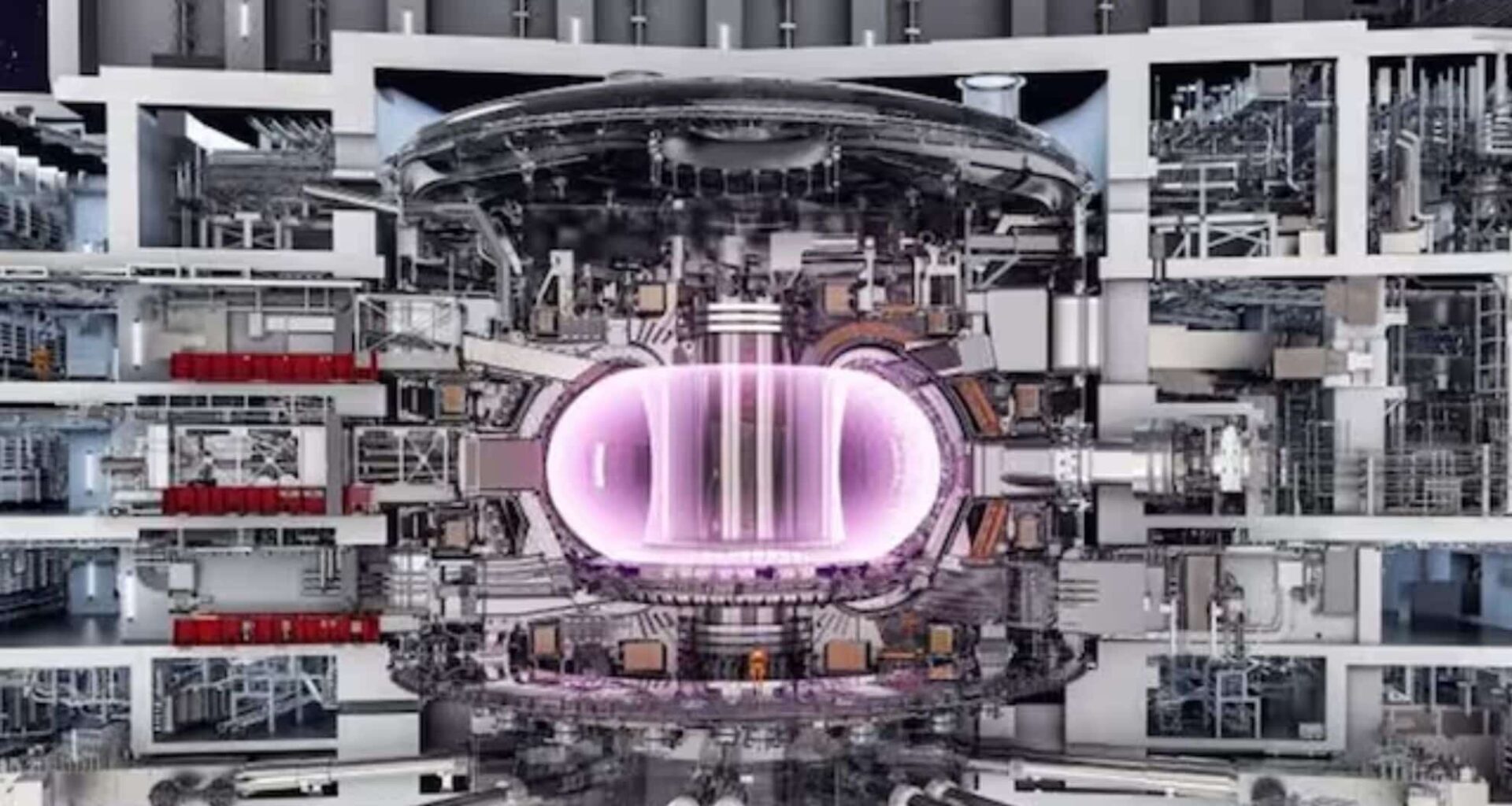
The International Thermonuclear Experimental Reactor (ITER) has reached a major milestone in the pursuit of clean energy.
The world’s largest superconducting electromagnet system is now complete, promising to propel the ITER project into the next phase of fusion energy research.
A Monumental Achievement in Fusion Energy
According to Interesting Engineering, The ITER project, located in Southern France, is an international collaboration that aims to prove the scientific and technological feasibility of harnessing fusion power.
Recently, the project announced the successful completion of its pulsed superconducting electromagnet system.
This system, which is the largest and most powerful ever assembled, is integral to the ITER Tokamak, the device designed to produce controlled fusion reactions.
“What makes ITER unique is not only its technical complexity but the framework of international cooperation that has sustained it through changing political landscapes,” ITER Director-General Pietro Barabaschi noted.
The Heart of the System: The Central Solenoid
At the core of this electromagnetic system is the Central Solenoid, a powerful magnet that has been built and rigorously tested in the United States before being shipped to the ITER site.
This 3,000-ton component is a crucial part of ITER’s fusion reactor, helping to initiate and confine the superheated plasma.
As explained by the ITER project, once fully assembled, this pulsed magnet system will have an immense weight of 3,000 tons and “will work in tandem with six ring-shaped Poloidal Field magnets, built and delivered by Russia, Europe, and China.”
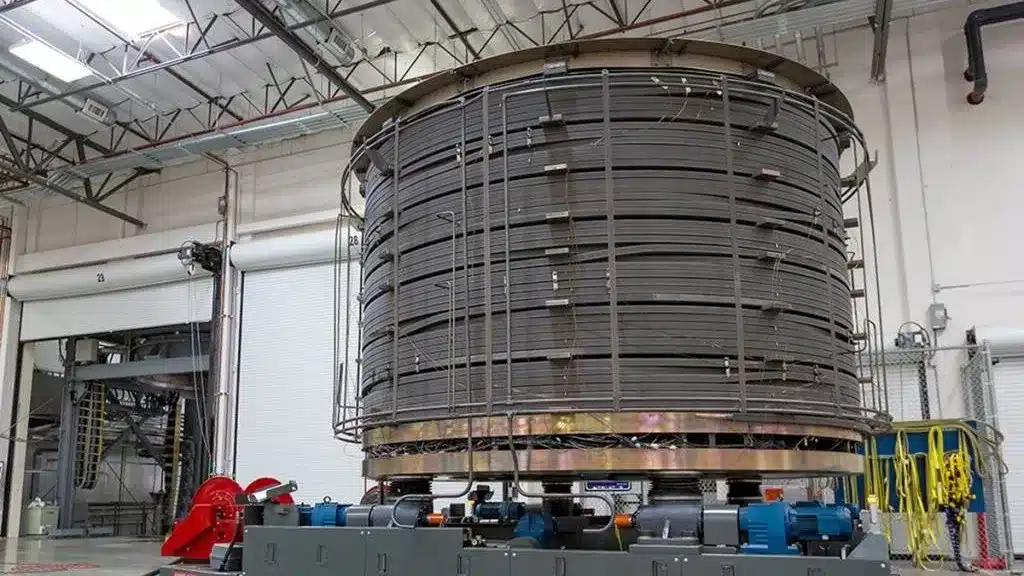
The world’s most powerful magnet. Credit: fanaticalfuturist
How the System Works to Produce Energy?
Fusion energy works by mimicking the processes occurring in the sun. In ITER’s Tokamak, hydrogen isotopes—deuterium and tritium—are injected into the chamber.
The electromagnet system then sends a current through the gases, transforming them into plasma.
The powerful magnets then confine and shape the plasma, keeping it from touching the reactor’s walls. The plasma is then heated to an incredible 150 million degrees Celsius, ten times hotter than the sun’s core.
At these extreme temperatures, atomic nuclei fuse, releasing vast amounts of energy. “At this temperature, the atomic nuclei of plasma particles combine and fuse, releasing massive heat energy,” ITER stated.
A Significant Step Toward Clean Energy
ITER’s ultimate goal is to demonstrate that fusion can be a practical source of energy. Once fully operational, the project is projected to produce 500 megawatts of fusion power from just 50 megawatts of input heating power, achieving a tenfold energy gain.
This self-heating reaction is expected to create what is known as a “burning plasma.” ITER’s design and its projected efficiency represent a major leap forward in the quest for clean, sustainable energy.
As ITER explained, “At this efficiency level, the fusion reaction largely self-heats, becoming a ‘burning plasma.’”
International Cooperation For A Sustainable Future
The ITER project is a testament to the power of global cooperation. More than 30 countries have contributed to the project, each playing a key role in the assembly of the Tokamak and its components.
The United States, for instance, is responsible for the Central Solenoid, while Russia, China, and Europe have contributed Poloidal Field magnets. Japan, Korea, and India have provided crucial components such as the vacuum vessel and thermal shields.
Together, these nations are working toward the common goal of proving that fusion power can be a reality.
“The ITER Project is the embodiment of hope. With ITER, we show that a sustainable energy future and a peaceful path forward are possible,” said Barabaschi.