
Eurozone inflation climbed to 2.5 percent in March, up from 1.9 percent in February, as energy costs surged in the wake of Israeli-US strikes on Iran, according to a flash estimate published Tuesday (31 March) by the EU statistics bureau Eurostat.
It is the steepest monthly rise since 2022, when Russia’s invasion of Ukraine and the ensuing gas disruption sent benchmark prices spiralling across Europe.
This time fossil fuels were again almost entirely responsible for the uptick of inflation. Energy prices are now 4.9 percent higher than a year ago — up from 3.1 percent annually just a month ago.
Inflation in other sectors remained broadly stable. This reflects the temporary delay with which the physical oil and liquid gas disruptions from the gulf reach European shores.
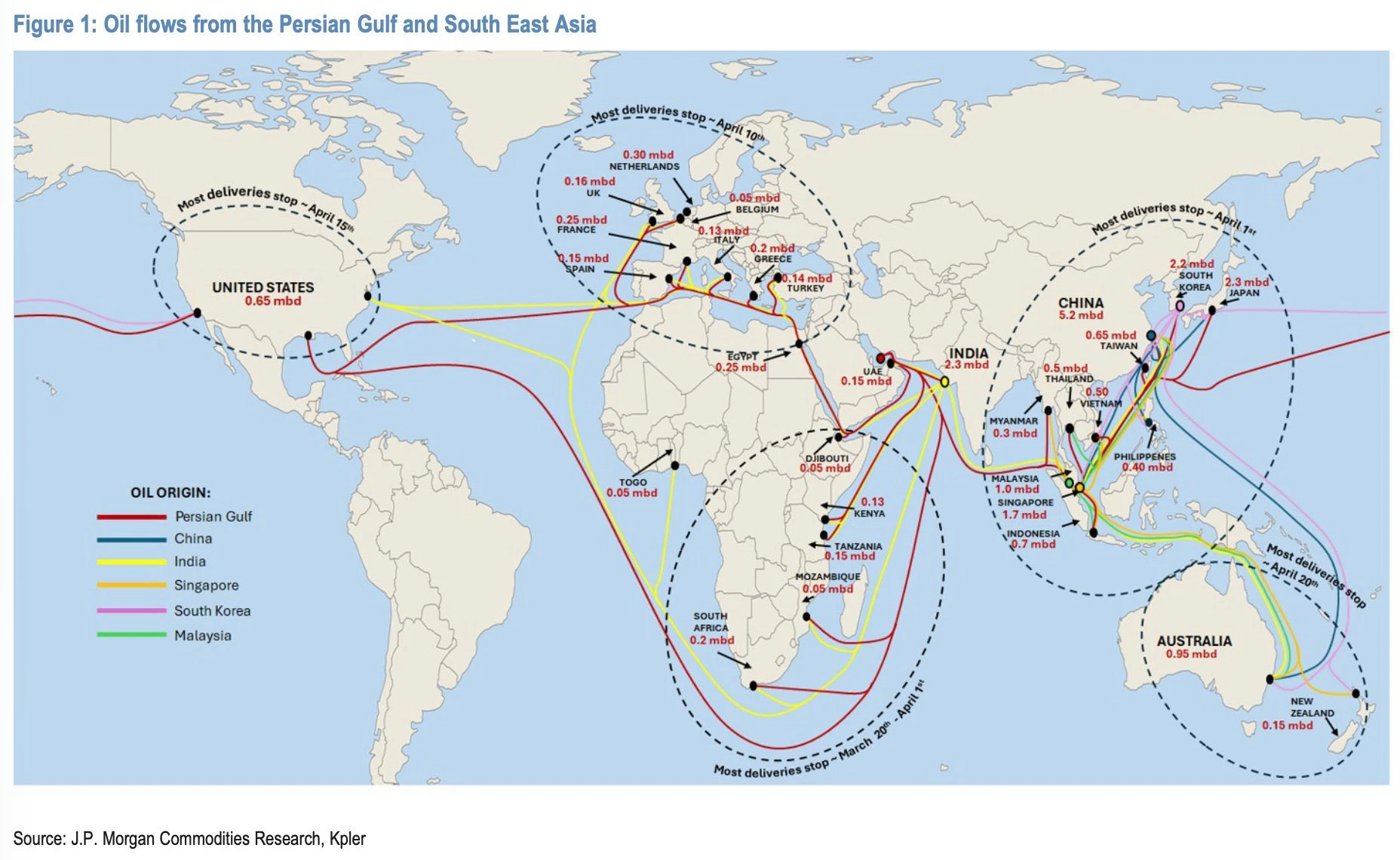
The delay of physical-supply disruption was captured in a map released by US investment bank JP Morgan, showing that ships stop arriving in Asia already this week, hitting Europe next week and the US mid-April.
Iran’s closure of the Strait of Hormuz has removed one-fifth of global oil and liquid gas supply, which the International Energy Agency has already described as the “largest supply disruption in history.”
It is still unclear how high prices could rise.
The global benchmark oil prices traded above $115 [€99.7] a barrel on Tuesday. But oil market analysts are starting to consider the prospect of unprecedented $200 a barrel prices.
The uptick of inflation reignited debate over whether the European Central Bank should raise interest rates.
ECB executive board member Isabel Schnabel, considered one of the bank’s more hawkish policymakers, has urged caution.
“There is no need to rush into action,” she said at an university lecture in Zürich on Friday.
The ECB is ill-suited to prevent oil and gas prices from rising and is therefore more focused on so-called second-round effects, such as strong wage or profit increases.