
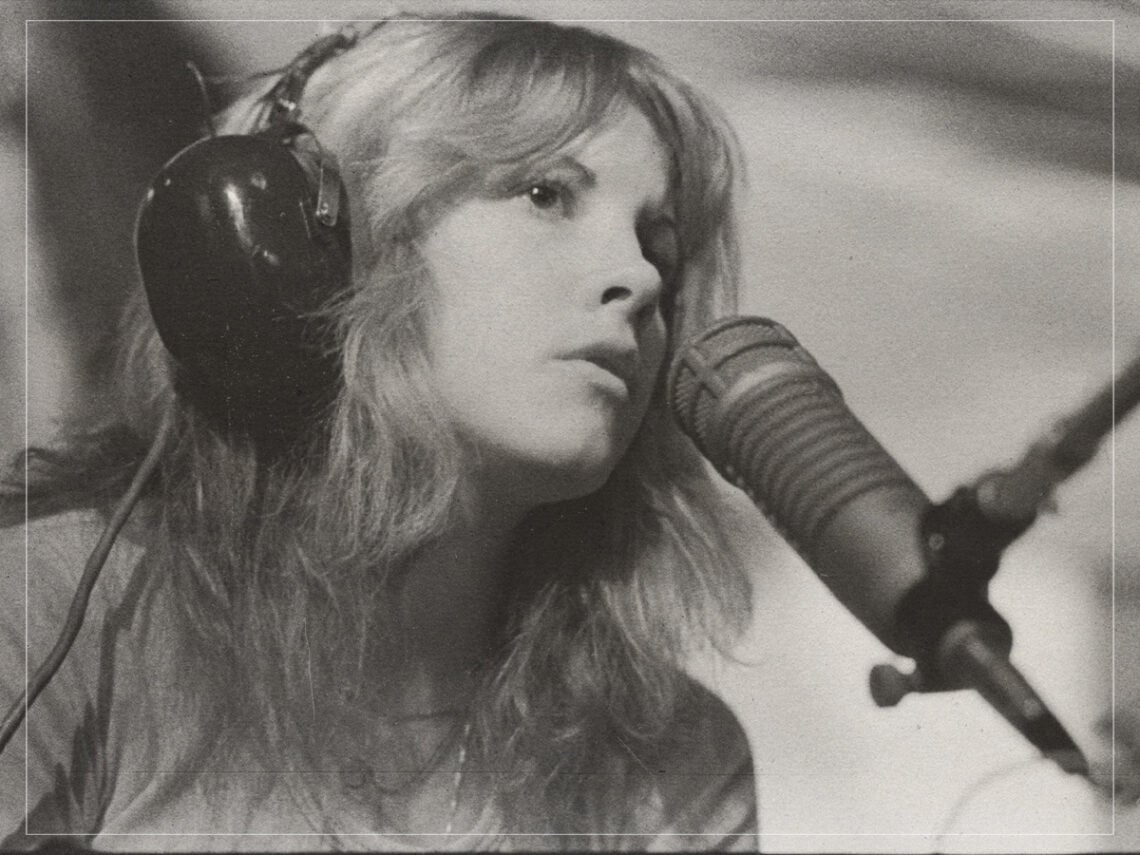
(Credits: Far Out / Stevie Nicks)
Fri 24 April 2026 16:47, UK
The whole appeal of Stevie Nicks walking away from Fleetwood Mac was to get some of her freedom back.
She had spent years working in tandem with Lindsey Buckingham, but having to see her ex-lover every single day and have to sing songs about their broken relationship would make any woman want to do literally anything else after a while. And even though Bella Donna got her first major solo smash, she admitted that working on this classic duet almost made her storm out of the studio.
Which is saying something, considering what Nicks had been up against in the past. The whole road to making Rumours was never going to be easy, and when working alongside Buckingham, there was no telling whether things were going to go well or a vocal take could erupt into a verbal sparring session.
When working with Jimmy Iovine on her first solo record, though, she found her footing outside of the band’s shadow. A lot of the songs still relied on a simple basis, but listening to the way that she worked off of Don Henley on ‘Leather and Lace’ or sang with raw passion on ‘After the Glitter Fades’ made everyone see a bona fide superstar in the making whenever she started singing.
Part of that emergence came from the way Nicks began to redefine her role in the studio. No longer one voice among many, she had the space to shape songs around her own instincts, leaning into a more direct and personal style of performance. There was still a collaborative element, of course, but the balance had shifted, allowing her personality to sit firmly at the centre of the music rather than orbiting around someone else’s vision.
 (Credits: Far Out / YouTube Still)
That freedom also brought a different kind of pressure. Without the familiar dynamics of Fleetwood Mac to fall back on, every decision carried more weight, from vocal delivery to the emotional tone of each track. It meant trusting herself in a new way, pushing past old habits and expectations to find something that felt entirely her own. In that sense, her early solo work was as much about self-definition as it was about musical exploration.
Despite getting some help from legends like Tom Petty, ‘Whenever I Call You Friend’ with Kenny Loggins is still one of the bright spots from this era. Even though Loggins had become a superstar in his own right outside of Loggins and Messina, hearing him and Nicks trading lines back and forth has all of the beauty of Nicks’s previous duets but with none of the emotional baggage.
That said, that didn’t mean that it came easy when it was time to record. If Buckingham was known for being a perfectionist in the studio, Loggins could give him a run for his money, usually making Nicks perform take after take until he got the right feeling when he heard it on the playback.
Nicks had been a workhorse throughout her time in Fleetwood Mac, but going back to this kind of gruelling studio work was the last thing on her mind, saying, “That was a discipline thing. I call him Slave-Driver Loggins. He cracked the whip on me for two days to get that particular performance. And I was downright angry at points where I was going, ‘I’m not going to do this.’ He said, ‘Yes, you are.’ He’s a real good producer, Kenny, he got exactly what he wanted. When it was done, and I left, I was knocked out.”
That kind of tension wasn’t exactly new for Loggins, either. Since Loggins and Messina were recording in the same studios Fleetwood Mac were, there were moments where the duo could be seen arguing outside the vocal booths, including one time when Messina tempted fate by saying that Loggins would never make it without the pair of them together.
Still, Nicks has seemed to have moved on from that type of studio discipline. She is more than willing to go the extra mile if the song needs it, but looking back on some of her biggest peaks as a solo artist, it’s about capturing a moment rather than slaving away at the song two lines until they’re perfect.
ADD AS A PREFERRED SOURCE ON GOOGLE 