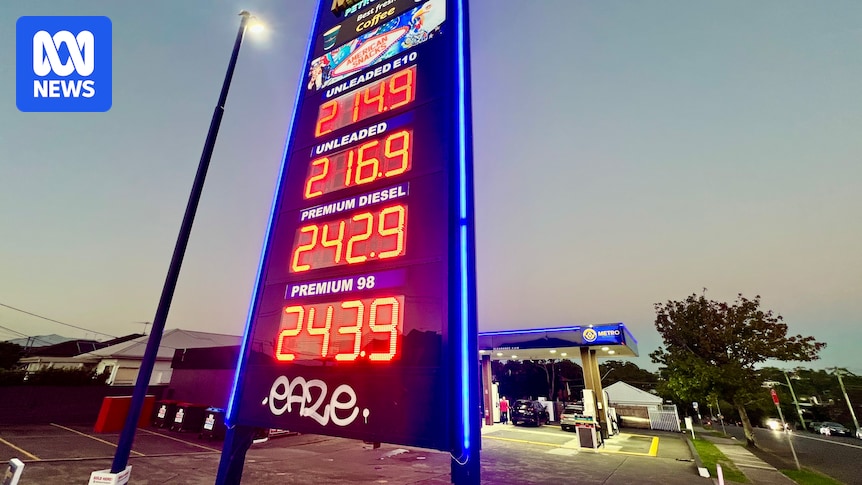
Why are borrowers penalised for high inflation when it’s not domestic demand pushing up inflation, it’s the war in the middle east ??
– Ian Wright
With the latest inflation reaching 4.6% it’s being reported that the reserve bank will most likely raise interest rates. Why? Aren’t rising fuel costs having the same effect on consumption that higher interest rates would have? Isn’t this a double whammy for Australians? Doesn’t make sense to me.
– Brad
Can you explain why, if inflation is being driven by fuel and is therefore technically outside the discretion of every day Australians, the Bank will also raise interest rates? How is double slugging the same audience going to fix inflation resulting from geo political events?
– Claire
Does the RBA give any weight that inflation is being caused by cost of living goods, and not discretionary spending? It seems harsh that rates will rise because of inflation that is not caused by optional spending, just punitive for costs required day-to-day.
– Sam
With many people already cutting back on non-essential spending and struggling to meet the rising costs of essential spending, how will raising interest rates help slow inflation and reduce the cost of living? Are our economic controls now ineffective and any attempt to use these controls now creating more hurt to our already struggling families?
– T S
Why do mortgage owners always take a hit from inflation? It feels unjust when they are the ones who have to take care of inflation by rate rises.
– AJ
Thanks to everyone who is reading the blog today and sharing your comments — a bit of a theme coming through in many.
And they are similar to questions that came through in March, in the wake of the RBA’s second rate hike this year.
I attempted to answer some of them at the time, using some of RBA governor Michele Bullock’s reasoning she provided at the press conference in March.
Firstly, how do higher interest rates bring down inflation?
The Reserve Bank raises the cash rate to increase borrowing costs for Australian households and businesses, through higher interest rates on their loans.
By changing how much cash is available to spend, by making it more expensive to borrow money, that influences people’s behaviour and, therefore, the demand in the economy.
And when demand drops, prices should go down, in theory.
After this year’s rate hike, households with variable home loans have been left paying between tens and hundreds of dollars more on their monthly minimum repayments — that’s money they don’t have to spend elsewhere.
If businesses have fewer people willing or able to buy their goods or services then they will be less able to keep increasing prices, even as their own costs may be rising.
But since for many households and businesses fuel isn’t an avoidable expense, and if people are likely to cut back their spending elsewhere if they are spending more on their home loan and petrol, does the RBA need to raise rates again?
That’s a question that’s difficult to answer without a crystal ball and one the RBA’s rate-setting board grappled with last month, over two days of what Ms Bullock described as “robust” discussion.
In March, the RBA governor highlighted that the RBA would have needed to raise interest rates anyway, even without the oil price shock.
“Inflation was already too high, reflecting the fact that demand is outstripping supply,” Ms Bullock said after the last rate hike.
What about the argument that the higher fuel costs would’ve done the same job as a rate hike?
“Higher fuel costs will not slow demand enough on their own to address this,” Ms Bullock said.
Since March, the fuel excise cut has also seen petrol prices come back down, as the flow on effects start to be felt more broadly, for example, rising milk prices.
Today’s data showed the trimmed mean, a measure of underlying inflation, was steady at 3.3% over the year to March — showing price pressures remain above the RBA’s target band even stripping out the biggest price moves, like fuel.
That’s enough to have most economists forecast a rate hike on Tuesday.
You can read more of the explainer here: