
When people imagine giant dinosaurs like Diplodocus, dull grey or brown skin often comes to mind. This idea comes from a lack of evidence, not from direct proof.
Dinosaur skin rarely survives fossilization, and color fades long before their bones turn to stone, but a recent study offers fresh insight.

Fossilized skin from young Diplodocus dinosaurs shows tiny structures linked to color. This discovery gives the first real clues about the skin color and overall appearance of sauropod dinosaurs when they ruled Earth 150 million years ago.
Determining dinosaur colors
Color in animal skin, hair, and feathers comes from pigments and structures inside the skin. One key pigment is melanin, which forms inside microscopic packets called melanosomes.
The shape, size, and arrangement of melanosomes affect color. In birds, long melanosomes often create black shades, while shorter or rounder ones create brown tones.
Flat and disc-shaped melanosomes can reflect light and add brightness or shine. Scientists have used these patterns to recreate the colors of feathered dinosaurs.
Large plant-eating dinosaurs like Diplodocus lacked feathers, so color research remained limited until now.
Rare fossil site in Montana
The fossil skin came from the Mother’s Day Quarry in Montana, USA. This site dates back to the Late Jurassic period, about 150 million years ago.
The quarry stands out because it preserves young sauropod dinosaurs – not just their bones but also skin impressions. Environmental conditions played a big role in preservation.
Dry weather likely caused the bodies to dry out before burial. Later, mud and debris covered the remains, sealing the skin in place. This process helped scales keep their shape and surface details.
The fossil skin belongs to juvenile Diplodocus dinosaurs. Young individuals often face greater danger from predators, so skin features like color and pattern may have helped survival.
Diplodocus skin with color clues
Researchers studied the fossil skin using scanning electron microscopes. This tool allows scientists to see objects smaller than a grain of sand. The images revealed two main layers inside each scale.
The top layer formed from clay minerals that replaced original skin material during fossilization. Beneath this layer sat a darker, carbon-rich layer. Carbon often points to organic material, including melanin.
Within both layers, scientists found tiny impressions shaped like melanosomes. These impressions matched the size and shape of melanosomes seen in living animals.
The surrounding sediment lacked similar shapes, strengthening the idea that the structures came from skin, not dirt.
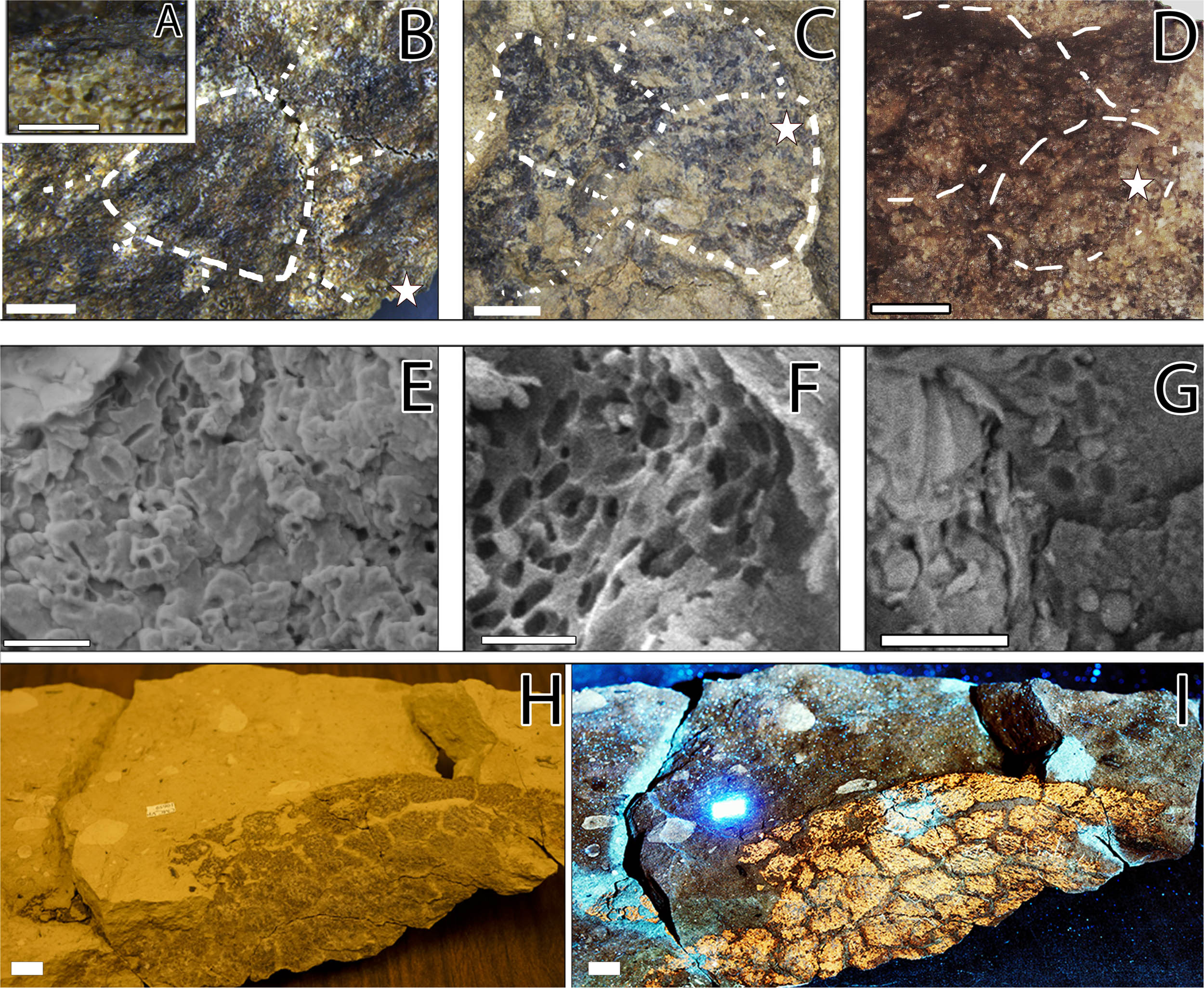 Sampled fossilized hexagonal scales outlined with dotted white lines, with correlated melanosome impressions and LSF image. Credit: Tess Gallagher/University of Bristol, UK. Click image to enlarge.Two different melanosome shapes
The fossil skin showed two distinct melanosome forms. Most appeared oblong or oval. This shape links to dark colors in modern reptiles and birds.
A second form surprised researchers. Some melanosomes appeared flat and disc shaped. These shapes resemble platelet melanosomes found in bird feathers that reflect light and enhance brightness.
The disc-shaped structures in Diplodocus were smaller than bird versions but still shared key features.
Both shapes appeared together in small clusters rather than spread evenly across the skin. This pattern suggests a speckled or spotted look instead of one solid color.
Deducing dinosaur color patterns
Exact colors remain unknown because living pigment cells no longer exist in the fossil. Still, melanosome evidence allows educated guesses.
Oblong melanosomes suggest dark tones such as brown or black. Disc-shaped melanosomes hint at areas that reflected light differently.
This mix supports the idea of patterned skin. Spots, speckles, or patches may have covered parts of the body.
Such patterns often help animals blend into surroundings. For a young Diplodocus, camouflage could reduce the risk of attack.
Other dinosaurs with preserved skin, such as Psittacosaurus, show complex color patterns used for camouflage. The new Diplodocus evidence suggests similar strategies may have existed among sauropods.
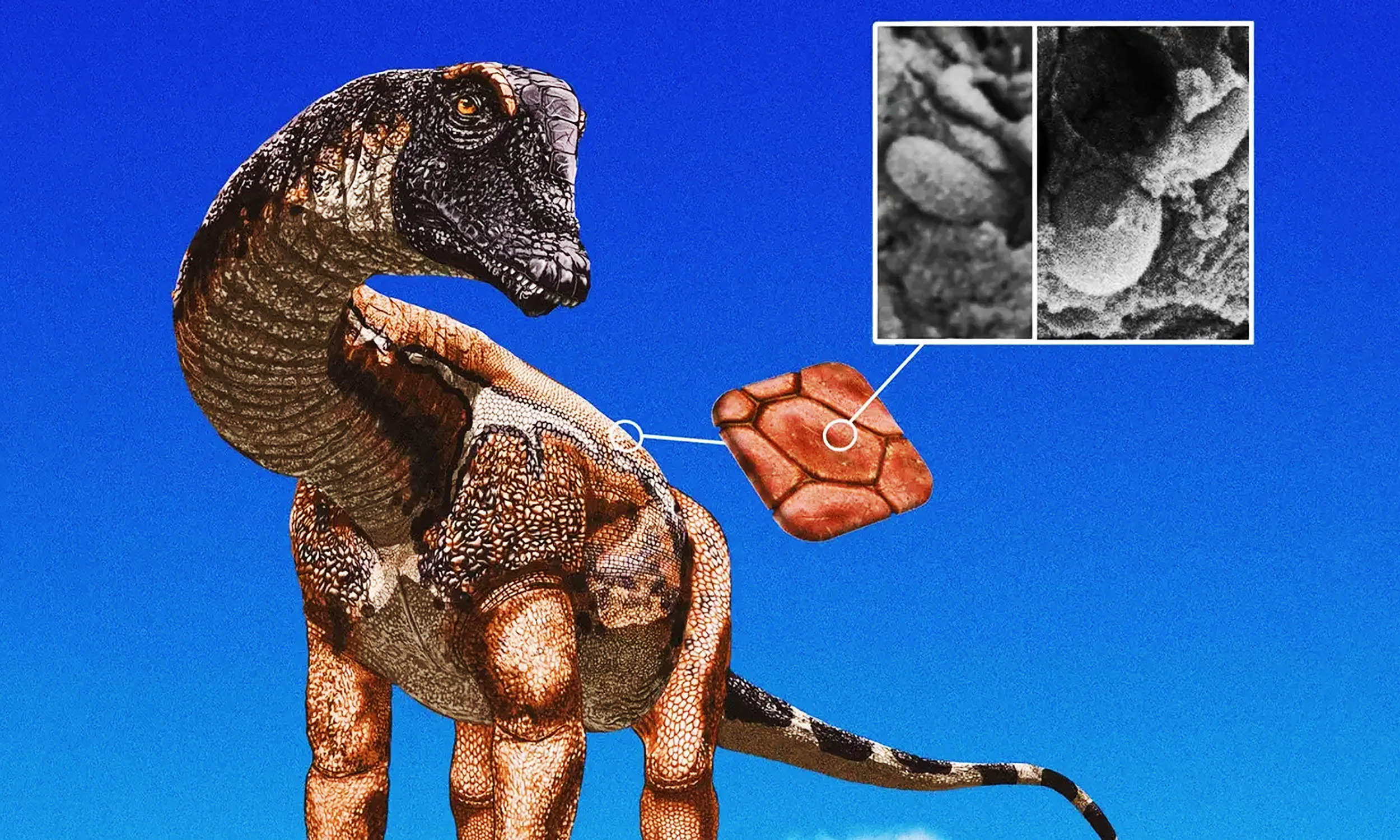 Illustration of a colorful sauropod dinosaur. Inset shows pigmented structures in its skin. Credit: Tess Gallagher/University of Bristol, UK. Click image to enlarge.Studies on dinosaur skin
Earlier studies on dinosaur skin often reported no evidence of color. This research explains why. The fossil skin preserved an outer layer that hid deeper melanosomes.
Surface scans failed to detect pigment because melanosomes sat beneath mineral layers.
Only by cutting cross sections of the skin did researchers reveal the hidden structures. This finding suggests other dinosaur skins may also hold color clues waiting below the surface.
This study provides the first physical evidence of color-producing structures in sauropod skin. It also shows that sauropod skin had layered complexity, similar to modern reptiles.
The presence of two melanosome shapes opens new questions. Sauropods may have had higher metabolism during early life stages. Changes in energy use can affect pigment systems.
The melanosome diversity seen here may hint at such biological traits, although more research is needed.
Clearer picture of Diplodocus
Diplodocus no longer fits the image of a plain, lifeless giant. Young individuals likely displayed textured, patterned skin with dark shades and lighter reflective spots.
This appearance would have made these animals more dynamic and better adapted to survival.
Each fossil discovery adds new details to the story of the Dinosaur Age. Fossilized skin, once rare and overlooked, now helps scientists explore color, behavior, and evolution of dinosaur species
The history of dinosaurs and their time on Earth continues to grow richer and more complex, one microscopic clue at a time.
The research was conducted by experts at the University of Bristol, The Chinese University of Hong Kong, the Foundation for Scientific Advancement, the Cincinnati Museum Center, and the Elevation Science Institute.
The study is published in the journal Royal Society Open Science.
—–
Like what you read? Subscribe to our newsletter for engaging articles, exclusive content, and the latest updates.
Check us out on EarthSnap, a free app brought to you by Eric Ralls and Earth.com.
—–