
It’s not long after you enter Nigo: From Japan With Love that you realise this is not really an exhibition about clothes at all.
Yes, there are the expected grails: original BAPE shark hoodies, rare varsity jackets, stacks of vintage Levi’s and enough deadstock Americana to make a Hypebest weep.
But the real subject is taste itself, and how one Japanese teenager from the countryside ended up quietly rewiring global menswear.

The Design Museum.
The Design Museum’s impressive retrospective, the first major exhibition on Nigo staged outside Japan, sprawls across more than 700 objects drawn largely from the designer’s own archive.
It opens with a reconstruction of his teenage bedroom in 1980s Gunma, complete with magazines, records and vintage finds that shaped his worldview long before the internet flattened taste into algorithmic sludge.
What emerges is a portrait of a genuine polymath rather than simply the founder of A Bathing Ape.

The Design Museum.
Over three decades, Nigo has moved from streetwear disruptor to luxury creative director, from obsessive collector to ceramicist and tea-house designer.
“Fashion is to be enjoyed. You need a bit of variety,” he has said, explaining his recent interest in Savile Row tailoring and traditional menswear.
The exhibition is strongest when it reveals how instinctive much of his empire really was.
“When I started making clothes I didn’t have any money, so I could only make 30 T-shirts at a time,” he says. “They were automatically limited edition.”
There are plenty of museum-grade curiosities along the way: a signed Hiroshi Fujiwara cap, impossibly rare early BAPE pieces, Pepsi cans wrapped in camouflage print and the original Levi’s Type II jacket Nigo bought as a teenager for what seemed like an outrageous amount of money at the time.
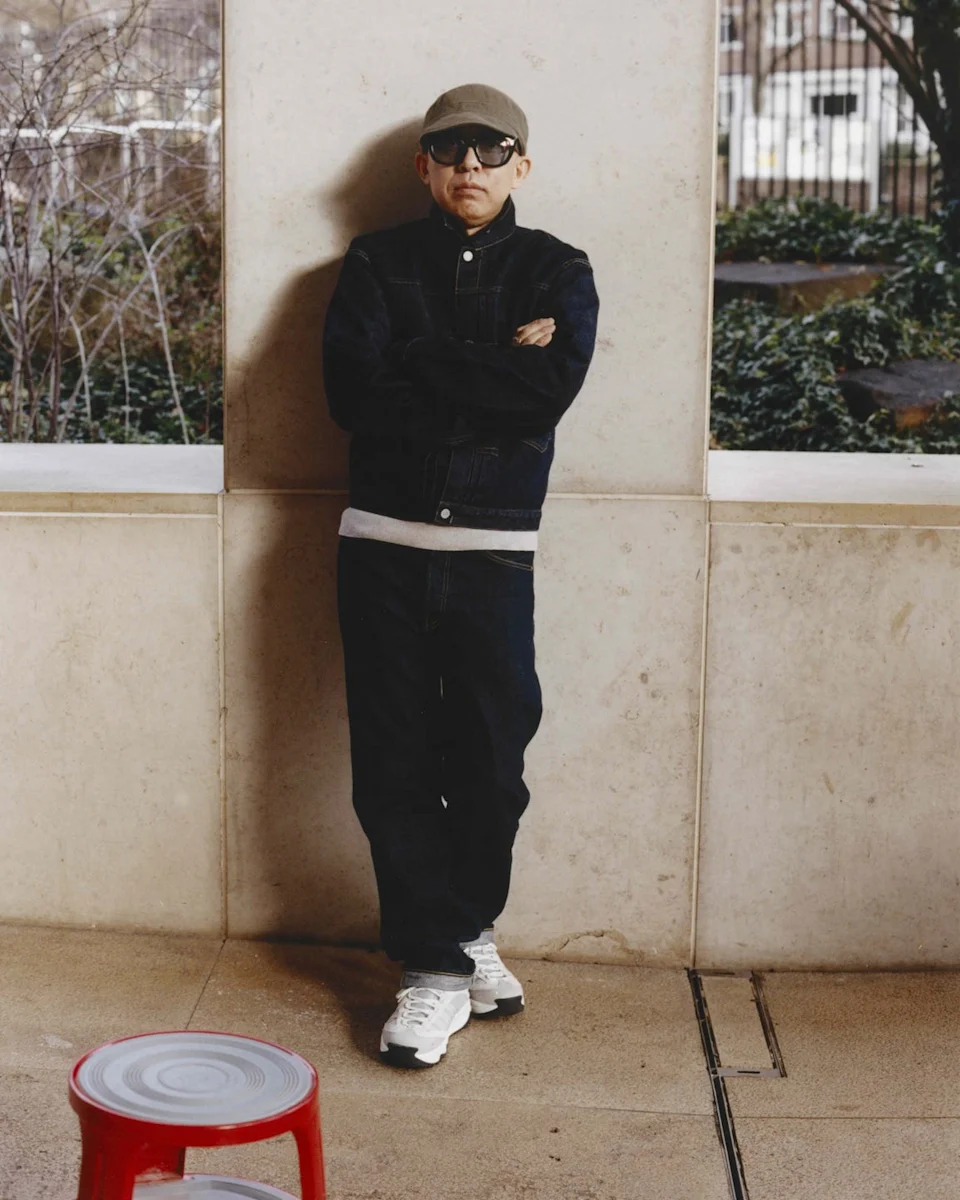
The Design Museum.
The show also traces the chain reaction his work triggered, from Pharrell Williams and Virgil Abloh to modern luxury’s obsession with drops, collaborations and scarcity.
But perhaps the most surprising section arrives at the end.
After decades spent obsessing over Americana, vintage workwear and hip-hop culture, Nigo has recently turned back towards Japan itself, becoming absorbed in ceramics and the rituals of tea-making.
A serene glass tea house filled with his own hand-thrown bowls closes the exhibition on an unexpectedly reflective note.
“I’m still trying to learn about all the different things,” Nigo says.
That curiosity, more than any shark hoodie or sold-out sneaker, is what makes the show such a must-see.