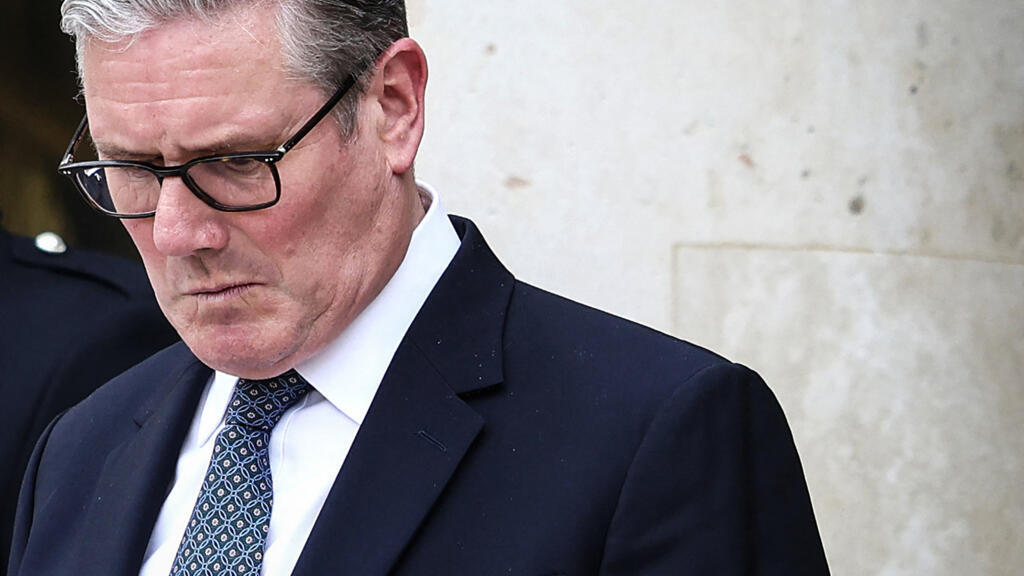
In a major speech delivered in London on Monday, Starmer doubled down on his ambition to place Britain “back at the heart of Europe”, insisting closer ties with the European Union were essential to reviving economic growth, improving living standards and restoring Britain’s influence abroad.
The intervention came as the Labour leader battles mounting unrest within his own party following bruising local election losses across England and setbacks in Scotland and Wales.
Critics have urged him to announce a timetable for his departure, while allies insist replacing another prime minister mid-term would deepen political instability.
“I know I have my doubters and I know I need to prove them wrong, and I will,” Starmer told party activists and lawmakers, pledging to confront the country’s “big challenges” and offer hope to voters “tired of a status quo that has failed them”.
At the centre of his argument was an unapologetically pro-European message that signals a growing confidence inside Labour about revisiting Britain’s relationship with the continent a decade after the Brexit referendum.
Starmer portrayed Reform UK as a threat to Britain’s future, warning the country risked heading down “a dark path” if Farage’s party gained power. In doing so, he sharpened what is increasingly becoming one of the defining political fault lines in Britain – between Labour’s promise of renewed European cooperation and Reform UK’s hardline Brexit nationalism.
The speech also reflected a wider shift in British politics, with growing numbers of voters and businesses concluding that Brexit failed to deliver the economic revival promised by its supporters.
UK PM Starmer vows to fight on after local polls drubbing
Brexit’s fallout returns to centre stage
Ten years after the referendum campaign that transformed British politics, the economic evidence against Brexit has become increasingly difficult for mainstream politicians to ignore.
A series of studies by economists, trade experts and business groups have pointed to weaker growth, reduced investment, labour shortages and declining trade performance since Britain left the EU single market and customs union in 2020.
Starmer stopped short of advocating rejoining the EU, the single market or the customs union – all measures that economists say would deliver the biggest economic gains. But his government has already moved to soften some post-Brexit trade barriers and is pursuing closer cooperation with Brussels on defence, security and energy.
Erasmus returns as UK and European Union find common ground again
He also confirmed plans for a youth mobility agreement with the EU, allowing young Britons to work and travel more easily across Europe for limited periods – a policy strongly opposed by Reform UK.
The prime minister argued that closer European ties were now essential in a world reshaped by geopolitical instability and Donald Trump’s “America First” approach in the United States, which has pushed European nations towards deeper defence and economic cooperation.
While Brexit remains politically sensitive across the UK, most Labour supporters are now strongly pro-European and polling consistently shows public regret over leaving the EU has grown steadily in recent years.
Labour infighting
Despite striking a more confident tone on Europe, Starmer remains under intense pressure at home after the local election results exposed growing voter frustration over the cost of living, sluggish economic growth and Labour’s policy reversals.
Former deputy prime minister Angela Rayner – widely viewed as a potential leadership contender – issued a blunt warning on Sunday that Labour’s current approach was failing.
“What we are doing isn’t working, and it needs to change,” she said, accusing the government of allowing “a toxic culture of cronyism” to emerge and urging Labour to reconnect with its social democratic roots.
Rayner stopped short of openly demanding Starmer’s resignation, but other Labour figures have been less restrained. MP Catherine West – a former junior minister under Starmer – said she would postpone efforts to trigger a leadership contest for now, while still urging the prime minister to step aside by September to allow for an “orderly transition”.
For Starmer, the gamble is that a more openly pro-European message – combined with warnings about Farage and Reform UK – can help Labour redefine the political debate around economic competence, national renewal and Britain’s place in the world.
As Britain approaches the 10th anniversary of the Brexit vote next month, that argument is returning to the centre of national politics.
(With newswires)