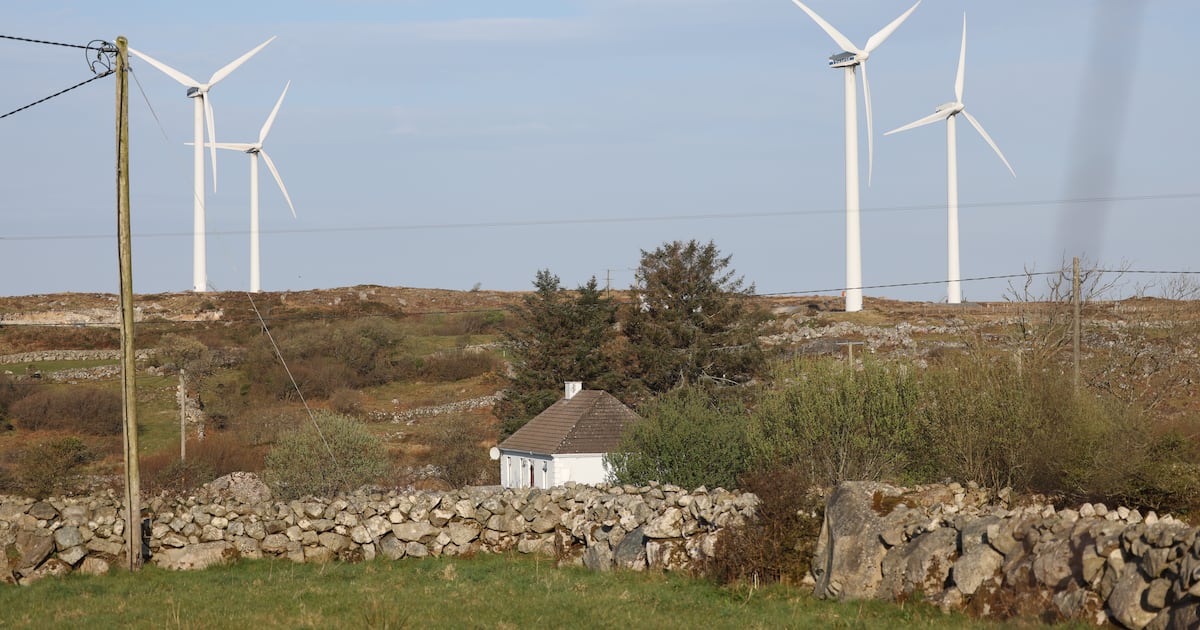
Wholesale electricity prices halved on recent windy days, according to the Climate Change Advisory Council (CCAC), which is pleading with the Government to speed up the supply of renewable power.
It said as long as the country needs to import large volumes of fossil fuels to generate electricity, customers will be denied the chance of cheaper bills.
The price gap on high wind days versus high fossil fuel days was €94 per megawatt hour compared to €179, the independent body said. However, it said the number of new wind and solar farms being developed has slowed and is running behind target.
This view echoes concerns expressed by industry group Wind Energy Ireland, which this week said no new wind farms got planning permission in the first quarter of the year. It said 15 wind projects were awaiting a planning decision for more than a year, with six waiting for more than two years.
The CCAC said there was also not enough grid infrastructure – pylons, cables and transmission stations – to get all the wind power generated to the places that need it.
The result, it said, was that 10 per cent of all wind power last year was wasted because it could not be used in the immediate locality and turbines had to be shut down to prevent network overload.
The council is calling on the Government to classify the grid as critical infrastructure and give related projects an accelerated route through the planning system.
Alex White, the council’s chairman, said Ireland was “unnecessarily dependent” on imported gas and oil, leaving the State exposed to global energy shocks such as that triggered by the Iran war.
“We know renewable energy helps to reduce wholesale electricity prices, but Irish households and businesses will not feel the full benefit unless we build the grid, storage and capacity needed to use that power,” he said.
“Every year of delay leaves Ireland more exposed to imported fossil fuels, volatile global markets and avoidable costs.”
New wind and solar projects capable of generating 800 megawatts of electricity were added to the grid last year, but at least 2,000 megawatts is needed each year to stay on target. Even when additional projects were developed, the council said, they did not displace fossil fuels because of “rising data centre demand offsetting gains”.
Electricity prices are expected to rise in the weeks and months ahead as a result soaring oil and gas prices due to the conflict in the Middle East. The council said greater efforts must be made to support households in energy poverty, with 319,000 customers already in arrears on their electricity bills.
It says the total “underlines the need for targeted energy supports” rather than relying “on broad subsidies that do not address the underlying causes of high energy costs”.
[ ‘Military-industrial complex’ contributing to climate change, says PresidentOpens in new window ]
It recommended that greater help be offered to install rooftop solar panels, which, while growing, still only supply electricity to 5.5 per cent of homes. It also said grants were needed for battery storage to enable households with solar to make more use of their free electricity.