
NEED TO KNOW
-
A minor geomagnetic storm may trigger northern lights visible across parts of Canada and northern U.S. this weekend
-
Dark skies from Saturday’s new moon could enhance visibility of faint auroras for skywatchers in rural areas
-
NOAA recommends checking real-time aurora forecasts and using space-weather apps to track solar activity changes
The cosmos isn’t done putting on a show!
After last night’s aurora lit up parts of the sky, the northern lights could make another appearance late Friday, May 15 into early Saturday, May 16 as NOAA forecasts a minor G1 geomagnetic storm triggered by a fast-moving stream of solar wind escaping from a coronal hole in the sun’s outer atmosphere.
The northern lights (aurora borealis) are a result of geomagnetic storms, which occur when charged particles from the sun collide with gases in the Earth’s atmosphere, creating brilliant waves of light in the sky.
Still, their visibility depends on several factors, including intensity and location.
In other words, Earth is currently being hit with charged solar particles that could trigger ribbons of green and red light across northern skies.
Remember, timing is everything when it comes to the northern lights but when considering Saturday’s new moon, skywatchers will be able to enjoy darker skies, making faint auroras easier to spot.
Lingering solar activity tied to recent sunspots and solar flares could keep geomagnetic conditions active overnight, per NOAA, especially across parts of Canada and the northern U.S. where skies remain clear and dark.
Here’s how, when and where to watch this stellar event.
When will the northern lights be visible?
Aurora borealis
Credit: Andrew Chin/Getty
The best chance to catch the aurora is overnight from Friday, May 15, into the early hours of Saturday, May 16, particularly between late evening and pre-dawn hours when skies are darkest.
NOAA forecasters say active to minor G1 storm conditions are possible due to lingering high-speed solar wind streams connected to a coronal hole on the sun.
The northern lights are typically strongest closer to midnight local time, though activity can fluctuate quickly depending on solar wind conditions.
Where will the northern lights be visible?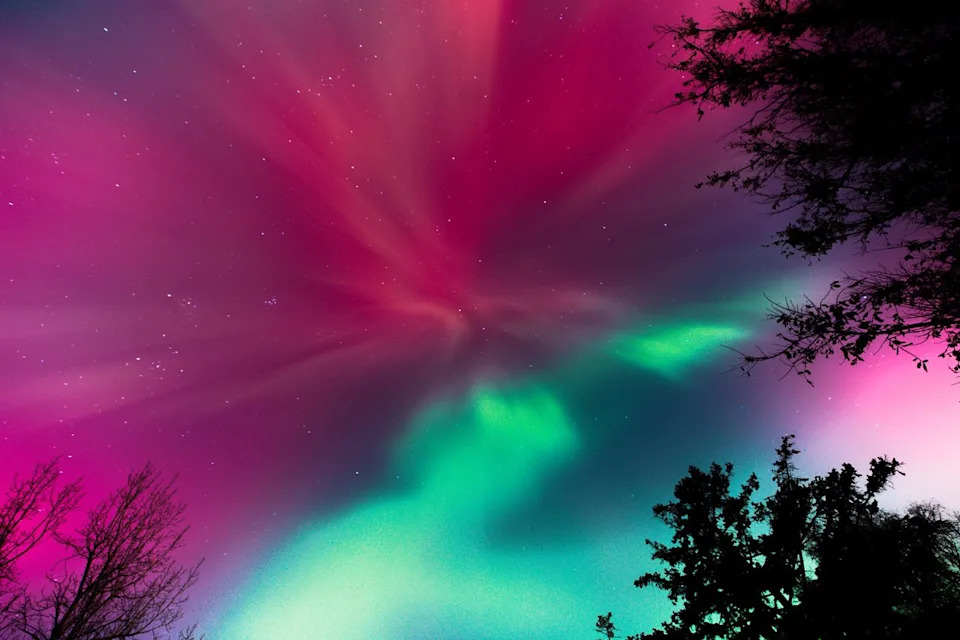
The Aurora Borealis
Credit: Steven Garcia/NurPhoto/Shutterstock
If conditions cooperate and weather permits, the aurora could become visible across parts of Canada and several northern U.S. states, especially along the northern horizon.
Potential viewing areas include Alaska, northern Washington, Idaho, Montana, North Dakota, South Dakota, Minnesota, Wisconsin, Michigan and Maine.
Dark, rural locations away from city lights will offer the best visibility, especially with the moon entering its darkest phase this weekend.
How to watch the northern lights?
Strong geomagnetic activity
Credit: Getty
Find a dark location away from city lights, ideally with a clear view of the northern sky.
The darker your surroundings, the more vivid the aurora colors will appear. Remember to also keep tabs on real-time conditions using NOAA’s 30-minute aurora forecast and space-weather apps that track solar wind and magnetic field changes.
How to photograph the northern lights?
Photographer on Skagsanden beach
Credit: Getty
You don’t need professional gear to capture the auroras… but it certainly helps!
If you’re hoping to photograph the northern lights, you’ll want to keep your setup as steady as possible, since the auroras are best captured with long exposures. But if you have a smartphone handy, that works just fine.
All you have to do is head to your device’s settings and tap the “Night Mode” option or “Pro Mode” with similar exposure times.
Read the original article on People