
The increase in inflation was expected following the massive fuel price increases in April as a result of the outbreak of war in the Middle East end of February.
- The fuel price surge in April led to an expected sharp jump in inflation, to 4%.
- While goods inflation almost doubled, food prices continue to cool.
- The inflation number adds to expectations of an interest rate increase next week.
- For more financial news, visit News24 Business.
The inflation rate has surged to 4% in April, as was widely expected following the massive increase in fuel prices. It is the highest rate since August 2024.
Inflation jumped more than one percentage point from March to April.
The increase of R7.37 per litre in the wholesale diesel price in April has flipped annual transport deflation into inflation for the first time in months, from -2.1% in February and -1.6% in March to 4.9% in April.
Core inflation, which excludes fuel, food and energy, jumped from 3.2% in March to 3.6% in April.
On the upside, food price inflation has seen a significant drop, from 3.2% in March to 2.9% in April. This is despite the almost doubling in general goods inflation, from 1.8% to 3.4%.
The 4% headline number was widely expected.
While inflation remains within the tolerance band of one percentage point above the 3% target of the SA Reserve Bank (SARB), the bank is expected to hike interest rates by 25 basis points next Thursday.
While the bank will be predicting inflation trends up to 18 months ahead, it knows already that fuel prices also increased in May, and that those increases might still be passed on to other goods and services.
There are already signs of inflation pass-through to services, with services inflation increasing from 4.2% in March to 4.6% in April.
Inflation exceeds the tolerance band significantly in the Western Cape, with 4.8% inflation, while the province with the lowest rate is Limpopo, at 3.1%.
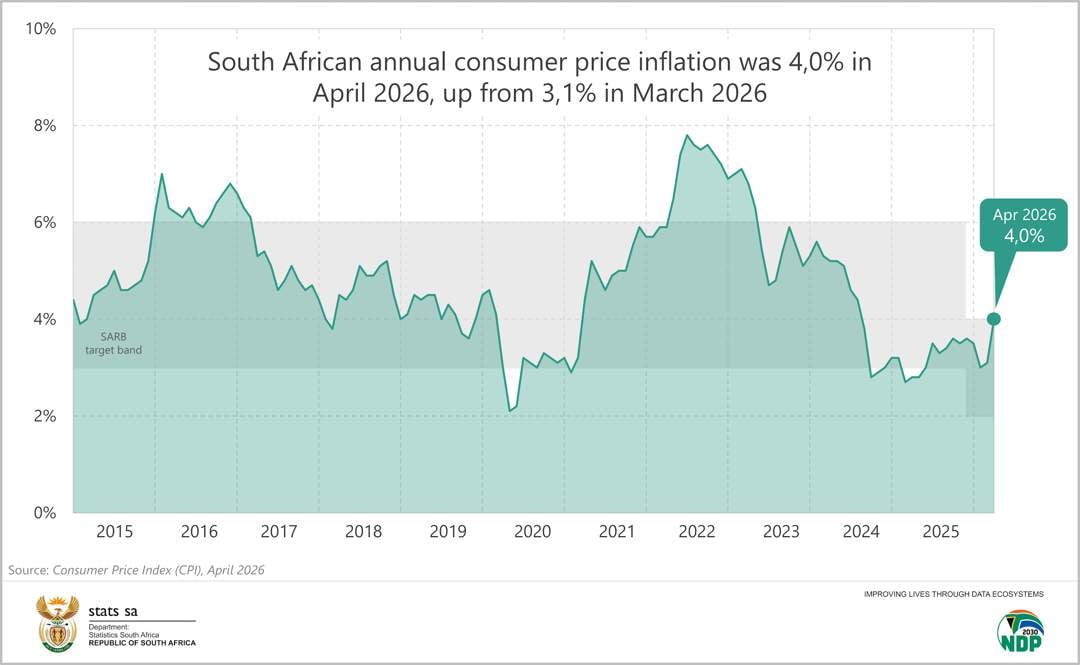
The highest inflation rate in almost two years comes on the back of fuel price increase.
Transport shock
According to Statistics SA, the index for fuel rose by 18.2% from March, the steepest monthly increase since the inflation measurements in its current form began in 2008.
Petrol prices were up by 15.2% and diesel by 35.4% year-on-year. In terms of percentages, it is the fifth-largest increase for 95-octane petrol grade in 50 years.
The fuel price increases affected flight and bus tickets.
The passenger transport services index climbed by 3.1% between March and April, the largest monthly rise since July 2022. Following a 14.3% hike in March, the price of an air ticket jumped by a further 24.5%. This is the largest monthly increase in airfares since March 2008, when ticket prices rose by 32.4%.
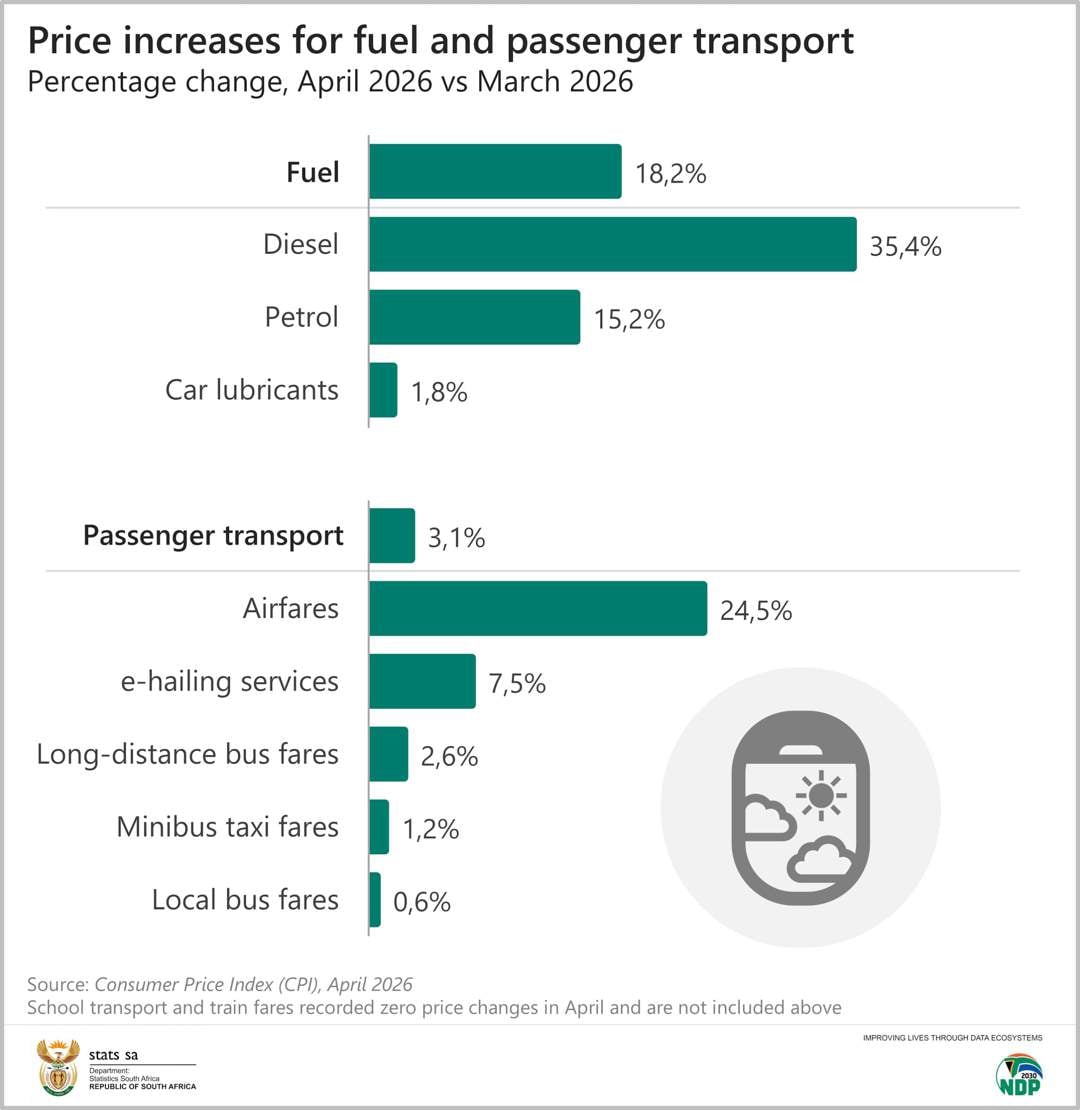
Fuel price increases led to general transport price increases.
Food relief, but not for meat
Inflation for food and non-alcoholic beverages decreased for a third consecutive month, from 3.7% in February and 3.6% in March to 2.9% in April.
Six of the 11 categories recorded lower annual inflation rates. Meat registered the largest decline, easing from 11.6% in March to 9.4% in April.
Beef mince inflation slowed from 22.2% to 15.3% and stewing beef from 22.6% to 8.7%. The rate for pork moderated from 19.5% to 17.7%.
Piggeries have been infected by foot-and-mouth disease, but prices were also affected by the FMD-related surge in beef prices.
READ | ‘Uncharted waters’: Pork industry battles first-ever FMD outbreak in commercial piggeries
The cereal products category recorded its third consecutive month of deflation, according to Statistics SA. White rice, maize meal, porridge, basmati rice and bread flour are now cheaper than a year ago.
The category for milk, other dairy products and eggs recorded its first annual increase since May 2025. The rate was 0.1%, up from -0.5% in March. Powdered milk and eggs, however, are getting cheaper, by -3,4% and -5,8% respectively.

Pork prices have been affected by foot-and-mouth disease spreading to pigs.
Newsletter
Daily
SA Money Daily
The biggest business, economic and market news of the day.