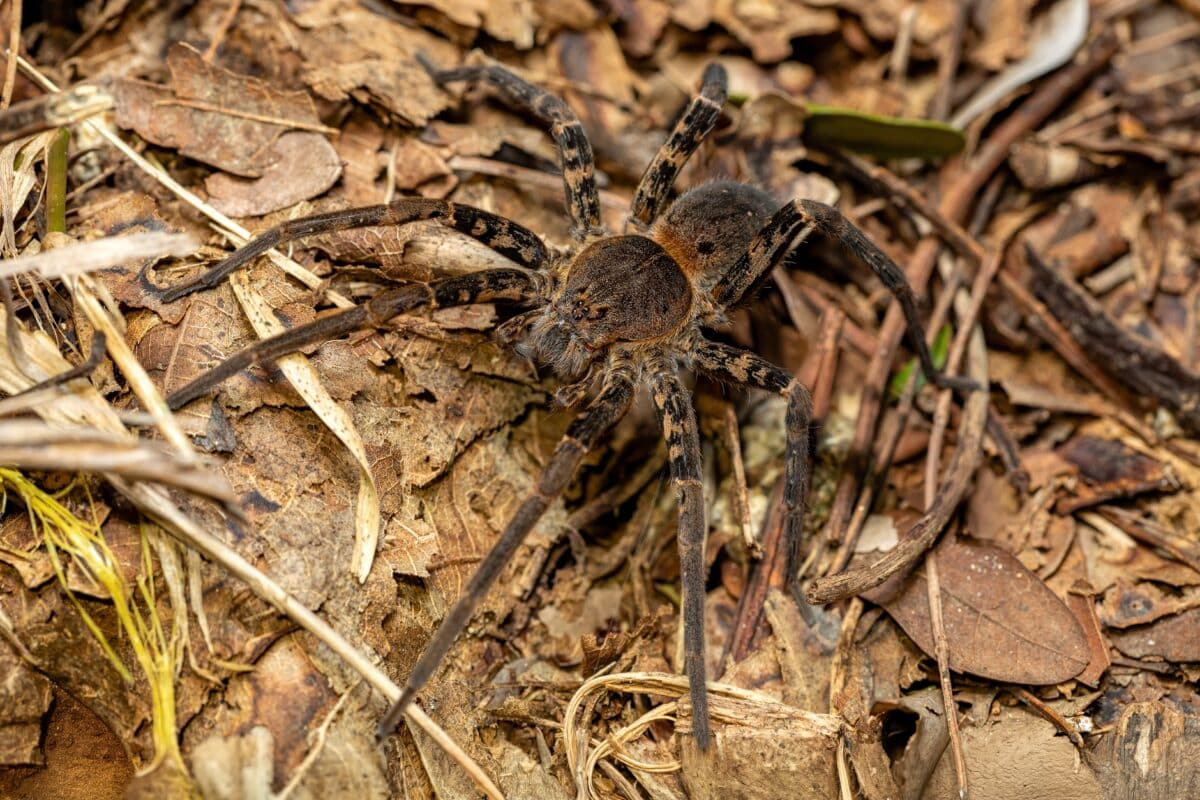
A giant funnel-web spider, named Hemsworth, has been recognized as the largest of its kind ever recorded by the Australian Reptile Park. Found in Newcastle, about 120 kilometers north of Sydney, this spider stretches an impressive 9.2 cm (approximately 3.6 inches) from foot to foot. This discovery has sparked interest across the globe, particularly as the funnel-web is one of the most venomous spider species in the world.
Hemsworth: A Record-Breaking Spider
According to CNN, the funnel-web spider (Atrax robustus) is a well-known species in Australia, notorious for its fast-acting and potentially deadly venom. Hemsworth, however, stands out from the rest, not just for his size, but for the story behind his name. Staff at the Australian Reptile Park were initially taken aback by the sheer size of the spider, thinking it was a female at first due to its unusually large dimensions. However, a closer inspection revealed that Hemsworth was, in fact, a male.
At 9.2 cm, Hemsworth breaks the previous size record held by Hercules, another funnel-web spider who measured 7.9 cm. While the average size of these spiders typically ranges from 1 to 5 cm, with females usually larger than males, Hemsworth defied the norms. “Hemsworth, he’s different. He is the biggest spider,” remarked Emma Teni, the park’s spider keeper, in a video posted on Facebook.
Why Hemsworth Was Named After the Hemsworth Brothers
The choice of the name “Hemsworth” was both fitting and symbolic. Named after Chris, Liam, and Luke Hemsworth, three of Australia’s most famous actors, the spider’s name highlights its towering presence among its peers. As Emma Teni explained, “This spider was just so big in comparison to his peers, it reminded me of Chris Hemsworth and his brothers, and how they tower over the average person.” The name pays homage to the towering stature of the Hemsworth brothers, reflecting the spider’s dominance in the world of funnel-web spiders.

Credit: Australian Reptile Park
Why Hemsworth is a Lifesaver?
One of the reasons for the heightened attention Hemsworth has garnered is his role in antivenom production. The venom of male funnel-web spiders is significantly more potent than that of females, being approximately six times more venomous.
This makes Hemsworth an invaluable asset for the Australian Reptile Park, as the venom can now be milked and turned into life-saving antivenom. “We can only milk the male funnel-web spiders, because of the presence of the atracotoxin in their venom,” said the park’s spider keeper.
Funnel-web spiders are infamous for their deadly venom, which was responsible for the deaths of 13 people before an antivenom was introduced in 1981. Since then, no fatalities have occurred due to funnel-web bites, thanks to the widespread use of the venom to produce effective treatments.
The Public’s Role in Funnel-Web Spider Conservation
As the breeding season for funnel-web spiders approaches each year, the Australian Reptile Park urges residents to be cautious when spotting these creatures. The park encourages local communities to calmly collect both the spiders and their eggs if found, ensuring that these spiders can be used to produce further antivenom.
With a rapidly growing population of funnel-web spiders in and around Sydney, this proactive approach is essential for maintaining the supply of antivenom and preventing future fatalities.
Hemsworth, Not the Largest Spider in Australia?
Despite his impressive size, Hemsworth is not the largest spider species in Australia. That title belongs to the whistling spider, a species of tarantula known for the distinctive noise it makes when provoked. These spiders can grow to a body length of 6 cm (around 2.36 inches), but their leg span can reach an incredible 16 cm (about 6.3 inches). While the funnel-web is notorious for its venom, the whistling spider takes the crown when it comes to sheer size.