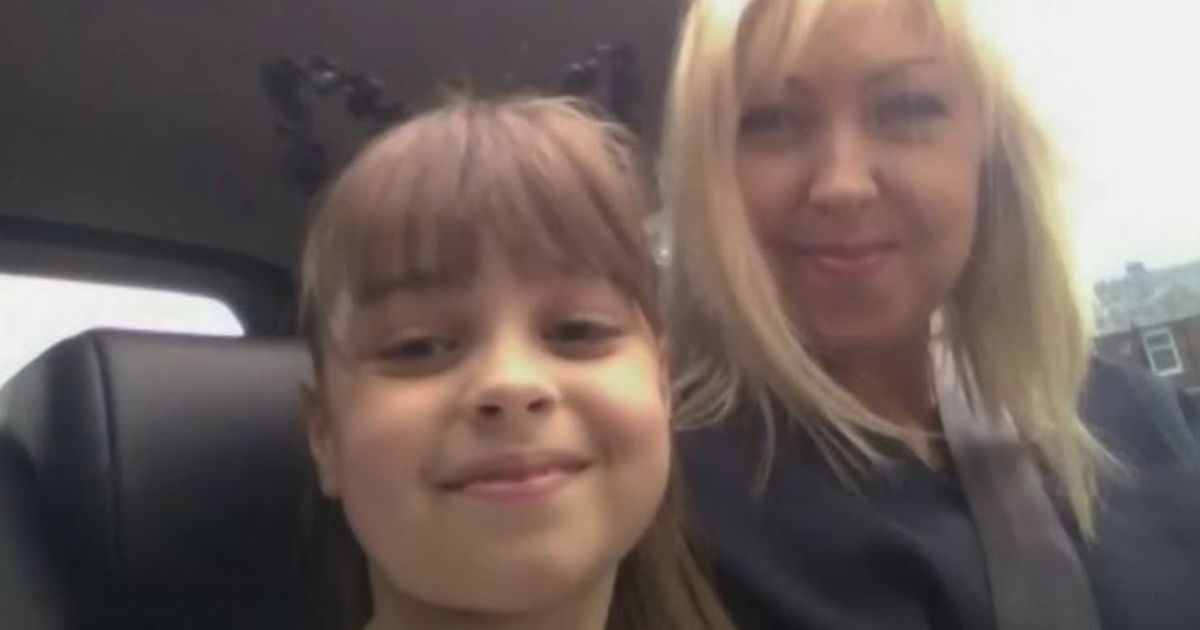
Lisa Roussos owes her life to hospital ‘miracle workers’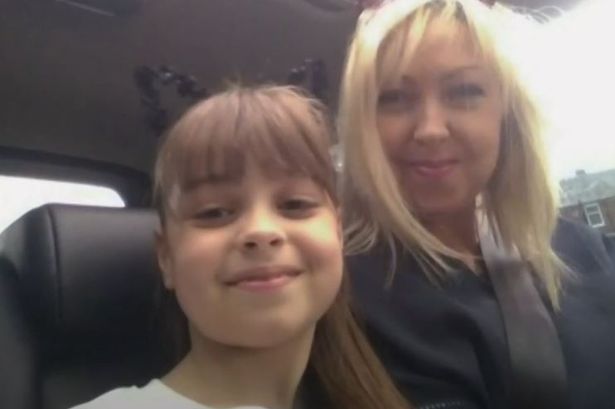 Saffie-Rose Roussos’ last selfie taken with her mum, Lisa, as they drove to the Ariana Grande concert at Manchester Arena
Saffie-Rose Roussos was the youngest victim of the Manchester Arena suicide bombing – she was just eight years old. The senseless loss of such a young life has come to be one of the defining tragedies of that awful night.
There are many others who might also have died but for the remarkable work of medical staff all over Greater Manchester.
One of those is Saffie’s mother, Lisa, who had taken her daughter to watch Ariana Grande that night, like so many other parents with kids obsessed by the American singer.
For the first time, nearly eight years after the attack on May 22, 2017, Lisa has spoken about the remarkable work of the top vascular surgeon who saved her life, Mark Welch, and how she and her husband Andrew battle each day to keep the memory of Saffie alive.
After the blast, Lisa slipped into unconsciousness and wouldn’t come out of her coma for six weeks when she learned the devastating news that Saffie was dead.
The fact Lisa was alive, had all her limbs and had not been paralysed – she would later find out – was because of the work of top vascular surgeon Mark Welch who was famous among colleagues at Wythenshawe Hospital, not only for his medical expertise and skill but also because he liked to play Deep Purple during his operations.
When Lisa had been airlifted into Wythenshawe Hospital, her chances of survival were reportedly rated at around fifteen per cent. If she did survive, there was a 90% chance she would be paralysed from the neck down because of the bolt in her neck.
Another nut was said to have come within millimetres of her heart, nearly killing her on the spot.
It was a minor miracle she didn’t die right there at the arena and it was another miracle that she was saved later at the hospital by Mr Welch.
“Lisa is alive,” Welch cautiously told Lisa’s husband Andrew after his remarkable surgery, rather understating his achievements. He’d also saved her leg and prevented her from being paralysed although she was not yet out of the woods.
The amazing details of that surgery have been revealed for the first time in a book the pair have written, Saffie, with investigative journalist David Collins.
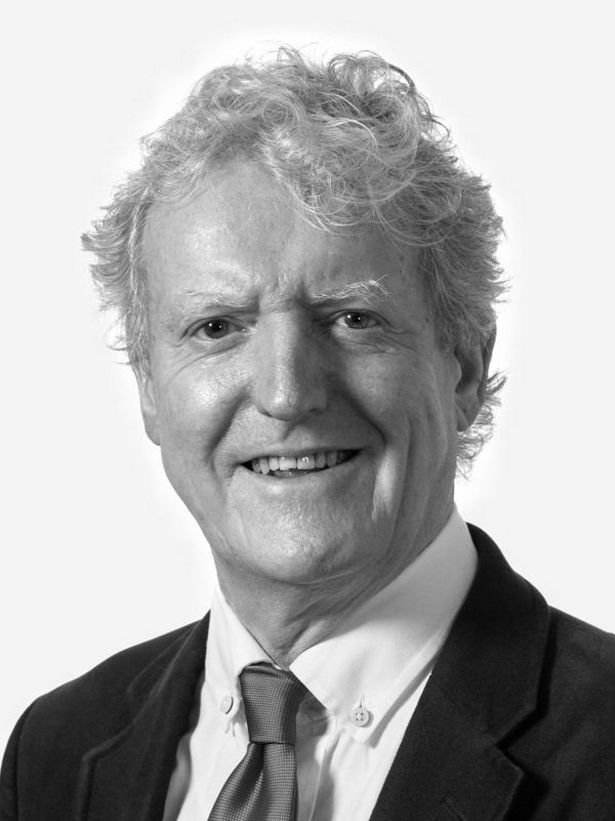 Vascular surgeon Mark Welch(Image: Mark Welch)
The blood flow into Lisa’s left lower leg had been blocked, which meant that even if she survived the leg may have ended up being amputated.
Welch and his team worked for six hours through the night from 1.30am to free that blockage and save her leg. The surgeon inserted a silicon tube between the two ends of the severed artery to allow blood to flow. He then removed a healthy section of damaged vein from the same leg and used it to repair the artery.
Some of the theatre nurses had reportedly never before witnessed the ‘reverse vein graft’ procedure in which he harvested the vein and turned it upside down so it could work in the repaired artery. Blood only flows one way through a vein.
Lisa’s doctors also faced other critical problems. One of the nuts from Abedi’s bomb had ended up at the heart sac, the protective layer around the heart, and one centimetre from the heart itself. She had come within millimetres of being instantly killed in the blast. Another nut had lodged in the back of her neck, putting her at risk of being paralysed.
The couple heaped praise on the work of Mr Welch and hand surgeon Professor Vivien Lees who operated on Lisa subsequently seven times.
“They are miracle workers as far as I’m concerned,” said Andrew in a frank interview with the Manchester Evening News in which he and Lisa said co-writing the book had brought them some comfort in keeping Saffie’s memory alive.
Saffie was just five metres from the seat of the explosion and was tended to at the scene by a t-shirt seller Paul Reid, off-duty nurse, Bethany Crook, along with police officers and first-aiders contracted by the Arena.
She was moved on a makeshift stretcher to the Trinity Way exit of the venue where a police officer flagged down an ambulance before she was taken to Royal Manchester Children’s Hospital.
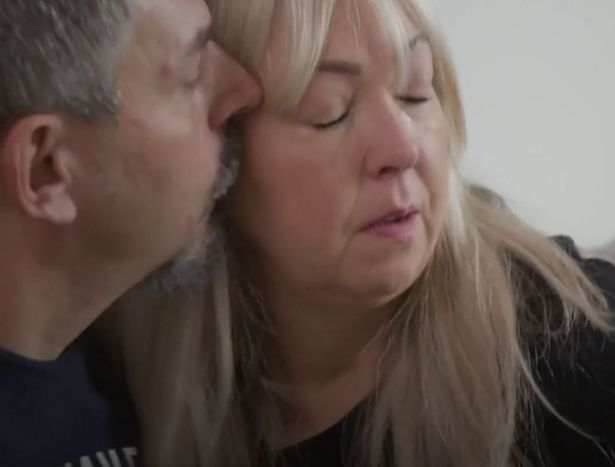 Saffie-Rose Roussos’ parents, Andrew and Lisa, the moment they saw the last selfies taken by their daughter, retrieved from her phone.
She arrived at Royal Manchester Children’s Hospital at 11.23pm, some 53 minutes after the blast, but was declared dead at 11.40pm after she went into cardiac arrest.
Andrew had been with their son Xander in Manchester city centre when the blast went off. He had been due to pick up his loved ones at the end of the concert and spent a terrible night attempting to find out what had happened to them.
He drove to Manchester Royal Infirmary where he waited until 2.45am when he learned his wife had been taken to Salford Royal Hospital, and he drove there, only to find out his wife had been airlifted to Wythenshawe Hospital. When he arrived there at 7am, he learned Lisa had undergone emergency surgery, was in a coma and may end up paralysed. He admitted he ‘broke down’.
Andrew still had received no word about Saffie. He gave a detective a photo of her that morning and was told at noon the devastating news that she had died.
Andrew and Lisa say their new book has given them some comfort in keeping Saffie’s memory alive but it has also given them a much deeper understanding of the life-saving work of the medics at Wythenshawe Hospital.
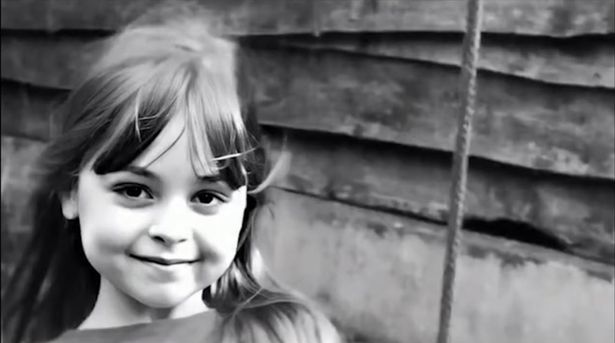 Saffie-Rose Roussos.(Image: Arena Inquiry.)
Mr Welch, said Andrew, had had to ‘think out of the box’ and turned an artery from Lisa’s good leg ‘inside out’ to repair her severely damaged left leg. “You are talking about a vein that’s two-feet long. He turned it inside out so it was compatible. He just tried it. Everybody was just waiting for Lisa to come out of surgery to see if it worked and it did,” said Andrew.
Lisa was equally full of praise. She said: “Do you know what? I found out a lot of things writing the book and one of them was that there was a piece of shrapnel in my heart sac that was just a centimetre from the heart. A little bit further and I would have been dead. And when you are hearing this or reading it, you don’t think it’s about you. It’s almost like it’s about someone else. I can’t explain it. I don’t feel anything. I just feel, oh, ok.
“Saffie is not here. It’s all because of that. It’s almost as if nothing mattered because Saffie is not here.”
Lisa praised the two doctors who had saved and repaired her: “They are the best at what they do.
“It’s life-changing, completely life-changing. The worst case scenario for me is that I could have been paralysed from the neck down and I would have been living for the rest of my life like that without Saffie as well. That would have been unbearable. So it could have been a lot worse. I’m absolutely and utterly grateful and I will never ever be able to thank the hospital staff enough.”
The couple talk about Saffie – their ‘little bundle of energy’ – every day, keeping her alive that way. Lisa said: “We find that helps, from a song that comes on the radio or something you see on TV, we will get a memory of Saffie together. Sometimes it might just be too painful to reflect on it but neither of us would live our lives without Saffie being in it.”
“She’s a big reason for us doing the book. The book has done something to us,” said Andrew, who added it was important to describe to the public ‘who Saffie is as a person rather than a victim of the 22nd of May’.
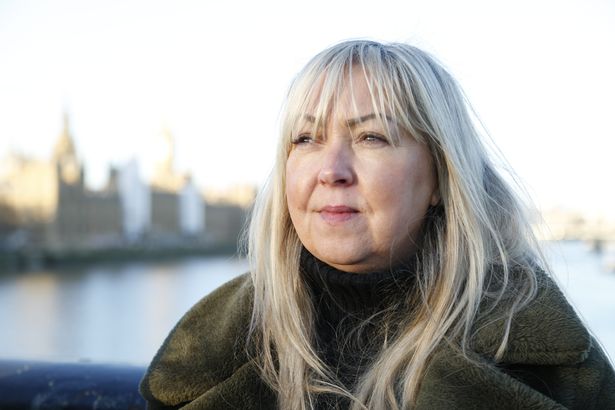 Lisa Roussos(Image: BBC Panorama, Manchester Arena Bombing: Saffie’s Story)
The couple have also launched ‘Saffie’s Smile’, an award scheme to celebrate children who go above and beyond to help others. “When you listen to the stories of the kids when these things happen, you would be surprised how mature they are and it’s incredible what they do. It’s allowed us to positively move forward with Saffie,” said Andrew.
Andrew famously criticised the response of the emergency services when he gave evidence to the public inquiry, particularly MI5 for failing to stop the attack. He told the inquiry he would ‘never forgive’ their failures.
In his interview with the M.E.N. Andrew went on: “For us, writing the book, we didn’t go into it to feel the way we do now. We just wanted to let off our frustrations particularly through the two years of the inquiry. We did have a lot of frustrations and disappointments.
“It was a gruelling process. We wanted to get this out of our system, particularly the cover-ups and the lies and at the same time to move away from Saffie being known as the youngest victim even though she is. But she was so much more than that. We wanted to put her across as a person, which we did.”
He said it was ‘nice’ to re-live memories of Saffie while they were writing the book but when it came to events around the attack it felt like ‘somebody else’s story’ rather than their own. Writing Saffie’s story was ‘important’, he said.
“It has triggered something in us to put all that behind us because it can destroy you,” he said.