Your support helps us to tell the story
From reproductive rights to climate change to Big Tech, The Independent is on the ground when the story is developing. Whether it’s investigating the financials of Elon Musk’s pro-Trump PAC or producing our latest documentary, ‘The A Word’, which shines a light on the American women fighting for reproductive rights, we know how important it is to parse out the facts from the messaging.
At such a critical moment in US history, we need reporters on the ground. Your donation allows us to keep sending journalists to speak to both sides of the story.
The Independent is trusted by Americans across the entire political spectrum. And unlike many other quality news outlets, we choose not to lock Americans out of our reporting and analysis with paywalls. We believe quality journalism should be available to everyone, paid for by those who can afford it.
Your support makes all the difference.Read more
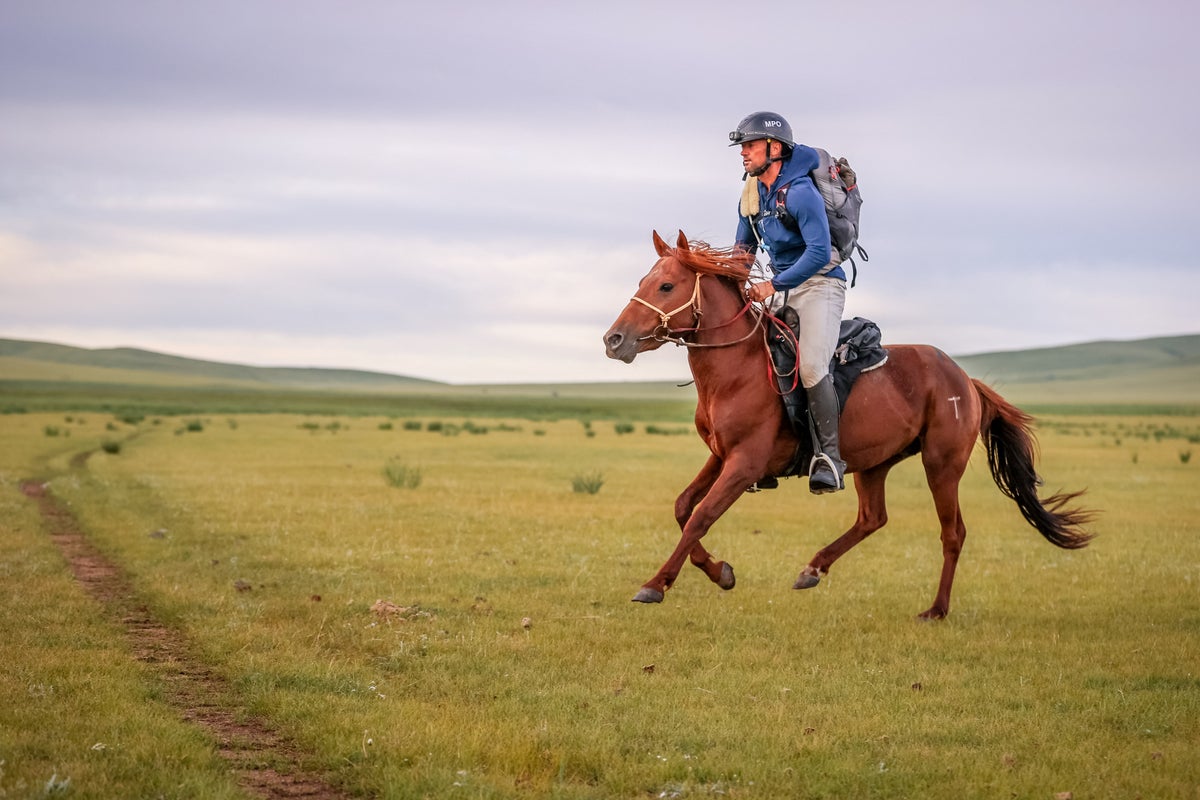
When riding across the Mongolian steppe, one mistake can mean game over. This can be anything from losing a piece of kit to your horse stumbling in a marmot hole while navigating the vast stretches of open landscape.
The wilds of Mongolia are beautiful but unforgiving, as 45 riders discovered earlier this month when they competed in the “world’s toughest horse race.”
The Mongol Derby is not for the faint-hearted, with riders crossing 1,000km (620 miles) of rugged terrain on semi-wild horses, relying on their survival skills, horsemanship and pure grit to reach the finish line.
Out here on the steppe (the wide open plains that characterise this land), the competitors live among local herders, often staying in ger, traditional Mongolian tents, with families. The riders change their mounts every 20 miles at morin urtuu (horse stations) and must deliver the animals in good health at every stage.
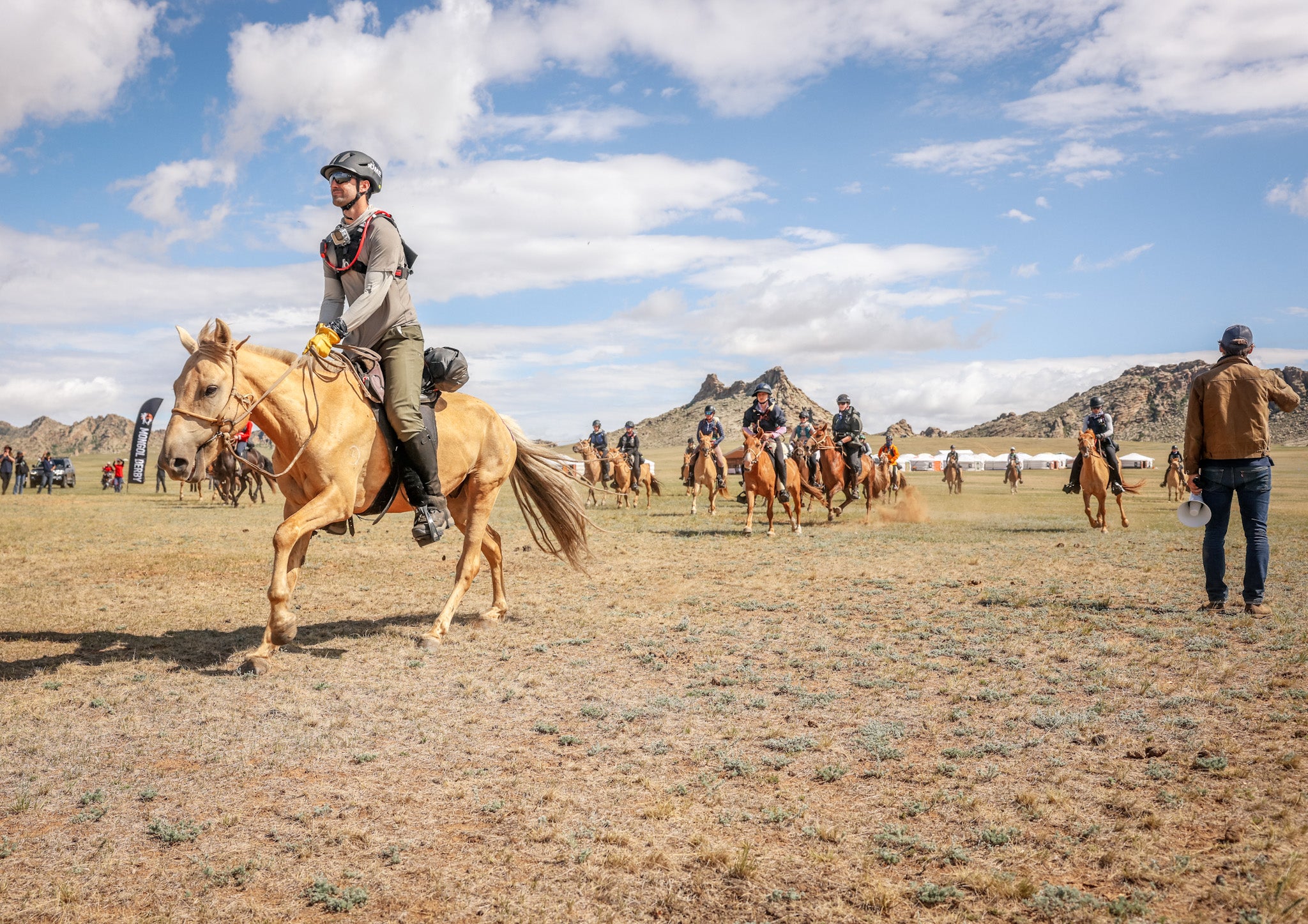
open image in gallery
The Mongol Derby has been running for a decade, but the idea for the race harks back to 1224, when Genghis Khan set up the world’s first long-distance postal transmission system (Kathy Gabriel)
Throughout the race (this year competitors took between 8-10 days to complete the course), riders found themselves cantering through wide open valleys, navigating mountain passes, crossing rushing rivers, and traversing rolling dunes.
Speaking to The Independent two days into the race, competitor Anna Loren described the toll this takes on the body and the level of endurance needed.
“Physically, it’s significantly harder than anything I’ve ever done before,” she said. “You’re riding 12-hour days, and because you have a fresh horse each leg, you can ride quite fast – that is really tough on your body.”
The diminutive Mongol horses are known to be the toughest in the world, living in temperature extremes from -40C in winter to 30C in Mongolian summers. Small but mighty, these sturdy steeds have changed very little in hundreds of years and are known for carrying warriors into battle during the Mongol Empire’s conquests in the 13th century. This strength and fearlessness is still seen now, with the horses able to cover vast distances at great speed.
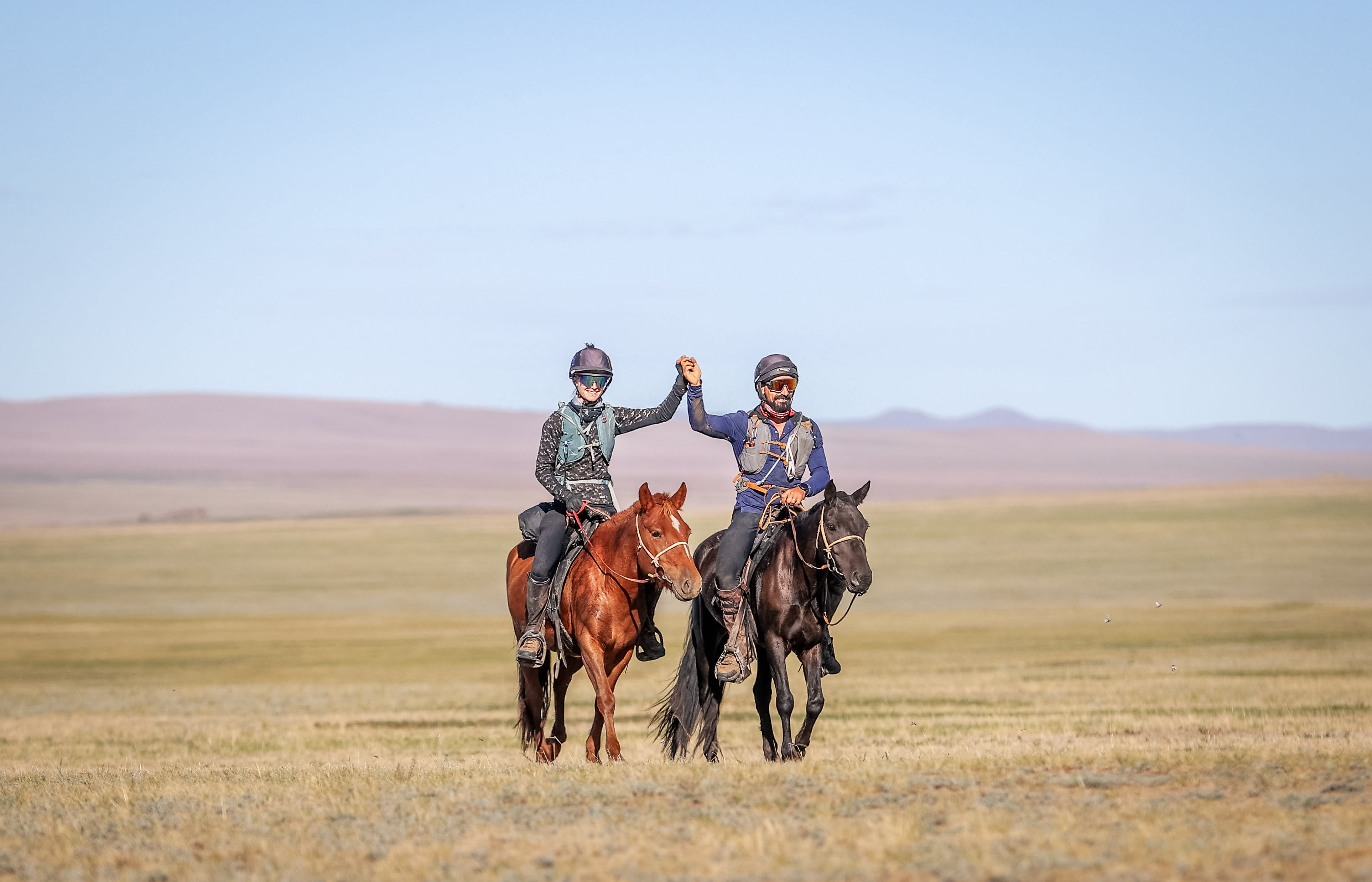
open image in gallery
Throughout the race, riders found themselves cantering through wide open valleys, navigating mountain passes, crossing rushing rivers, and traversing rolling dunes (Kathy Gabriel)
“You’re literally cantering for six miles which really hurts your knees,’ Anna added.
The 30-year-old teacher from London was one of the four winners of the Mongol Derby, crossing the finish line alongside Eisa Al Khayari and Khalifa Al Hamed from the UAE, and Michael Pollard from the USA.
“Gruelling” is how Michael, 44, described his eight days on the steppe. He told The Independent how he spent seven to eight hours in the saddle daily in preparation for the race, along with high intensity interval training to strengthen his core.
However, he says the mental strain of knowing that at any moment your race may be over – that something you do or how your horse responds may force you to retire – was the most challenging element.
.JPG)
open image in gallery
Anna Loren and one of the horses that helped her win the race (Kathy Gabriel)
Anna agrees. “The toughest part is keeping mentally upbeat all the time; you have such highs and such lows,” she said. One of the highs for her was staying in ger, and she said that the kindness and hospitality that welcomed riders at these stops was one of the things that kept her going.
Michael said that, for him, being pushed to these limits was a spiritual, almost religious, experience.
He explained: “There are just so many things that can go wrong, and if you focus on those things you’re just wracked with anxiety all the time, so I started praying constantly and asking god to help me. I’ve never done anything like that in my life and I found it incredibly powerful and spiritual.”
The Mongol Derby has been running for a decade, but the idea for the race harks back to 1224, when Genghis Khan set up the world’s first long-distance postal transmission system. The Mongol ruler and legendary warrior developed a network of morin urtuu that would allow his men to travel on horseback from the capital Kharkhorin to the Caspian sea in just a matter of days transporting messages.
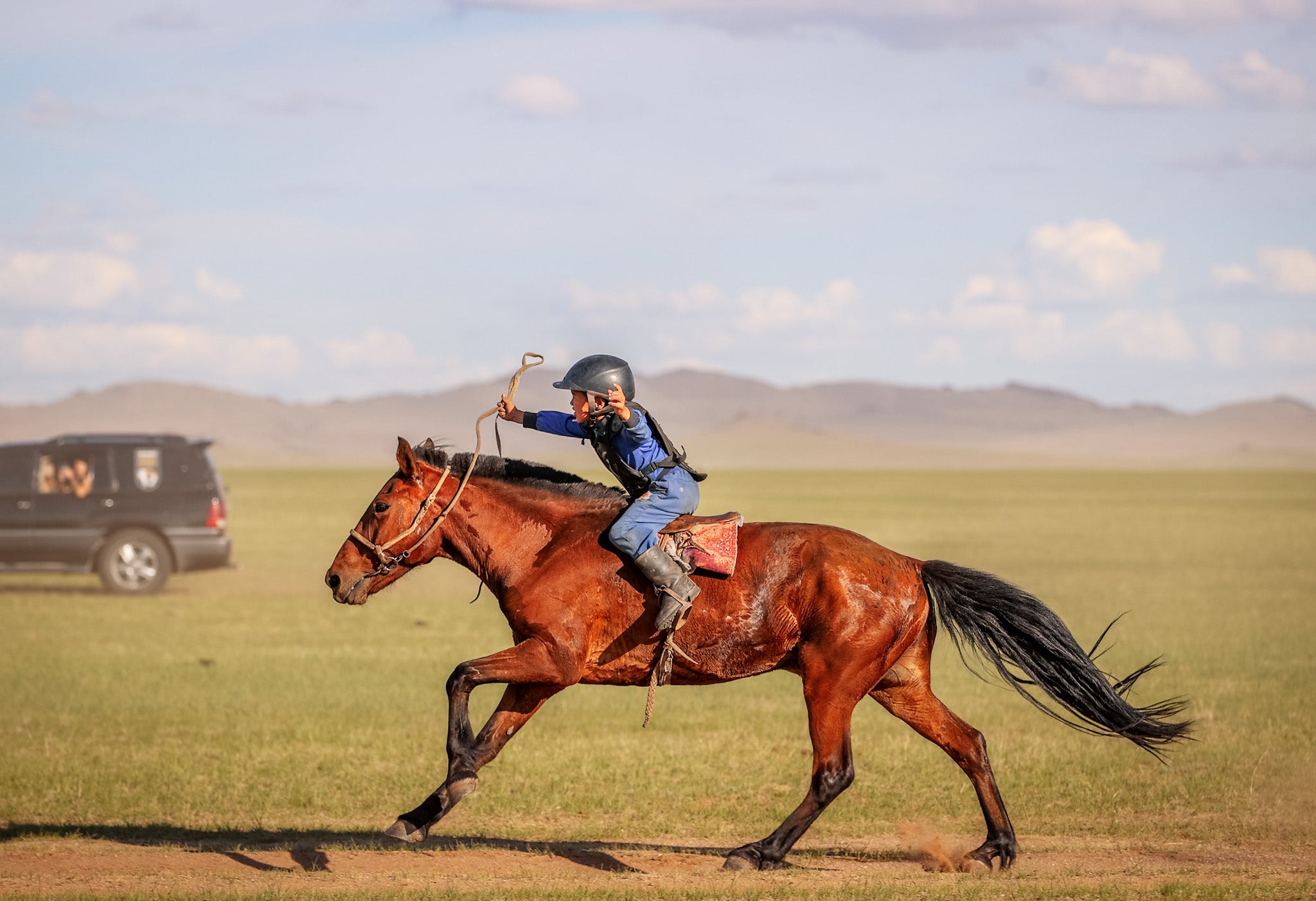
open image in gallery
The diminutive Mongol horses are known to be the toughest in the world, living in temperature extremes from -40C in winter to 30C in Mongolian summers (Kathy Gabriel)
Horses are the lifeblood of Mongolia and are revered in the community. Horsemanship is an important part of the culture, with the animals used for transport and racing, and Michael explained that respecting your steed was key to winning the race. The horses are semi-feral and riders are often thrown from the animals or struggle to control them through certain stages, but at no point can that respect between horse and rider be lost. “They’re sacred here and they’ve been scared in my life as well,” he added.
Rather unusually for a horse race, the Mongol Derby allows joint winners, which is how four riders crossed the finish line at the same time this year.
Michael said: “For all of us to be competing together and to gain the level of respect that we’d rather walk in together than see anyone lose who doesn’t deserve it is really beautiful. I’m really really honoured to have been part of it.”