Andrew Papworth returned to his hometown of Millom in Cumbria after 30 years and found it had barely changed – but that wasn’t necessarily a good thing.
Vita Molyneux Travel reporter and Andrew Papworth
10:33, 06 Sep 2025
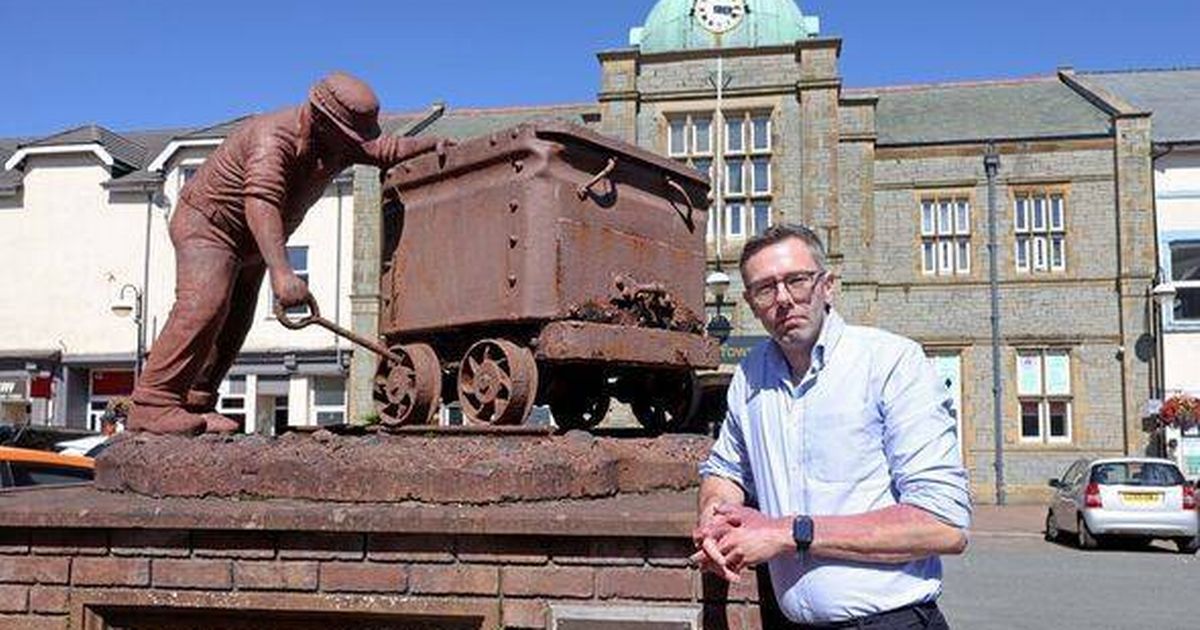
 Andrew Papworth beside a statue of a Millom miner in the town’s market square(Image: Jonathan Buckmaster)
Strolling through the UK seaside town on the fringes of the Lake District where he grew up, a surge of nostalgia and melancholy overwhelmed Andrew Papworth.
The deputy editor of The Express was returning to Millom, a compact town tucked amongst Cumbrian peaks. Whilst it might not be renowned nationwide, it undoubtedly made a lasting impression on Andrew.
He said: “As I retraced my steps from our family home in Seathwaite Close to the bottom of Lowther Road, I came across the infant school that gave me the very best start in life.
“Turning down St George’s Road, I passed Millom Park and the children’s play area, where I spent many hours as a boy. In the thriving town centre, I remembered my mum dragging me round the shops. Further along the road, close to the railway station, was The Bridge Cafe, where I used to pop in for sweets on my walk home from Black Combe Junior School.
“Millom was – and is – only a small town, but as a child it felt like my entire universe. In many ways it was, because like any quintessentially English town, it had everything you needed on your doorstep.”
Built around its steelworks during the 1800s before their shutdown in the 1960s, Millom possessed a powerful sense of pride and belonging. Everyone appeared to know everyone else, and there was a tangible feeling of solidarity.
Andrew said: “It looked exactly the same as when I left in 1995, aged nine, and when I last visited in 2005. And while that brought back many nostalgic memories, it also broke my heart.
“It appears that little investment has been made in Millom since then, whether in new homes, shops or community facilities.
“All I noticed was that the old Safeway is now a Tesco, and many of the shops that had such a strong presence seem to have long gone.”
Speaking to residents, one of their initial remarks is frequently regarding the absence of financial backing for their community.
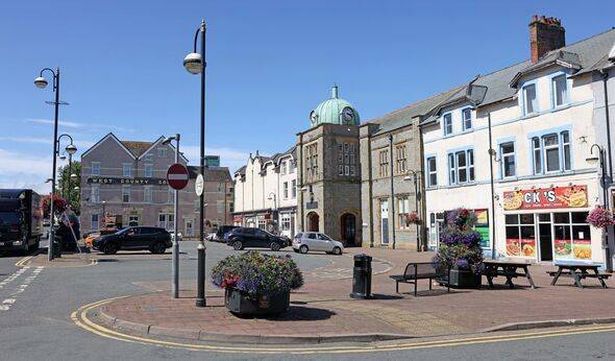 Millom was built around its ironworks in the 1800s(Image: Jonathan Buckmaster)
Andrew said: “It’s a great sadness. By contrast, Canary Wharf in east London, where I now work, didn’t even exist when I was born but has been steadily transformed from barren wasteland into the bustling heart of London’s financial district.
“Of course it’s not really an even comparison, but it feels desperately unfair that some areas of the country have had millions and billions of pounds of investment while a town with such a rich and vibrant history has barely been given a thought.”
Additional contributing elements may also be at work. The historic shipyard in neighbouring Barrow-in-Furness served as a major source of employment for Millom residents.
The elimination of 10,000 positions during the 1990s would have delivered a devastating blow. Cumbria lacked a university until 2007 and for decades, many viewed the shipyard and Sellafield nuclear power station, now undergoing decommissioning, as the sole major employment opportunities.
Countless individuals harbouring dreams of alternative futures must have inevitably departed for elsewhere.
Millom’s position on the north-west coastline also renders the town more difficult to reach.
However, if we can direct funding into even the most deprived areas of this country, surely we can accomplish it in a town gifted with such remarkable natural splendour.
Where Millom has unquestionably flourished is in its community cohesion, which remains as vibrant as ever.
 Nicola Armstrong’s Bloom Room florist shows the very best of Millom(Image: Jonathan Buckmaster)
During Andrew’s exploration on a magnificent Monday afternoon, he spoke with Nicola Armstrong, owner of The Bloom Room on St George’s Terrace since 2012. Her tale represents an exceptional success story – an entirely autodidactic florist who has claimed national honours and displayed her work at London exhibitions.
“From a tiny little town, I’ve gone to a lot of places,” she says – yet she never forgets one of the crucial elements behind her accomplishments.
“I wouldn’t have got where I am without this community,” she reveals. “They’re my biggest cheerleaders.”
During his visit, Andrew also discovered Coordination Group Publishing (CGP), whose colourful and entertaining study materials he depended upon throughout his GCSEs and A levels. It continues to be one of Britain’s leading educational publishers.
Despite many shops closing down, Ferguson’s has stood the test of time, remaining a dependable presence in Millom for 70 years. The owner, Arthur Ferguson, who celebrated his 100th birthday this year, is believed to be the oldest shopkeeper in Britain.
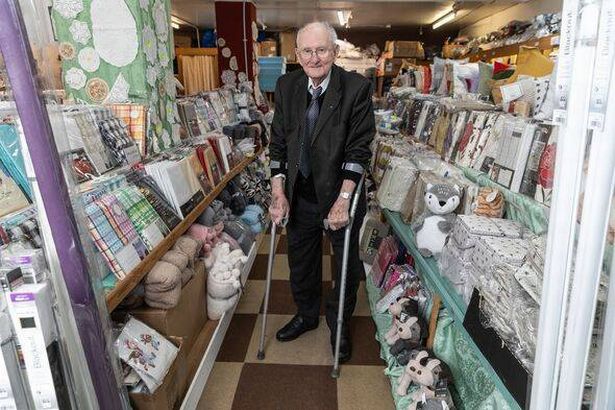 Britain’s oldest shopkeeper Arthur Ferguson(Image: Lee Mclean/SWNS)
Andrew stated: “While I was in Cumbria, I also visited Barrow to see its dramatic transformation as it builds the next generation of nuclear submarines and becomes the beating heart of Britain’s defence.
“I only hope some of the £220million of government funding going into that regeneration for the national endeavour will benefit Millom, even if only indirectly, because this small town and its people deserve only the best.
“Whatever happens in the future, I know that if I come back in another 30 years, Millom’s soul will remain as strong as ever.”