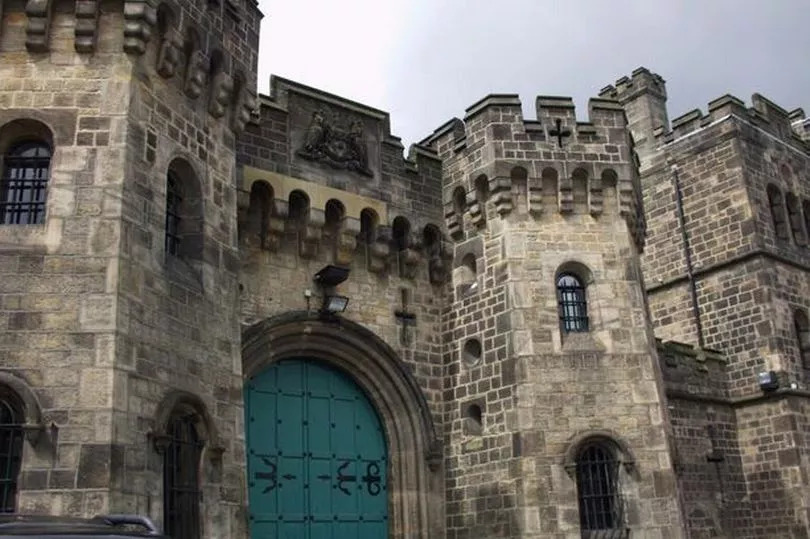
A vulnerable prisoner went unchecked for nearly an hour during a busy period at Leeds prison when 22 emergency bells sounded during a 45-minute period on one landing.
Inmate Brian Burrows, 43, who had a history of self-harm, was assessed as needing three observations per hour but was not checked on between 1.50pm and 2.43pm on the day he was found hanging in his cell. He died five days later, on May 15, 2024. He had a history of drug misuse, anxiety and depression.
One officer stated it had been the busiest day of his career so far. There was one officer responsible for conducting assessment checks on three prisoners on one landing including Mr Burrows.
Assistant coroner Naomi McLoughlin has now released a Prevention of Future Deaths report which she has sent to the governor at HMP Leeds following the death of Mr Burrows, who was serving a six-month sentence for burglary and theft. Mr Burrows was also known as Brian Smith.
An inquest into his death heard evidence prison officers are instructed in training to treat a cell bell as an emergency and not walk past a cell bell when activated for any reason.
The inquest heard evidence there was no guidance given to prison officers by senior officers or management about how to prioritise these tasks in such circumstances. Evidence was heard that no training is given to prison officers about making decisions in such circumstances and how to critically assess which task to prioritise.
The coroner has asked the governor to respond to her concerns by November 4. A report by the Prisons Ombudsman said Mr Burrow was only in prison for six weeks before he took his own life.
His main concern was a historical drug debt, “which appeared to contribute to a deterioration in his mental health,” the Ombudsman said. The Ombudsman said: “My investigation found that staff missed opportunities to assess, communicate and manage Mr Burrows’ risk of suicide and self-harm. They also failed to properly investigate Mr Burrows’ claim that he was under threat or support him appropriately.”
A clinical reviewer concluded that Mr Burrows’ mental healthcare was not equivalent to what he could have expected to receive in the community as he never had a formal mental health assessment or a review of his medication despite being in crisis.
The coroner concluded that Mr Burrows’ death was due to suicide.
Get all the latest and breaking news in Leeds by signing up to our newsletter here.