
I’ve been a productivity app nomad for years. Notion promised me an all-in-one workspace. Obsidian seduced me with bidirectional linking and knowledge graphs. Each time, I’d spend weeks migrating notes, tweaking workflows, and watching YouTube tutorials on how to build the perfect system. Then I’d abandon ship when the next shiny thing appeared.
But for the past two years, I have kept coming back to Standard Notes. It’s an app that’s so unremarkably simple it makes Apple Notes look feature-rich. It’s just encrypted markdown notes. No AI assistant. No collaboration features. No templates marketplace. And somehow, that’s exactly why it works.
In an era where every productivity app is racing to cram AI agents and social features into their interfaces, Standard Notes’ radical commitment to simplicity feels almost subversive. It’s the productivity equivalent of a flip phone in a smartphone world — and I mean that as the highest compliment.
The feature bloat trap
Modern note apps are exhausting
Open Notion today, and you’re greeted with AI assistants, databases, wikis, project boards, and a permissions system complex enough to require its own tutorial series. Obsidian’s plugin marketplace has over 2,500 extensions. These aren’t criticisms of their capabilities. Both are powerful tools. But somewhere along the way, note-taking apps stopped being places to write and became platforms to configure.
I’d spend more time organizing my organizational system than actually capturing thoughts. Should this be a database or a page? Do I need a MOC (Map of Content) for this topic? Which of my seventeen plugins is breaking the mobile sync again? The tools designed to take your productivity to the next level were becoming productivity sinks themselves.
Standard Notes sidesteps this entirely by refusing to play the feature game. When you open it, you get a list of notes on the left and a markdown editor on the right. That’s it. No onboarding flow explaining seventeen different view types. No AI chatbot asking what you’d like to create today. Just a blank note waiting for your words. The app doesn’t care about your productivity methodology because it isn’t built to accommodate any specific one. It’s just a reliable place to put text.
Why boring wins for long-term thinking
Stability isn’t sexy, but it’s essential
Often, the fancy features that attract you to note-taking apps are often the same ones that become abandoned or paywalled later. I’ve watched note apps pivot from local-first to cloud-only, jump on the bandwagon for AI features, seen beloved features moved behind new subscription tiers, and experienced the chaos of companies shutting down entirely. Each time, there’s the scramble to export data, find a new home, and rebuild workflows.
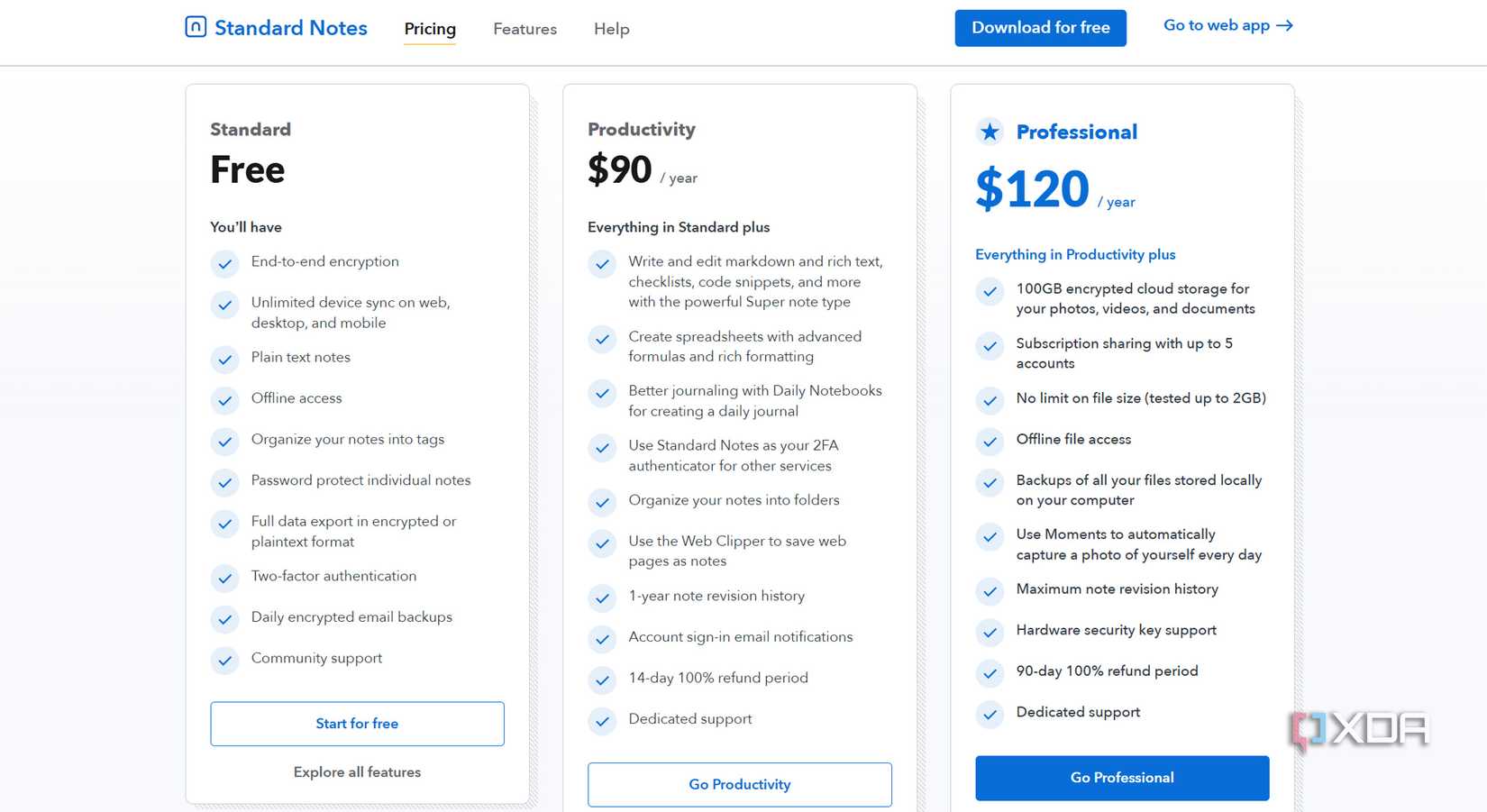
Standard Notes has existed since 2016 with the same core promise: encrypted, private notes that you control. The free tier gives you unlimited notes, tags, and editors across unlimited devices. The Professional plan ($120/year) adds features like automated backups, no limits on file size, and hardware security key support—but crucially, nothing that fundamentally changes how the app works. You’re not paying to unlock the “real” experience; you’re paying to support sustainable development and get some quality-of-life additions.
This boring consistency means my journal entries from 2022 open exactly the same way today as when I wrote them. The notes I’ve used for project planning, article drafts, and personal reflections haven’t been migrated, reformatted, or trapped in a deprecated format. They’re just there, exactly where I left them, in plain markdown that I could export and read in any text editor if Standard Notes disappeared tomorrow. That portability is insurance against the inevitable churn of the tech industry.
What encryption actually means for focus
Privacy as a productivity feature
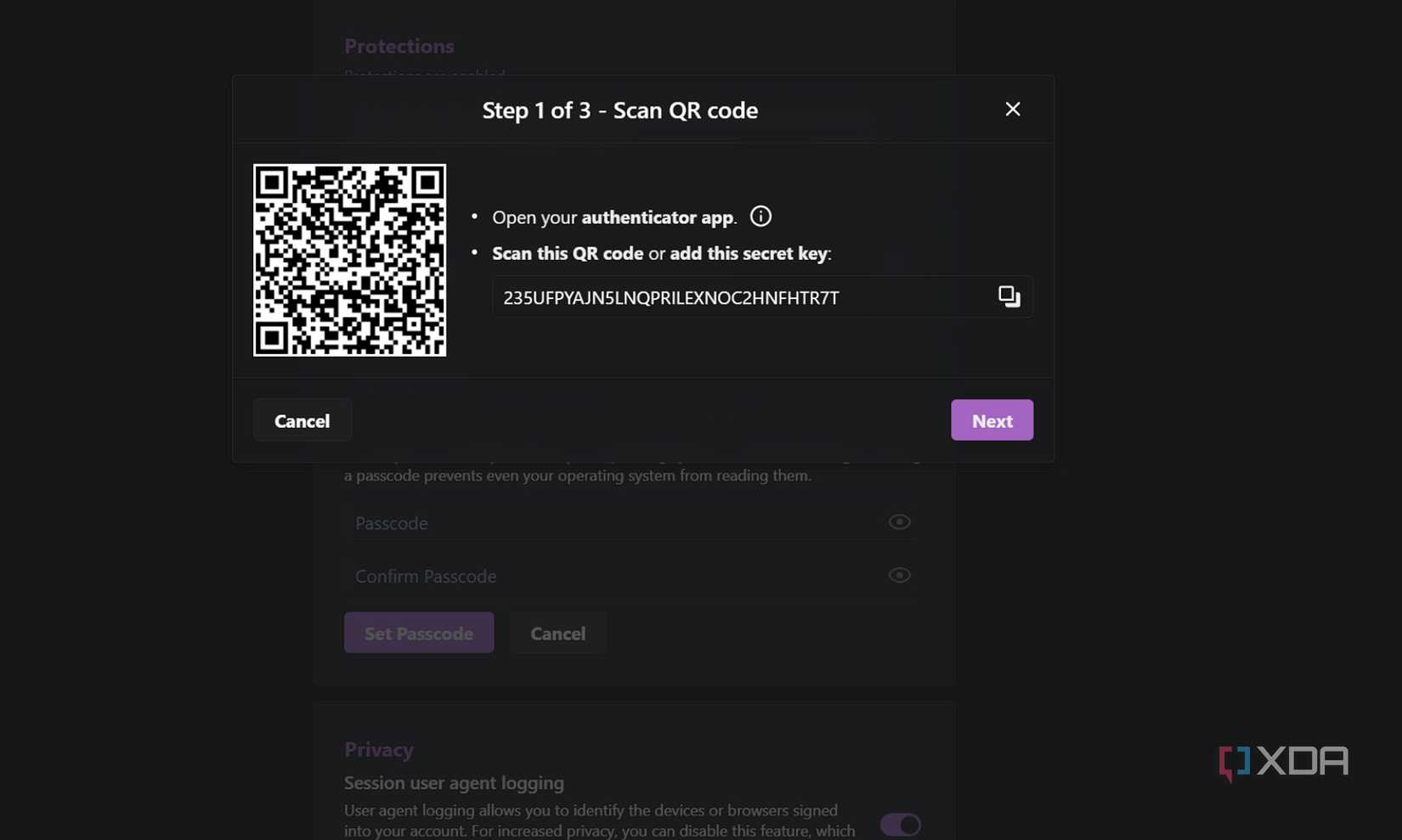
Standard Notes encrypts everything by default as part of its foundational architecture. Your notes are encrypted on your device before they ever reach Standard Notes’ servers. The company literally cannot read your notes, even if compelled by legal request. For a note-taking app, this seems like overkill. Who cares if someone reads my grocery lists?
But knowing my notes are genuinely private changes how I use them. My Standard Notes journal is more honest than anything I’ve written elsewhere. I draft sensitive work thoughts, process difficult emotions, and sketch out half-formed ideas without the nagging background anxiety that someone — a company, an algorithm, a future data breach — might access them. There’s no AI training on my writing style, no algorithm suggesting what to write next based on sentiment analysis.
When Notion launched its AI assistant, I found myself self-censoring personal notes, worried about what data was being processed. In Standard Notes, I write freely because the app’s architecture makes surveillance technically impossible. That psychological safety translates directly into better thinking and more authentic writing.
The minimalist design advantage
Less interface means more focus
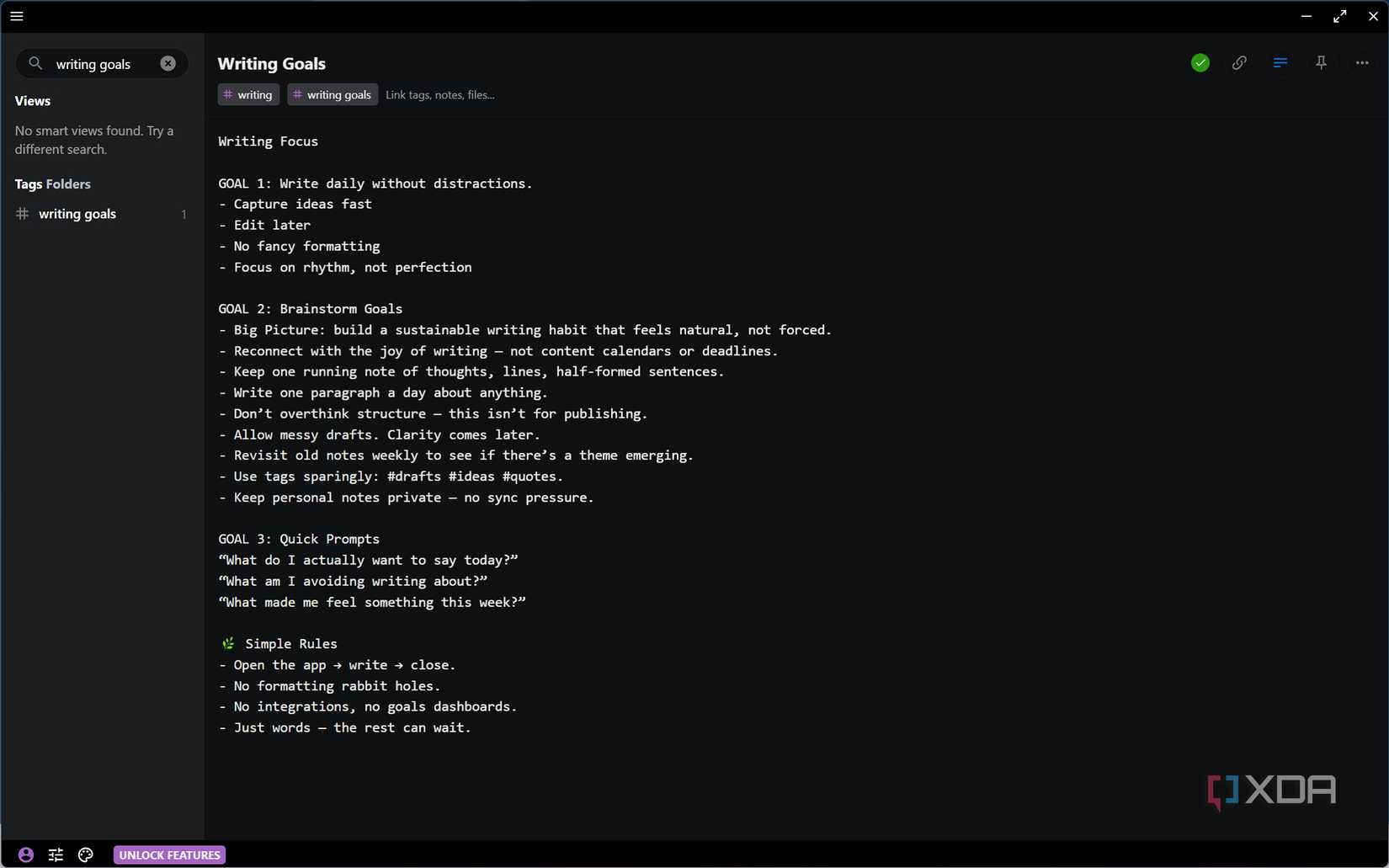
Standard Notes’ interface looks like it was designed by someone who actually writes rather than someone who designs productivity tools. The editor is full-screen by default. There’s no sidebar cluttered with suggested templates or recent updates from shared workspaces. The markdown formatting is absolutely basic on the free plan (no headers, bold, italics), but you can add emojis. The app never assumes you want seventeen different block types.
This Spartan approach eliminates the paradox of choice that plagues feature-rich apps. When Obsidian offers five different ways to link notes, I agonize over which method to use. Standard Notes gives me tags and a search bar. That constraint is liberating. I don’t waste cognitive energy on organizational methodology because the app doesn’t provide enough rope to hang myself with complex systems. I just write, tag it if I remember, and trust that search will surface it later.
The mobile app maintains this discipline. While competitors try to cram their full desktop experience into a phone screen, Standard Notes on mobile is basically a list of notes and a text editor. It’s perfect for capturing quick thoughts or journaling before bed without getting sucked into reorganizing my entire knowledge base.
The ethical business model difference
Sustainability through simplicity
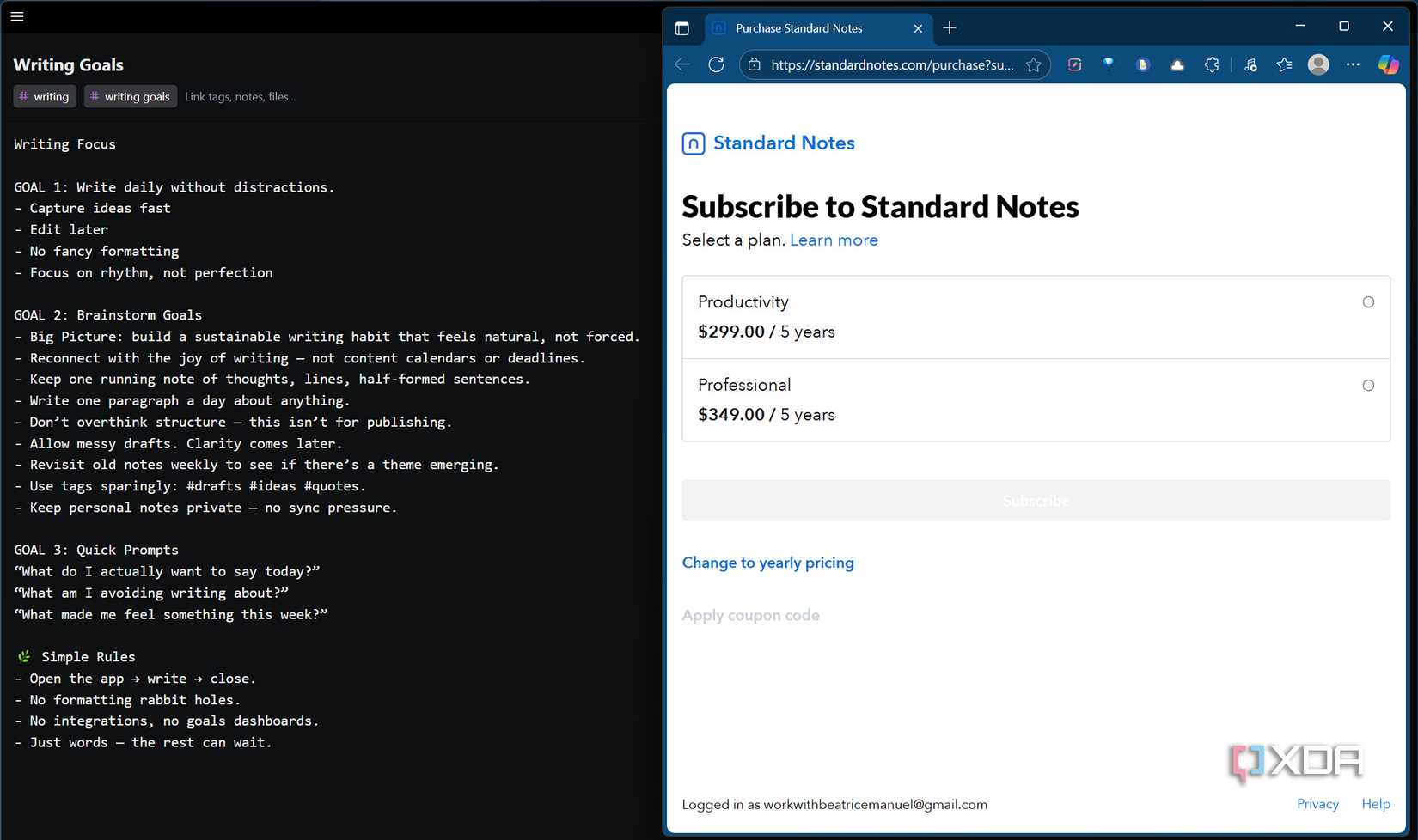
Most note apps follow a familiar trajectory: launch with generous free tiers to build a user base, then either raise prices dramatically or sell to a larger company that changes direction. Standard Notes has avoided this by keeping costs low through technical simplicity. They’re not running expensive AI inference on every keystroke or maintaining complex collaboration infrastructure. They’re essentially providing encrypted storage and sync services with predictable, scalable costs.
The company is also fully independent and profitable. There’s no venture capital funding demanding exponential growth, no pressure to pivot toward whatever’s trendy. This boring stability means the app I rely on today will likely work the same way in five years. For something as foundational as my note-taking system, that reliability is worth more than any flashy new feature.
When boring is exactly what you need
Standard Notes is the way forward
Standard Notes won’t revolutionize how you think or unlock some secret productivity framework. It won’t impress your colleagues or generate AI summaries of your meeting notes. It’s just an encrypted box for your thoughts that works the same way every time you open it. After years of chasing sophisticated note-taking systems, I’ve realized that’s precisely what I needed all along. The most productive tool is often the one that gets out of your way and lets you work.