Rocket Lab launched its sixth mission for the Japanese Earth-imaging company iQPS this afternoon (Nov. 5) from its seaside pad in New Zealand.
You may like
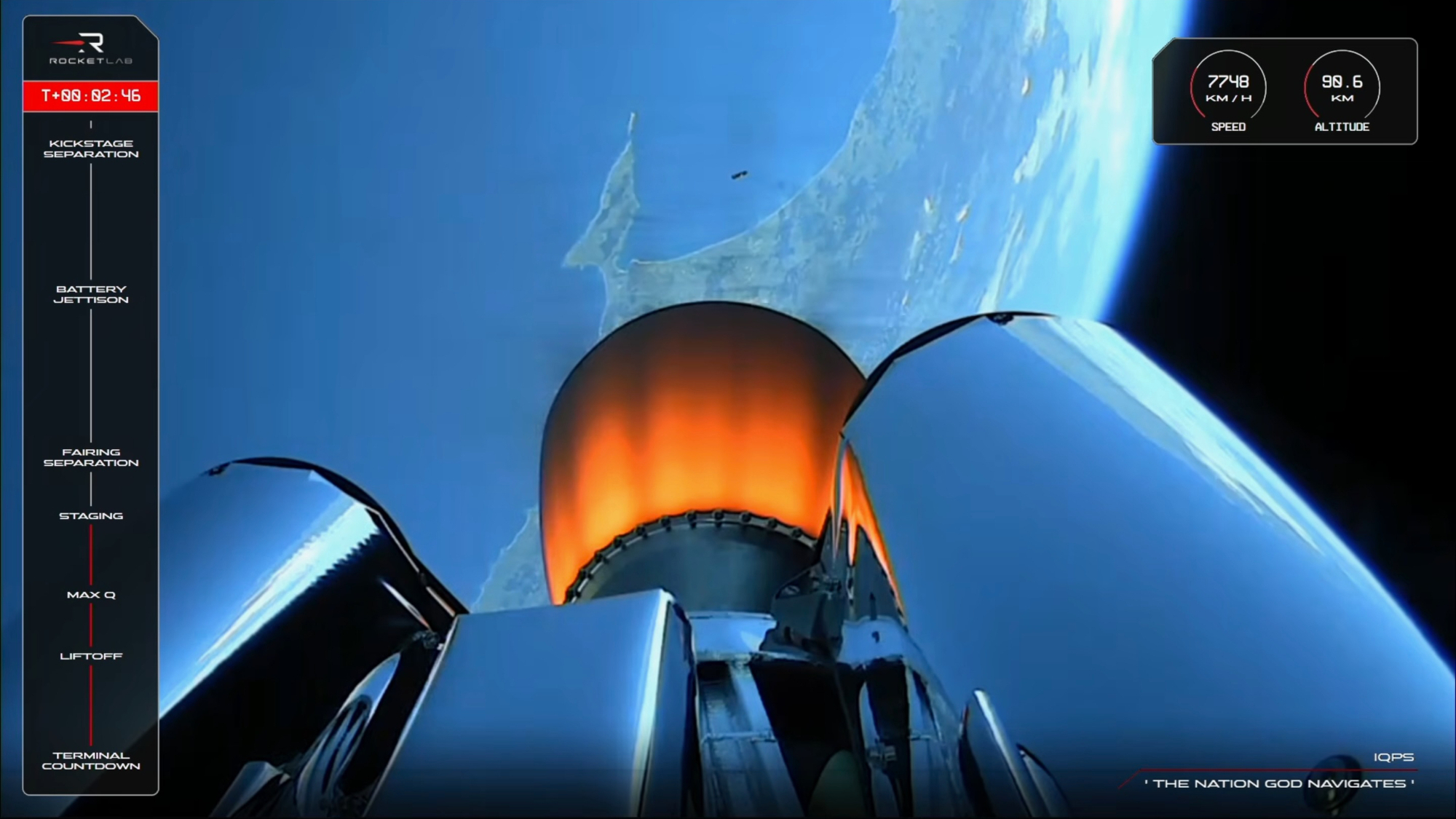
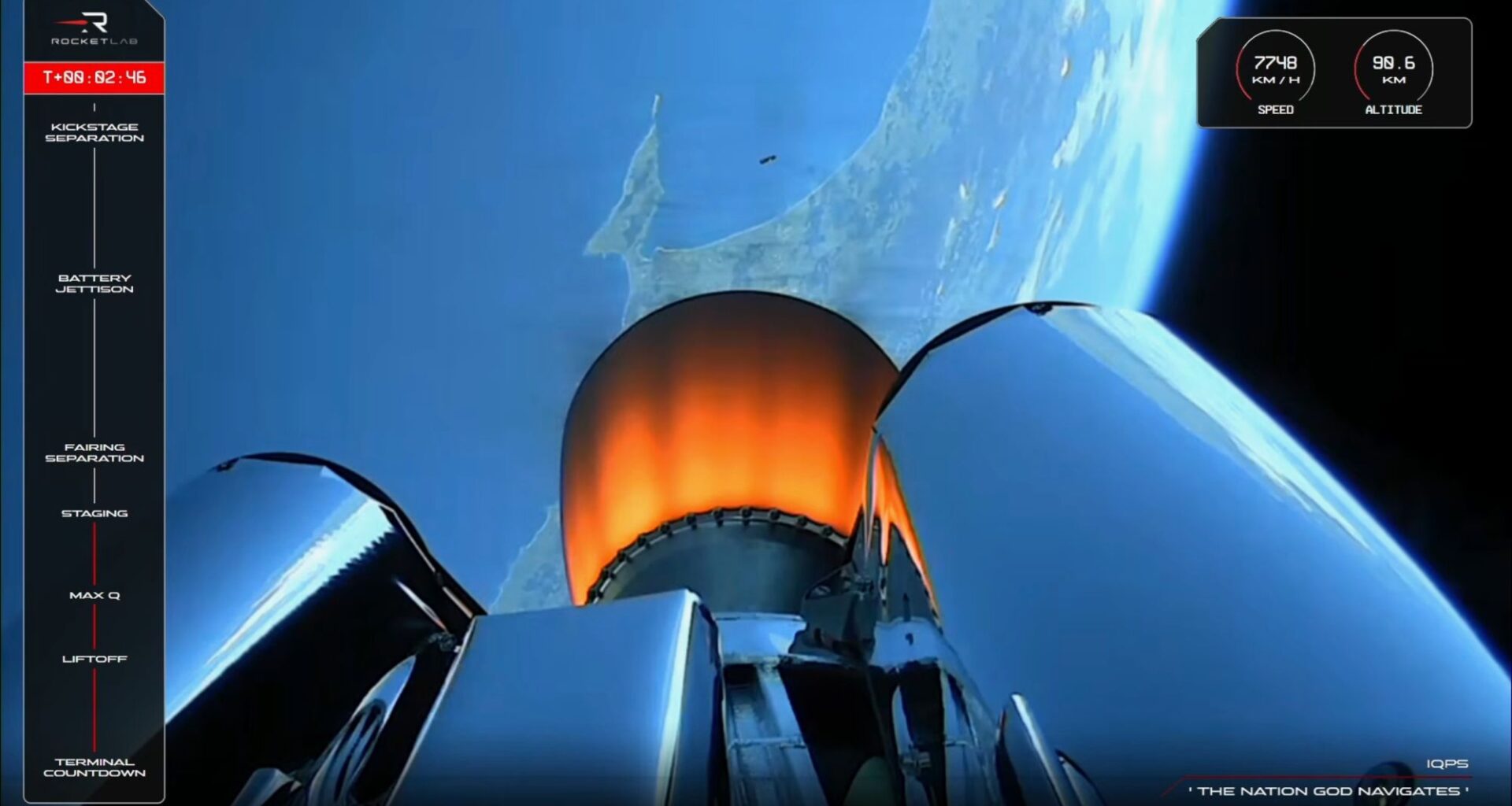
The view from the second stage of a Rocket Lab Electron rocket during its Nov. 5, 2025 launch, which lofted an Earth-observing satellite for the Japanese company iQPS. The Electron’s first stage is visible falling back to Earth in the distance. (Image credit: Rocket Lab)
“This satellite will join the rest of the QPS-SAR constellation in providing high-resolution synthetic aperture radar (SAR) images and Earth monitoring services globally,” Rocket Lab wrote in a mission description. “iQPS aims to build a constellation of 36 SAR satellites that will provide near-real-time images of Earth every 10 minutes.”
Yachihoko-I will be the 13th (not 14th, as it name implies) iQPS satellite to reach orbit to date. Seven members of the growing constellation have flown atop non-Electron rockets to date — India’s Polar Satellite Launch Vehicle, Japan’s Epsilon and SpaceX’s Falcon 9, to be specific.

A Rocket Lab Electron rocket launches the “Nation God Navigates” mission for Japanese Earth-observing company iQPS from New Zealand on Nov. 5, 2025. (Image credit: Rocket Lab)
Yachihoko-I takes its name from the Japanese god of nation-building, according to Rocket Lab. That explains the moniker the company gave to today’s mission: “The Nation God Navigates.”
Today’s launch was the 16th of 2025 for Rocket Lab and the company’s 74th overall to date. The vast majority of these have been conducted by the 59-foot-tall (18 meters) Electron. Rocket Lab also operates a suborbital version of the vehicle known as HASTE (“Hypersonic Accelerator Suborbital Test Electron”), which has flown five times since debuting in June 2023.
Editor’s note: This story was updated at 3 p.m. ET on Nov. 5 with news of successful liftoff, then again at 3:58 p.m. ET with news of successful satellite deployment.