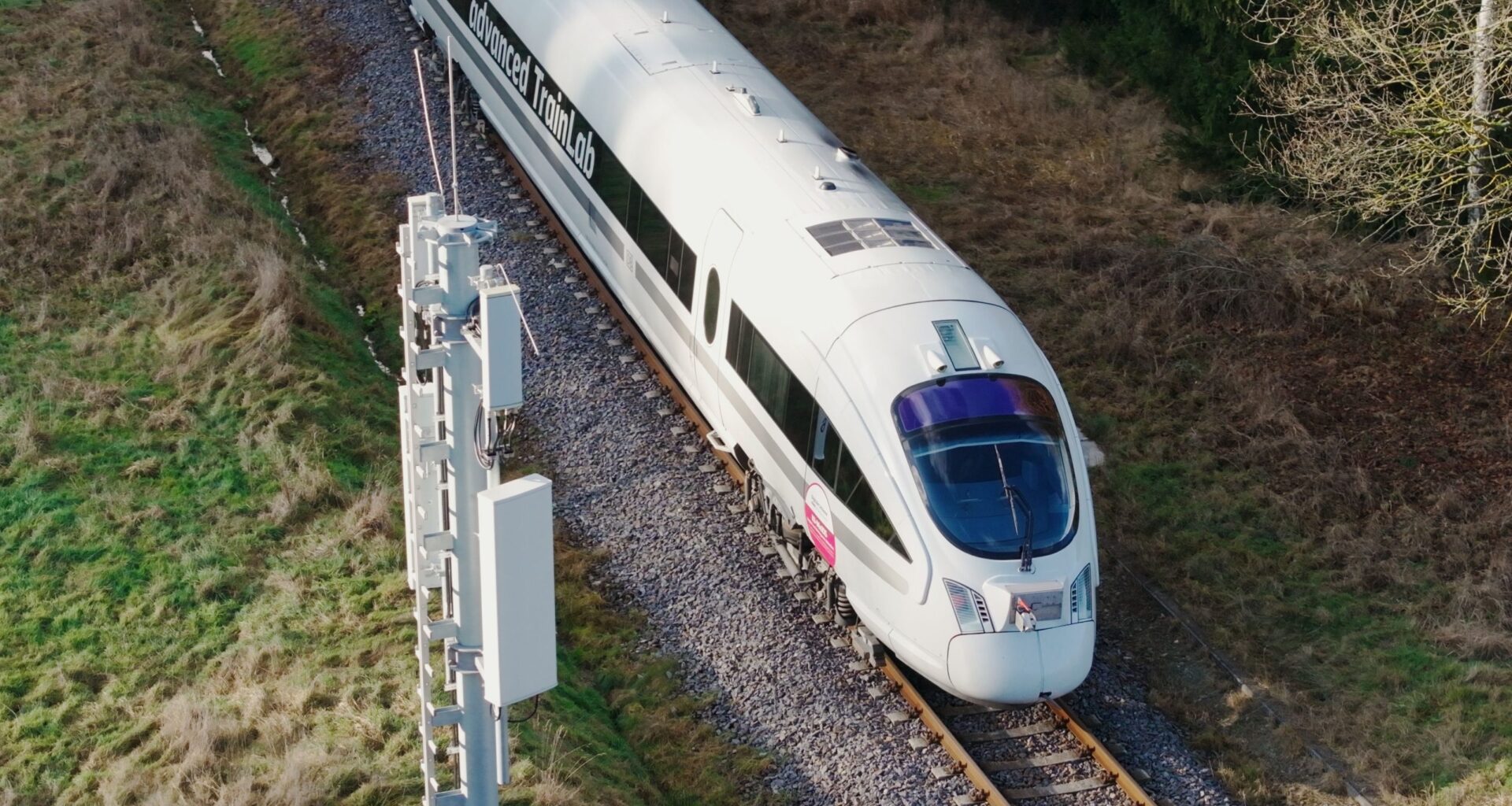
The Future Railway Mobile Communication System (FRMCS) is being heralded as the backbone of Europe’s digital railways, set to replace the ageing GSM-R network over the coming decade. It promises higher capacity, lower latency, and advanced safety features, enabling rail to handle more passengers and freight while contributing to the EU’s climate and mobility goals.
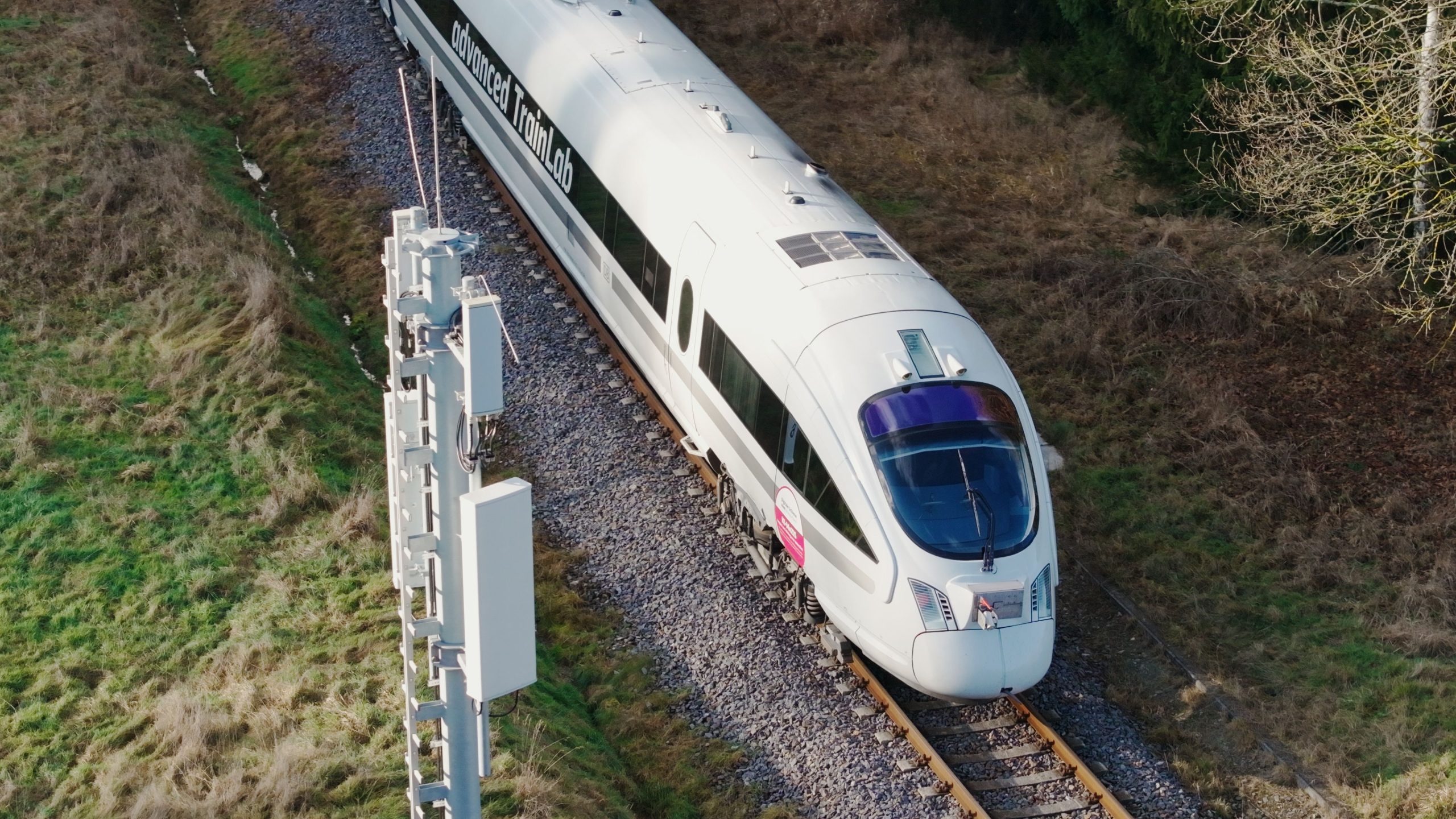
Yet as this transition begins, concerns are mounting that Europe’s FRMCS market is being shaped around just two dominant players: Nokia and Kontron. Together, they hold a near-monopoly on the equipment and systems needed for the new standard, raising fears of vendor lock-in, inflated costs, and reduced innovation.
Why FRMCS Matters
FRMCS is not simply a telecoms upgrade. Built on 5G technology, it is designed to handle mission-critical railway operations — from train control and signalling to remote diagnostics and real-time passenger information. It will underpin automated train operation, predictive maintenance, and smarter logistics, while replacing legacy GSM-R systems that are becoming obsolete.
Given the scale of Europe’s rail network, FRMCS represents a multi-billion-euro investment in both trackside and onboard systems. Contracts awarded today will shape the sector for decades, making supplier diversity and competition crucial for cost control, innovation and resilience.
The dominance of Nokia and Kontron
Nokia has established itself as the de facto supplier of FRMCS radio and network systems. Its AirScale radio access hardware and 5G Standalone (SA) core have already been deployed on test tracks in Germany and elsewhere. The company’s global telecoms expertise, combined with established relationships with national rail operators, give it a formidable lead.
Nokia’s strength lies in offering an end-to-end package — radio hardware, core network, integration and long-term support — which appeals to operators but also risks locking them into a single vendor for decades.
Kontron plays a less visible but equally critical role in the onboard domain. Its embedded computing platforms, routers and communication units are widely used in European rolling stock, often integrated with signalling and safety systems. As FRMCS-ready onboard units are rolled out, Kontron’s existing footprint makes it a natural choice, further entrenching its position.
Together, the two companies effectively control both ends of the FRMCS chain: Nokia on the infrastructure side, Kontron on the onboard side.
Such concentration carries several risks:
-
Limited choice for operators;
-
Reduced price competition;
-
Innovation bottlenecks;
-
Vendor lock-in;
-
Interoperability concerns.
The case for regulatory intervention
Given the high stakes and technological lock-in, there is a strong argument that competition authorities should take notice:
-
Ex ante oversight
The European Commission (via the Competition Directorate or the Commissioner) could require open procurement frameworks for FRMCS, ensuring that tender specifications are technology agnostic and avoid vendor bias. -
Mandating modular, interoperable interfaces
Regulators could mandate that FRMCS contracts require open APIs, standard interfaces, and decoupling between core, radio, and onboard components – so operators can swap modules without being tied to a single vendor. -
Market monitoring and audit
A European-level oversight body could monitor FRMCS procurement across member states, identifying patterns of exclusion or dominance, and enforcing remedies where necessary. -
Support for challenger firms
Public R&D funding (e.g. from Horizon Europe) could be channelled to smaller firms developing alternative FRMCS hardware or software, ensuring a more diverse supplier base. -
Remedies for incumbents
In already awarded contracts, regulators could impose fairness conditions: for example, requiring interoperable components, non discriminatory access to maintenance data, or interoperability licensing. -
Standardization governance
The European Commission (or a dedicated transport authority) should oversee FRMCS standards bodies to ensure no single vendor exerts undue control on specification evolution or backwards-compatibility constraints that favour its products.
Counterarguments and responses
-
Safety and certification risk
Some may argue that opening the market increases the risk of nonconforming or incompatible solutions. But interoperability and conformance testing regimes already exist for ETCS and signalling. A properly governed FRMCS certification framework can ensure safety without stifling competition. -
Economies of scale
Nokia and Kontron may claim that only large players can bear the investment in standards, testing labs, integration and global support. But modular and consortia-based models can also reap scale advantages. -
Fragmentation risk
Critics may fear that too many small vendors will fragment the ecosystem and hinder interoperability. Yet, mandating compliance with strict standards and open interfaces mitigates that risk. -
Legacy inertia
Some incumbents might resist change, preferring high switching costs. That’s exactly why proactive regulation is needed: to ensure that the future market is not locked into a few incumbents by default.
What should the European Competition Commissioner do?
Given the European dimension and the public interest in efficient, competitive rail, the Competition Commissioner should:
-
Commission a market study into FRMCS procurement across the EU, examining tender practices, interoperability clauses, and supplier concentration.
-
Issue guidance or regulation on how future FRMCS tenders must be structured: technology-neutral, modular, with compulsory interoperability clauses.
-
Condition EU funding for railway digitalisation projects on compliance with open procurement principles.
-
Liaise with national rail regulators (e.g. the European Union Agency for Railways, ERA) to embed competition safeguards into tram/rail digital standards.
-
Empower member states to challenge unfair practices in FRMCS contracts, ensuring smaller firms can appeal or complain under competition rules.
Opening the market: Potential entrants
Despite current dominance, the FRMCS market could be diversified if procurement frameworks encouraged multi-vendor participation. Different suppliers bring strengths in specific layers of the system — radio access, core networks, and applications — and could be combined to create robust, interoperable solutions.
Radio Access Network (RAN)
Potential players: Ericsson, Huawei, ZTE, NEC, Mavenir, Funkwerk (rail-focused).
-
Strengths: Ericsson and Funkwerk have an established EU presence and track record in mission-critical networks. Huawei and ZTE can offer cost advantages, though both face political and security challenges in Europe. NEC and Mavenir bring flexible Open RAN designs that reduce lock-in and allow for multi-vendor integration.
-
How they could fit: National tenders could be split into regional lots or line segments, enabling Ericsson or Funkwerk to compete head-to-head with Nokia. Pilot projects could incorporate NEC or Mavenir to demonstrate Open RAN’s benefits and broaden the supplier base.
Core Network (5G/FRMCS Central System)
Potential players: Ericsson, Huawei, ZTE, Mavenir, NEC.
-
Strengths: Ericsson offers politically acceptable, stable solutions within Europe. Mavenir and NEC specialise in cloud-native, software-driven platforms that promise flexibility and lower lifecycle costs.
-
How they could fit: By separating the “core” contract from the radio access layer, authorities could encourage competition. This would open the door for suppliers like Ericsson, Mavenir or NEC to provide the central network, reducing reliance on Nokia.
Applications and Dispatcher Systems (MCX, Voice, ETCS Integration)
Potential players: Frequentis, Siemens Mobility, Thales, Funkwerk, Viavi (testing tools).
-
Strengths: Frequentis is a leader in mission-critical dispatcher systems, already widely used in aviation and public safety. Siemens brings deep ETCS integration expertise, while Thales has global experience in rail telecoms and defence communications. Funkwerk supplies FRMCS-ready onboard and radio products, while Viavi specialises in independent testing and validation.
-
How they could fit: Authorities could require tenders to allow separate contracting of dispatcher, voice and integration layers. For example, an Ericsson RAN could be paired with a Mavenir core and a Frequentis dispatcher system — a combination that breaks the Nokia/Kontron duopoly while maintaining interoperability.
European rail is expected to invest billions in digital communications infrastructure in the next decade. The question is whether this money will flow into a healthy, competitive ecosystem, or be channelled into the coffers of two entrenched suppliers.
Share on: 


