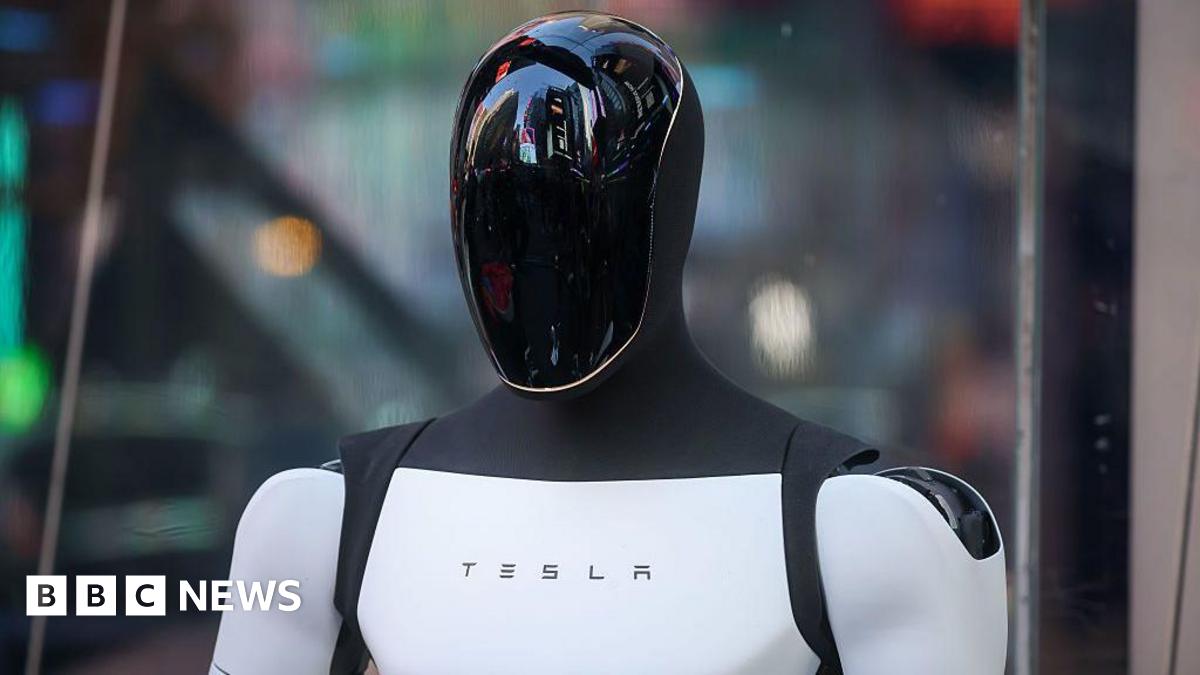
Silicon Valley is gunning hard for humanoids.
A report released by Morgan Stanley on Friday predicted Apple, which is reportedly looking into the robots, could potentially earn $133bn a year from them by 2040.
Foxconn is reported, external to be deploying them at its Nvidia factory in Texas.
The idea of advanced AI within a human-shaped shell is an astonishingly powerful combination in theory. It would let the tech interact with the physical world around it – and yes that includes us.
While many companies have sought to develop human-like robots for factory and industrial use – such as UK robotics firm Humanoid – some are already looking to insert the tech in homes.
The highly-publicised Neo from tech firm 1X, slated to launch in 2026, can do menial chores like emptying the dishwasher, folding clothes and fetching you items.
It will cost $20,000 but it does come with a caveat – the WSJ reported it was actually controlled by a person wearing a virtual reality headset, external.
Forrester analyst Brian Hopkins said the falling costs of components, combined with improvements to robot dexterity and AI, was helping to make humanoid robots feasible for a variety of different settings.
“From warehouses and restaurants to elder care and security, new use cases are gaining traction fast,” he wrote in a blog post.
“If current trajectories hold, humanoid robots could disrupt many physical-service industries significantly by 2030.”
Musk previously told investors his robots had “the potential to be more significant than the vehicle business, over time”.
He went one step further after his pay package deal was approved on Thursday, saying he believed it could be “the biggest product of all time by far, bigger than cell phones, bigger than anything”.
He has also suggested it might boost Tesla’s AI ambitions – particularly in advancing artificial general intelligence (AGI) systems capable of matching human abilities.
“Tesla AI might play a role in AGI, given that it trains against the outside world, especially with the advent of Optimus,” he wrote on X in 2022, external.
Elsewhere in the space, Boston Dynamics’ hydraulic humanoid Atlas has captivated millions on YouTube with its gymnastics and dance routines.
Viral videos of its leaps, bounds, somersaults and backflips have shown the advances in robotics over the years – with scientists now seizing upon the AI boom to boost their capabilities with systems enabling them to undertake more complex tasks.
When it was retired last year, it was replaced with a newer, fully electric model developers said could contort its metal frame in even more ways.