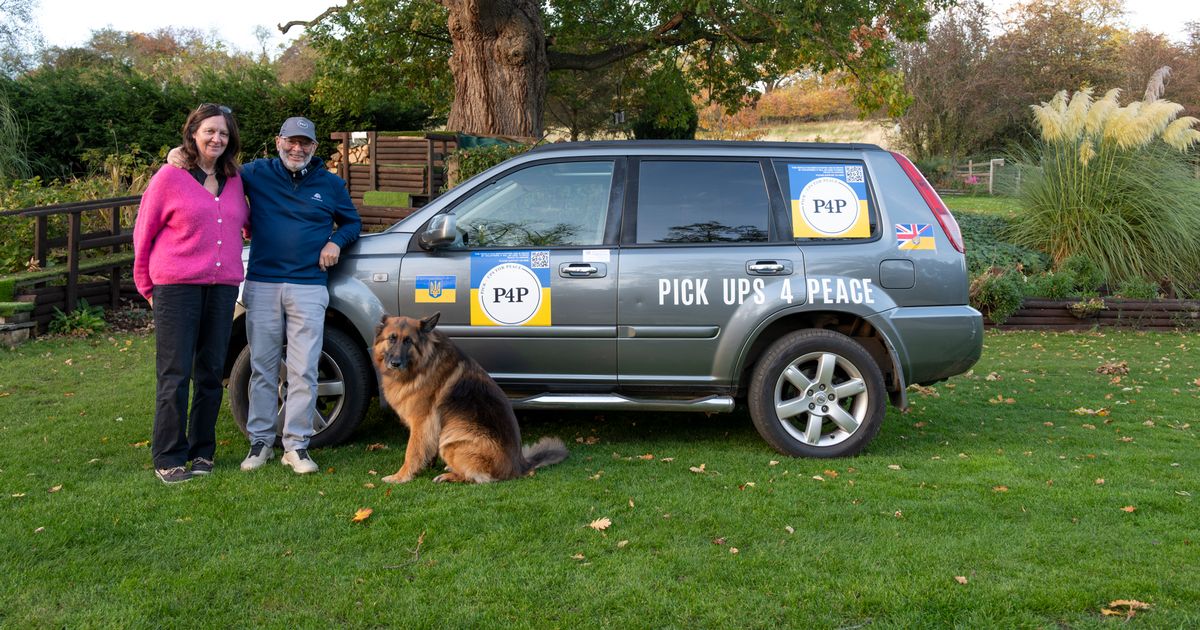
When most couples their age are enjoying retirement, Krishan and Mary Pillai are packing up a pickup truck and heading for Ukraine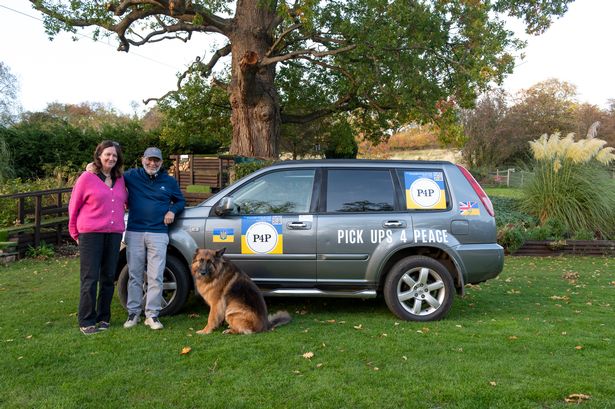 Cheltenham residents make fifth trip to Ukraine (Credit : Ellianna Collins)
Krishan Pillai was just coming off a round of golf when a friend mentioned he was heading to Ukraine. Not for sightseeing, but to deliver a pickup truck loaded with aid to the Ukrainian Army.
“It’s a war zone,” Krishan replied. But that conversation lit a spark. “It struck a chord in my heart,” he says.
By the time he got home and nervously brought it up with his wife, Dr Mary Pillai, the decision was as good as made. She agreed. And just like that, what began as an offhand comment became the start of something life-altering.
At 80 years old, with Mary in her late sixties, the Charlton Kings couple had just celebrated 50 years of marriage.
They had time, they had energy, and more than anything, they had a sense of purpose that couldn’t be ignored.
Motivated by media reports of the suffering in Ukraine—particularly the toll on children—and by the sheer resilience of Ukrainians fighting for their freedom, they packed up their lives, quite literally, and hit the road.
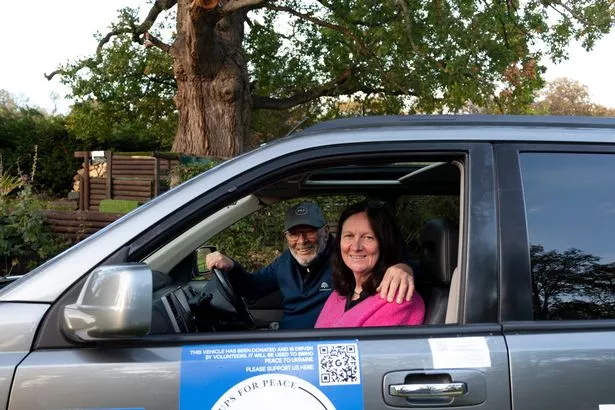 The couple are motivated by the suffering in Ukraine
“We are lovers of freedom and take it for granted,” Krishan says. “Yet without massive support, Ukraine’s freedom and its very survival appeared in doubt.”
They had no prior ties to Ukraine. No experience with humanitarian missions. Just a visceral sense that doing nothing wasn’t an option.
And despite initial surprise and concern from family and friends, the response was overwhelmingly supportive. The couple’s first trip would not be their last.
Each convoy since has brought with it a mix of exhaustion and inspiration.
The couple joined forces with Pickups for Peace (P4P), a charity founded in February 2023 by three farmers and an associate.
Since then, P4P has delivered 766 pickup trucks filled with desperately needed supplies. That figure is fast approaching 800.
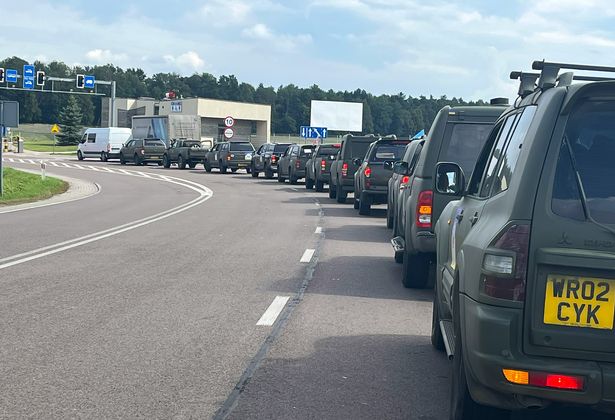 Travelling to Ukraine poses a whole host of challenges
What they deliver is more than material aid—it’s hope. “People line the road waving Ukrainian and UK flags to greet us,” says Krishan. “They want to shake our hands, stating they see the UK as their staunchest and most reliable supporter.” That sense of connection is what keeps them going.
The logistics are formidable. Once the aid is packed, the couple drive to the Channel Tunnel, sometimes stopping off in Surrey to see family and grandchildren.
From there, they make their way through France, Belgium, the Netherlands, Germany, and on to Wroclaw in Poland—roughly 1,700 miles from home. It’s in Wroclaw that the convoy meets, stories are exchanged, and final preparations made.
Then it’s a six-hour drive to the Ukrainian border, followed by a three-hour crossing, and a final two-hour push to Lviv.
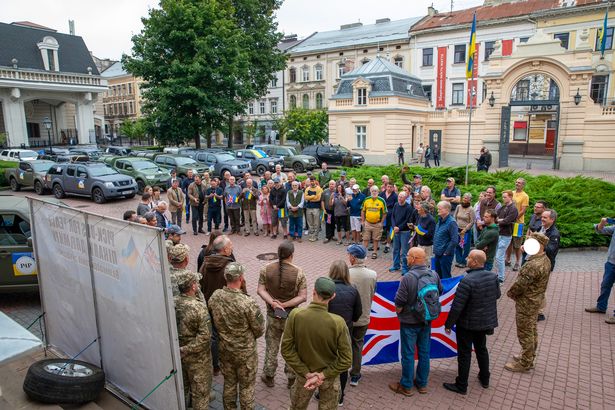 The aid is gratefully received in Ukraine
Convoy members are connected via WhatsApp, a digital lifeline for sharing locations, flagging breakdowns, and ensuring no one is left behind. And breakdowns do happen.
“We once lost a front wheel while travelling at 80mph on a Polish motorway,” recalls Krishan. “The wheel ended up more than 100 yards ahead in the central reservation.”
It delayed them by four hours, but they made it. “Shaken but not stirred.”
What they deliver—besides the trucks themselves—includes everything from generators and power banks to laptops, hydraulic jacks, tarpaulins, diesel cans, and winter clothing.
No military items. Just tools for survival and recovery. “The focus is on saving lives and relieving suffering,” Krishan stresses.
The vehicles, typically 15–20-year-old 4x4s with more than 150,000 miles on the clock, don’t last long. “Once handed over, the vehicles go to the front line where they are used to ferry and rescue injured soldiers,” he explains.
“They save many lives but have short lives, being destroyed within weeks or months.”
Despite being checked and MOT-certified before leaving, breakdowns are inevitable. Insurance and breakdown cover don’t extend into Ukraine, which is why a police escort is provided from the border.
Even with the risk, Krishan says they’ve never felt unsafe in western Ukraine—though he notes a rising tension of late. “Things are very different in the East,” he adds soberly.
Some of the most harrowing experiences come not from the roads, but from the reality of war on the ground. The couple visits the Field of Mars in Lviv during each trip. Once a Soviet military cemetery, it has now become a burial site for those killed since the war began. “With each visit we see more graves,” Krishan says. “Many millennials, women as well, the generation whose parents—our age—and young children are left to mourn.”
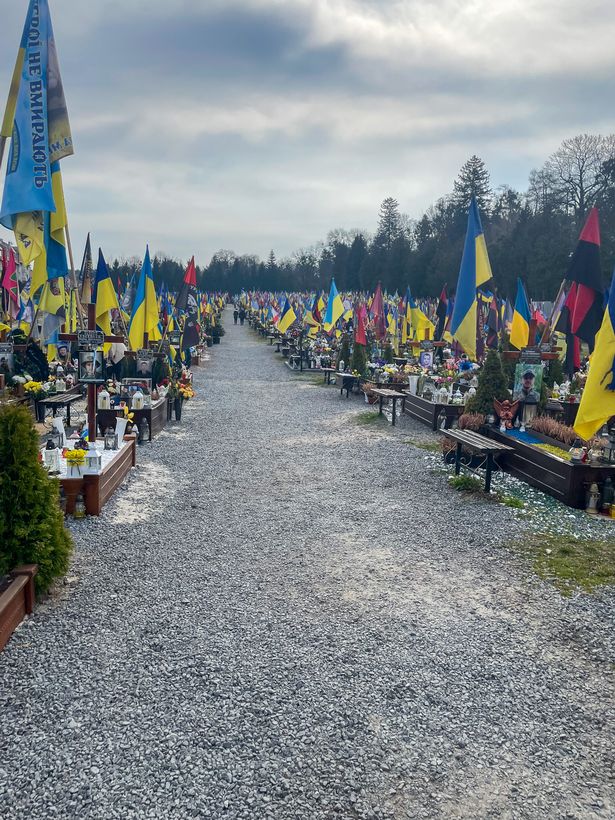 The couple want to make a difference
He remembers hearing a bugle in the morning and the solemn drumbeats in the evening that signal new casualties. “Such a waste for a pointless war,” he says. The gravity of what they witness is inescapable.
The trips aren’t just about giving—they’ve brought something back, too. For Krishan, they’ve been unexpectedly healing. Having struggled with anxiety in recent years, he says the experience has been therapeutic. “My mojo has returned and anxiety totally cured,” he says. “Thank you, Ukraine, and P4P.”
Mary and Krishan are a team in every sense. She handles the complex logistics—travel bookings, paperwork, accommodation. He manages the fundraising, a role Mary finds difficult. “We both share the driving and source aid wherever we can,” Krishan adds. “I personally am able at finding solutions to any problems like breakdowns.”
It’s not easy. They cover the costs of fuel, insurance, road tax, travel insurance, hotels, Eurotunnel crossings, flights home—most of it out of pocket. The charity arranges some accommodation, but most costs are theirs to bear. “Our hope is to persuade the British public to overrun our JustGiving page with donations,” he says. “To raise funds for an army of pickups with volunteers to help drive them.”
They take the preparation seriously—booking transport, confirming convoy details, ensuring all documents are in order, and organising safety measures. “We sign a waiver for P4P,” Krishan says. “There is no medical or vehicle insurance cover in Ukraine.”
And yet, they go. “Physically I am very fortunate with my health,” he says. “I follow a golf ball many miles each week and I chainsaw and split several tons of wood each month.”
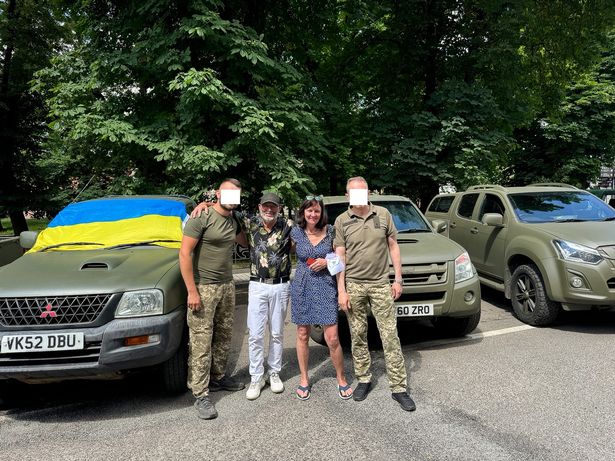 They say Ukraine is paying a heavy price for the war
Their motivation is clear: legacy. “We worry about what’s being left for our grandchildren,” says Krishan. “We believe in the saying ‘evil triumphs when good men and women do nothing’.”
The war, they remind us, is not far away. “Ukraine is paying a heavy price for being the buffer zone for Europe. If Russia stops fighting, there will be no war. But if Ukraine stops fighting, there will be no Ukraine.”
For all the effort, they are modest about their contribution. “What we have done is a drop in the ocean in terms of bringing peace,” Krishan says. “What P4P has achieved collectively in two and a half years is remarkable.”
Their next trip will be their first in winter. Mary used to avoid night driving, but after lens replacement surgery, she’s ready. They’ll experience some of the same hardships Ukrainians endure—power cuts, freezing conditions. “Returning home is always something of an anticlimax,” says Krishan. “We now look at 4x4s thinking how appropriate they are for the front line. Each one is estimated to save at least 10 lives.”
And it’s not just about ferrying the injured. “They have a particular value in this new form of warfare,” Krishan adds. “They’re crucial in drone defence, used to back up soldiers on foot. Without a vehicle, they likely won’t escape.”
Will they go again? That depends on health and finances. But their dream is simple: to one day return—not in aid convoys, but in peace. “A trip back when peace returns is our ultimate wish.”
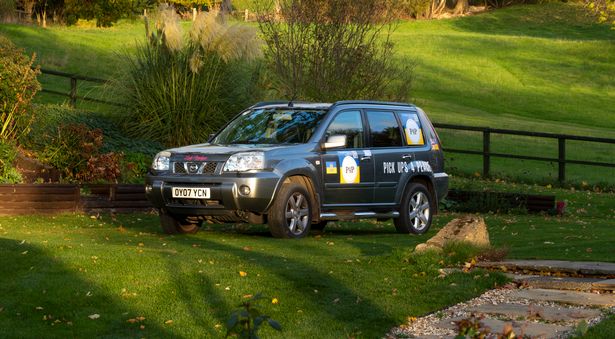 They want to return when there is peace
In the meantime, they keep going. They rally support, gather donations, source vehicles and supplies. They return to a warm welcome from their German shepherd Kyra and their elderly cat George. And they keep sharing their story.
Because for Krishan and Mary, action beats intention. Every time.
“Doing and inspiring others is so much better than just thinking about it.”