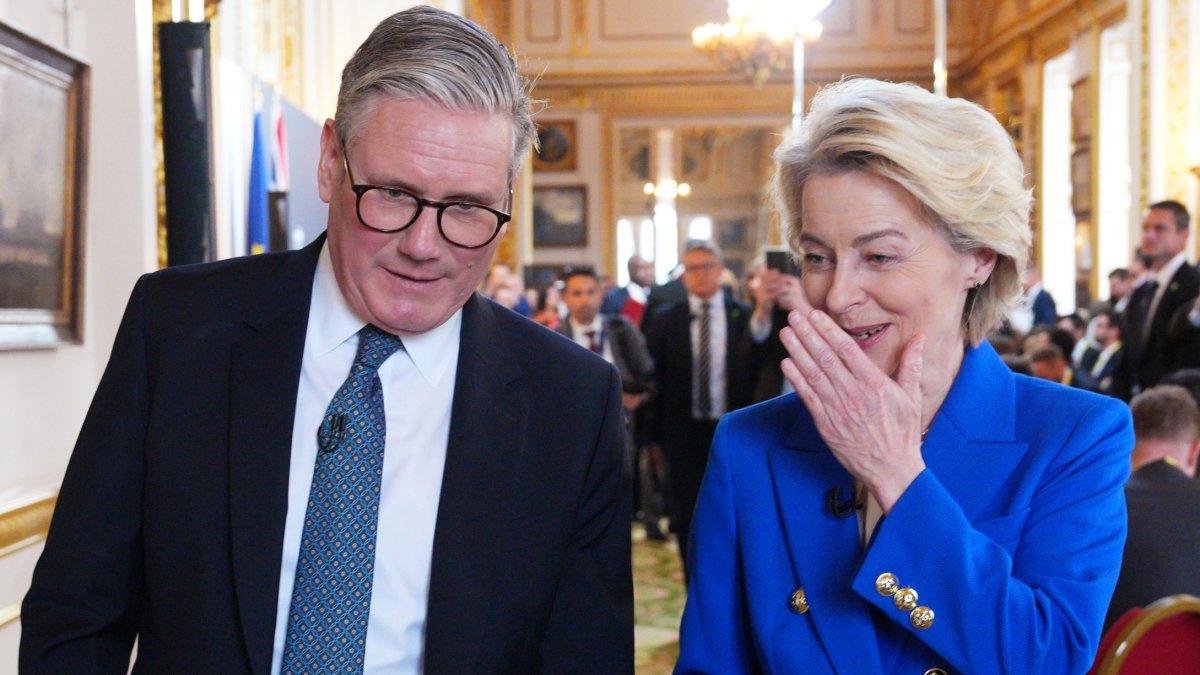
The UK is ready to walk away from a flagship Brexit reset deal on defence funding due to EU demands to pay billions to “pay to play”.
Both sides believed negotiating the UK’s participation in Brussels’ new €150bn (£130m) rearmament fund – Security Action for Europe (Safe) – would be relatively straightforward after the UK and EU signed a wider security and defence deal in Sir Keir Starmer’s Brexit reset summit in May.
But as negotiations go down to the wire ahead of a 30 November deadline, the UK is resisting EU demands to pay billions of pounds to gain access for UK defence giants such as BAE Systems and Babcock to up to half of the Safe fund’s contracts.
New FeatureIn ShortQuick Stories. Same trusted journalism.
The scheme, worth €150bn (£132bn) in low-interest loans, is intended to boost Europe’s arms production capacity and reduce reliance on US supplies in response to the growing threat from Russia and Donald Trump’s withdrawal from the continent.
It is also seen as crucial to boosting the UK’s manufacturing productivity as No 10 tries to boost the economy.
In May, at press conference after the Brexit reset summit, the Prime Minister said the programme would provide “new opportunities for our defence industry, supporting British jobs and livelihoods”.
But The i Paper understands the UK is willing to walk away from the negotiations if it cannot get a deal that it considers value for money, particularly given the sensitivity as Rachel Reeves prepares to break a Labour manifesto pledge and increase income tax to fill a black hole in the public finances in a make-or-break Budget later this month.
EU insiders on the other hand believe Britain will eventually concede amid claims that UK defence firms have already lined up bids for loans with European counterparts, ready to submit on 30 November, creating pressure on the Government not to cut them out.
Biggest defence spending upgrade since Cold War
These claims were backed by former Tory defence minister Tobias Ellwood, now a consultant in the security industry, who told The i Paper multinational weapons firms “do not want us to do anything to remove ourselves, to restrict ourselves from participating in what is the biggest upgrade in expenditure that we’ve seen since the end of the Cold War”.
The talks have hit a snag over EU demands to balance contributions to the fund and the benefits the UK can get from it.
The European Commission’s opening offer is believed to be that the UK pays between €4bn and €6.5bn (£3.5bn to £5.7bn) to allow British defence firms to bid for contracts worth up to 50 per cent of the Brussels rearmament scheme.
If the UK wanted to secure a greater proportion of access, it would have to pay more, and if it wants to pay less, British defence firms would have less access, under the Brussels proposals, but London has so far resisted the EU’s “pay-to-play” demand.
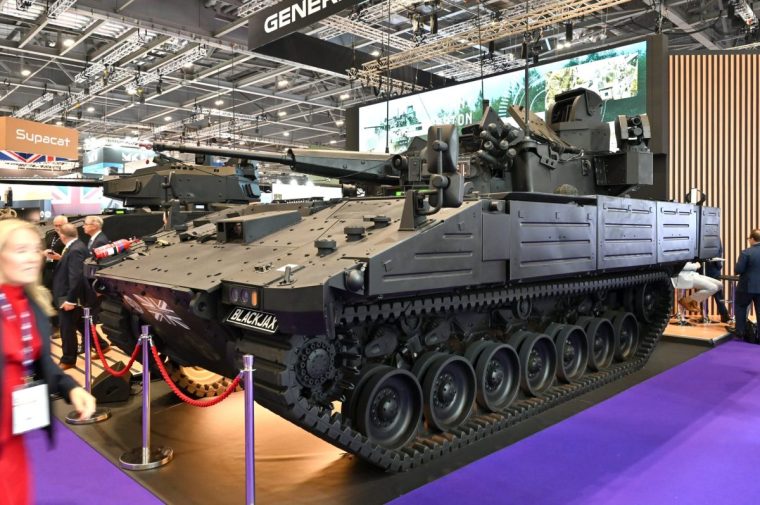 The new Ajax armoured vehicle which entered service earlier this month. UK-based defence firms do not want to be locked out of the EU defence fund (Photo: John Keeble/Getty)
A European Commission spokesperson confirmed Starmer sought to raise the issue with Ursula von der Leyen during last week’s COP30 summit in Brazil, but the meeting “did not happen for scheduling reasons” – which many have interpreted as a diplomatic snub.
The Safe programme has become the test case for how far the bloc’s new defence industrial ambitions can stretch beyond its borders. Member states broadly agree that the UK, as a key Nato power, should be part of Europe’s security build-up – but only if it shoulders part of the financial burden.
With the first window for funding bids closing on 30 November, officials on both sides are under pressure to resolve the impasse. “There’s a timing issue here,” one diplomat said. “Everyone wants to start, but the language has to be right.”
‘A huge role to play in Europe’
Ellwood, who served as a defence minister in the previous Conservative government, backed the suggestion British defence firms are ready to go with bids.
“It’s probably for the back channels and behind-the-scenes negotiation to see whether that initial figure [demanded by the EU] gets whittled down into something a bit more constructive and workable,” he said.
“But I really hope this doesn’t get turned into Brexit debate mark II, which would be very sad indeed.
“We have got a huge role to play as Europe becomes more self reliant.
“And many of those multinationals that are actually headquartered in the UK do not want us to do anything to remove ourselves, to restrict ourselves from participating in what is the biggest upgrade in expenditure that we’ve seen since the end of the Cold War.”
He went on: “The contracts are enormous.
“When you secure the platform for an armoured personnel carrier or a medium lift helicopter, that is going to be enormous.
“So the idea that we throw our teddies in the corner, I really hope our politics are better than that.
“We cannot afford to miss this opportunity to participate, not just economically but security-wise as well – we’d have to look after ourselves and a wedge would be driven between the continent and Britain and that’s not good.”
EU split over UK access
EU ambassadors are expected to discuss UK access to the Safe fund on Wednesday amid splits over British payments to Brussels related to other aspects of the reset, such as the food and drink deal that Starmer has made its economic centrepiece.
Diplomats said Tuesday’s meeting in Brussels, which stretched into the afternoon, broke up without final agreement after several capitals, led by Germany and the Netherlands, raised concerns about how to phrase references to future UK payments.
Your next read
According to one senior EU official, the deadlock is less about the numbers than the “formulation of words” around whether London’s contribution should be explicitly mentioned.
France and several southern member states have pressed for a tough line, warning that the EU cannot let post-Brexit Britain enjoy the benefits of membership without paying in. But others fear that making new budget demands could poison the warmer EU-UK relations established under May’s reset agreement.
A No 10 spokesman said: “We are working together with the EU to implement the package agreed at the UK-EU summit. We will only agree deals that provide value to the UK and UK industry. Nothing has been agreed. And I won’t give a running commentary on ongoing talks.”