Your support helps us to tell the story
From reproductive rights to climate change to Big Tech, The Independent is on the ground when the story is developing. Whether it’s investigating the financials of Elon Musk’s pro-Trump PAC or producing our latest documentary, ‘The A Word’, which shines a light on the American women fighting for reproductive rights, we know how important it is to parse out the facts from the messaging.
At such a critical moment in US history, we need reporters on the ground. Your donation allows us to keep sending journalists to speak to both sides of the story.
The Independent is trusted by Americans across the entire political spectrum. And unlike many other quality news outlets, we choose not to lock Americans out of our reporting and analysis with paywalls. We believe quality journalism should be available to everyone, paid for by those who can afford it.
Your support makes all the difference.Read more
Adolf Hitler had a hidden genetic disorder that would have hindered the development of his sexual organs, new analysis of his DNA has uncovered.
The Nazi dictator had Kallmann syndrome, impacting the normal progression of puberty and suggesting that it seems likely he would have struggled to form sexual relationships.
The findings are set to be revealed in the Channel 4 documentary Hitler’s DNA: Blueprint of a Dictator, which also debunks the myths Hitler had Jewish ancestry and provides evidence that he probably had one or more neurodiverse or mental health conditions.
Scientists were able to build the DNA profile from a sample of blood-stained cloth that a US Army colonel had cut from the sofa where Hitler took his own life in 1945.
While the research and its outcomes are likely to provoke controversy, the lead geneticist said that while she was conflicted about taking on the project, she wanted to ensure it was done properly.
open image in gallery
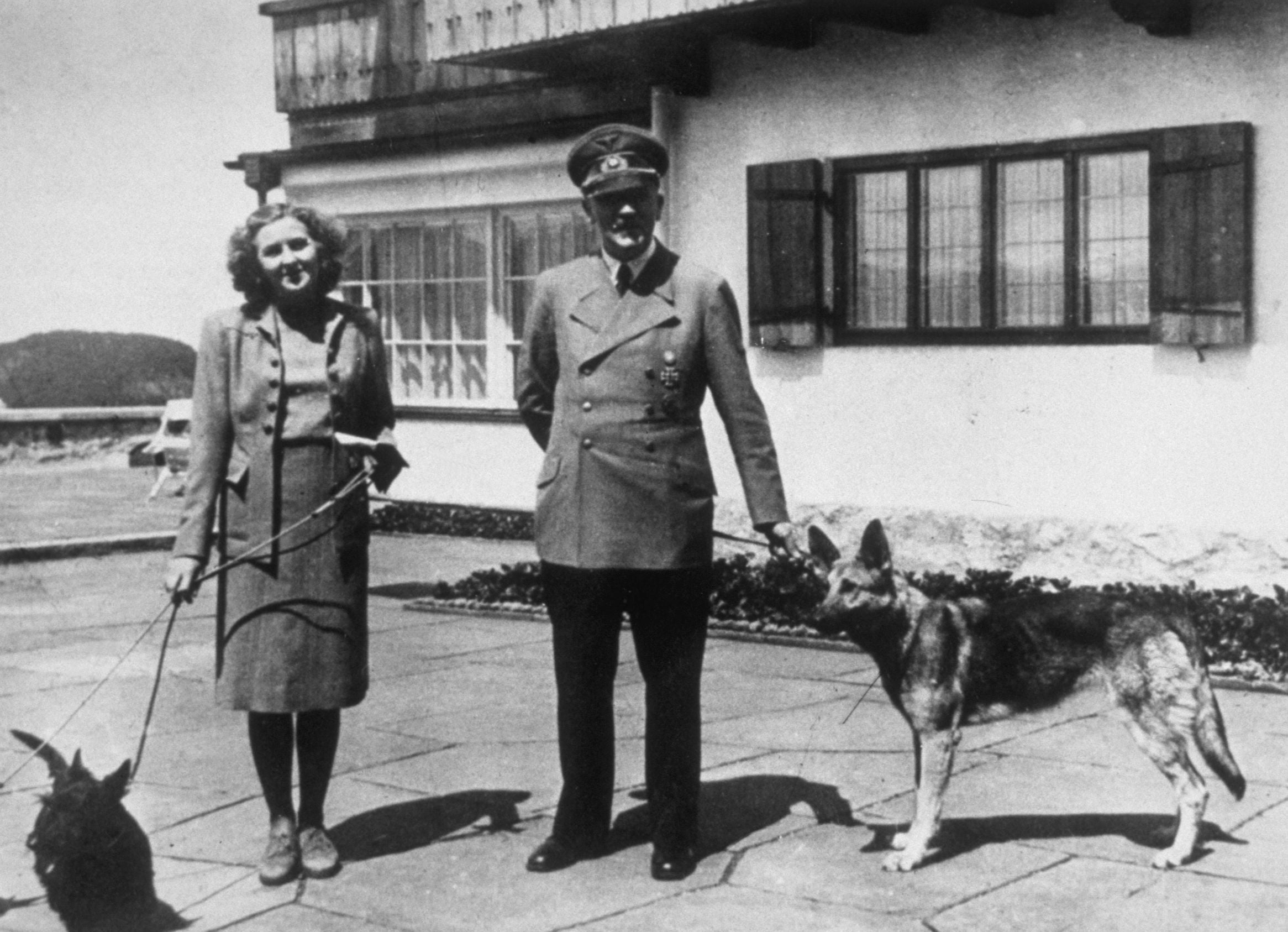
Hitler with his partner Eva Braun and their dogs at Berchtesgaden (Getty)
Professor Turi King, who identified the remains of Richard III, said: “I agonised over it. But it will be done at some point and we wanted to make sure it’s done in an extremely measured and rigorous fashion. Also, to not do it puts him on some sort of pedestal.”
She added: “If he was to look at his own genetic results, he would have almost certainly have sent himself to the gas chambers.”
Stories from the First World War suggest that Hitler had been bullied over the size of his genitalia, with his genetic condition meaning he had a one in ten chance of having a micropenis.
A 1923 medical examination, which was uncovered in 2015, showed that Hitler did have an undescended testicle, giving surprising credence to the derogatory wartime song about him.
Alex J Kay, a historian at the University of Potsdam, who specialises in Nazi Germany told the documentary that this could help explain his “highly unusual and almost complete devotion to politics in his life”.
.jpg)
open image in gallery
The research debunked the rumour that Hitler had Jewish ancestry (Getty)
He said: “Other senior Nazis had wives, children, even extramarital affairs. Hitler is the one person among the whole Nazi leadership who doesn’t. Therefore, I think that only under Hitler could the Nazi movement have come to power.”
The DNA findings have also dispelled long-held rumours that Hitler had Jewish ancestry, and that he was illegitimately descended from a Jewish grandfather.
However, the possibility of having one of a number of neurodiverse and mental health conditions was not ruled out, with some of his genes overlapping between conditions.
It was found that Hitler was in the top percentile in terms of his chances of having autism, schizophrenia and bipolar disorder, but it is unclear which of these symptoms he may have possessed.
Dr Alex Tsompanidis, an autism researcher at the University of Cambridge, said: “I think it’s fair to say that his biology didn’t help. I don’t think any clinical term applies here. We can’t know, we can’t diagnose. The cognitive process is likely to have been affected, but I use his behaviour as much as genetics when I say that.”
However, the group of researchers are keen to ensure the findings are not used to stigmatise those with the same conditions that are indicated in the DNA.
“Behaviour is never 100 per cent genetic,” psychologist Professor Sir Simon Baron-Cohen said. “Associating Hitler’s extreme cruelty with people with these diagnoses risks stigmatising them, especially when the vast majority of people with these diagnoses are neither violent nor cruel, and many are the opposite.”