Hamburg (Vax-Before-Travel News)
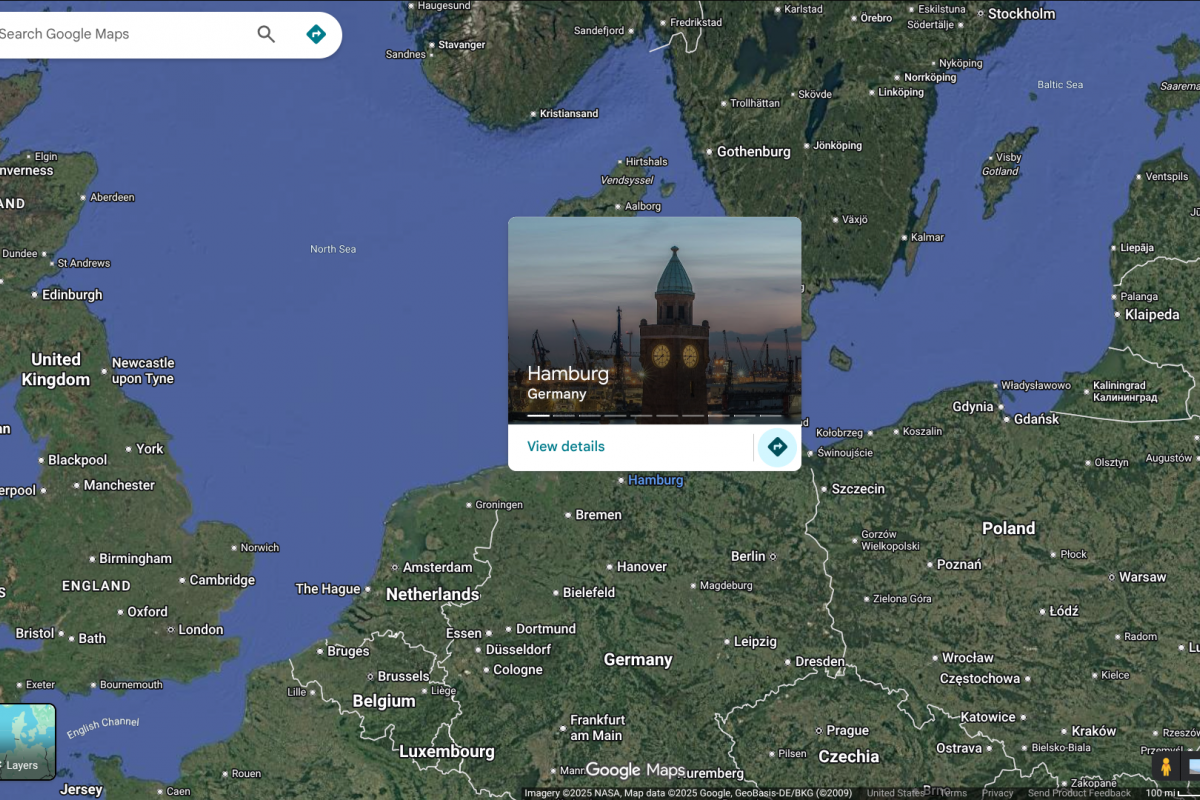
In its latest update, the Robert Koch Institute (RKI) has confirmed the detection of wild poliovirus type 1 (WPV1) in Hamburg, Germany, home to about two million people.
The RKI says regular testing of wastewater samples for polioviruses has been carried out in Germany since May 2021. WPV1 has not been detected in wastewater in Germany in the past.
Furthermore, the last case of poliomyelitis acquired in Germany through wild poliovirus was recorded in 1990, and the previous imported cases were registered in 1992.
As of November 13, 2025, the National Reference Center for Poliomyelitis and Enteroviruses (NRZ PE) has detected WPV1 in a wastewater sample collected in Hamburg. Analyses conducted in collaboration with the World Health Organization (WHO) have shown that the genome sequence of the isolate is very similar to a genetic cluster in Afghanistan. The wastewater sample in Hamburg was taken on October 6, 2025 (calendar week [CW] 41/2025) and analysed as part of the research project on the detection of polioviruses in wastewater (PIA).
To date, no clinical cases or suspected cases of poliomyelitis have been reported to Germany’s national public health institute, the Robert Koch Institute (RKI).
The detection of wild poliovirus in wastewater is an unusual but generally not unexpected event. WPV1 currently circulates only in Afghanistan and Pakistan. In recent years, however, WPV1 has also been detected outside these two countries: in environmental samples in Iran (2019) and in confirmed cases in Malawi (2021) and Mozambique (2022).
The current detection suggests that at least one person in Hamburg excreted the virus around the time the wastewater sample was collected. There is no connection to the circulating vaccine-derived poliovirus type 2 (cVDPV2), which has been detected in wastewater samples in Germany and several other European countries since the end of 2024, as it is a different type of poliovirus.
The RKI has reported several times in the Epidemiological Bulletin on the detection of cVDPV2, most recently on the occasion of World Polio Day in October 2025. Since the last report in July 2025, further cVDPV2 detections have occurred in wastewater samples in Munich (CW 29/2025), Mainz (CW 31/2025), Frankfurt am Main (CW 34/2025), and Cologne (CW 39/2025 and CW 41/2025) [5].
Both types of polioviruses (cVDPV2 and WPV1) can cause poliomyelitis in unvaccinated or incompletely vaccinated individuals. Complete poliomyelitis vaccination with the inactivated polio vaccine (IPV) used in Germany provides reliable protection against the disease, but only limited protection against infection and onward transmission of the pathogen. Infected individuals may potentially infect others.
Infection occurs mainly through direct contact and contaminated surfaces, especially under poor hygiene conditions, such as faeces. In the initial phase of infection, transmission via droplets is also possible, for example, through coughing or sneezing.
Poliomyelitis immunisation coverage among children in Hamburg is above the national average. Most recently, 81% of children born in 2021 in Hamburg were fully vaccinated against polio by the age of 24 months, compared to 77% nationwide. At the age of six years, 91% of children born in 2017 in Hamburg were fully vaccinated against polio, compared to 88% nationwide.
These figures are based on health insurance claims data from the Associations of Statutory Health Insurance Physicians (KV), which are evaluated as part of the RKI’s immunisation coverage monitoring. Immunisation coverage by age, federal state, and district can be found on the RKI’s immunisation coverage dashboard, called VacMap (www.rki.de/vacmap, in German).
According to the RKI, the risk to the population in Germany posed by wild poliovirus is considered to be very low, given high immunisation coverage and the single detection in wastewater, even though the occurrence of a clinical case in unvaccinated individuals is possible.
To alert international travelers of this health risk, the U.S. CDC included Germany in its latest Global Polio Travel Health Notice. The CDC states that adults who previously completed the complete routine IPV polio vaccine series may receive a single lifetime booster dose.
In the United States, the IPV is offered at clinics and pharmacies.