 Image: Cadw
Conservation work has been carried out at Wales’ only crannog to prevent collapsing willow trees from destroying the fragile early-medieval island site
Crannogs are man-made or natural islands modified by man built in lakes, traditionally used as sites for homes or defensive fortresses.
Llangorse Lake Crannog stands as a unique testament to early medieval Wales, dating to the late 8th or early 9th century AD, once home to a high-status residence linked to the King of Brycheiniog.
The crannog, first noted in the 1860s, was fully understood after excavations in the 1990s and 2000s. Built around 890 AD on a peat island with wood, wattle, and stone, it was used for less than 30 years before its destruction in 916 AD by Queen Aethelflaed of Mercia.
Finds on the crannog ranging from jewellery and religious items, t0 a silk-embroidered tunic reveal its royal and cultural significance.
In 2024, Cadw’s Field Monument Warden (FMW) visited the crannog and raised concerns about the willow trees growing on the island, particularly two large specimens in poor condition.
If these trees fell, their roots could tear up significant sections of the crannog, exposing buried remains to oxygen and accelerating the decay of organic materials.
Cadw led a partnership project with the landowner and Natural Resources Wales (NRW) to devise a careful programme of tree removal, mindful of the site’s scheduled monument and SSSI status.
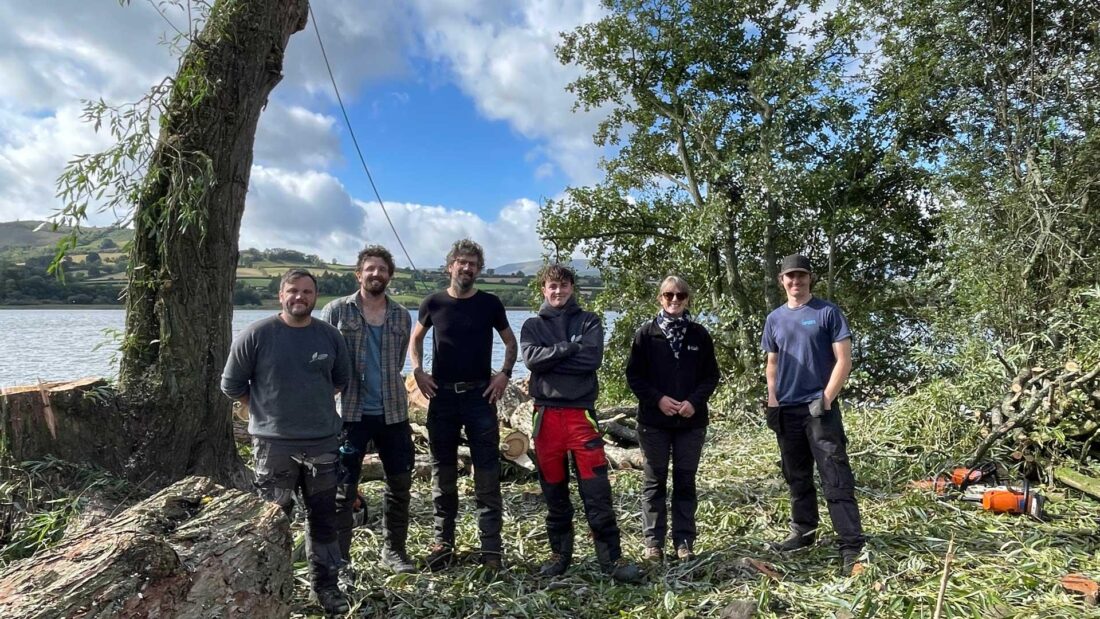 Image: Cadw
In September 2025, Leaf Arboriculture and Forestry carefully carried out a challenging two-week tree felling operation at the crannog site.
To protect the fragile waterlogged wooden structures and archaeological layers they used brash matts and sectionally felled large willows, winching timber down gently.
An amphibious Truxor vehicle, previously used at Caerphilly Castle, transported materials across the lake for processing on shore, ensuring minimal disturbance.
About 75% of the trees on the crannog, mostly willow, were cut down to ground level. These will regrow to help protect the crannog’s edges.
The work was done under SSSI consent from NRW and in consultation with Cadw’s FMW, following all grant and consent conditions. Brash was chipped and removed, while larger logs were left to create habitat piles on the island.
The work has significantly reduced the risk of catastrophic root damage and ensured the continued preservation of an important archaeological monument.
The waterlogged remains of the crannog will be preserved for future generations, safeguarding its unique history and the stories held beneath the surface of Llangorse Lake.
For more information about Cadw’s work, visit their site here.
Support our Nation today
For the price of a cup of coffee a month you can help us create an
independent, not-for-profit, national news service for the people of Wales, by
the people of Wales.