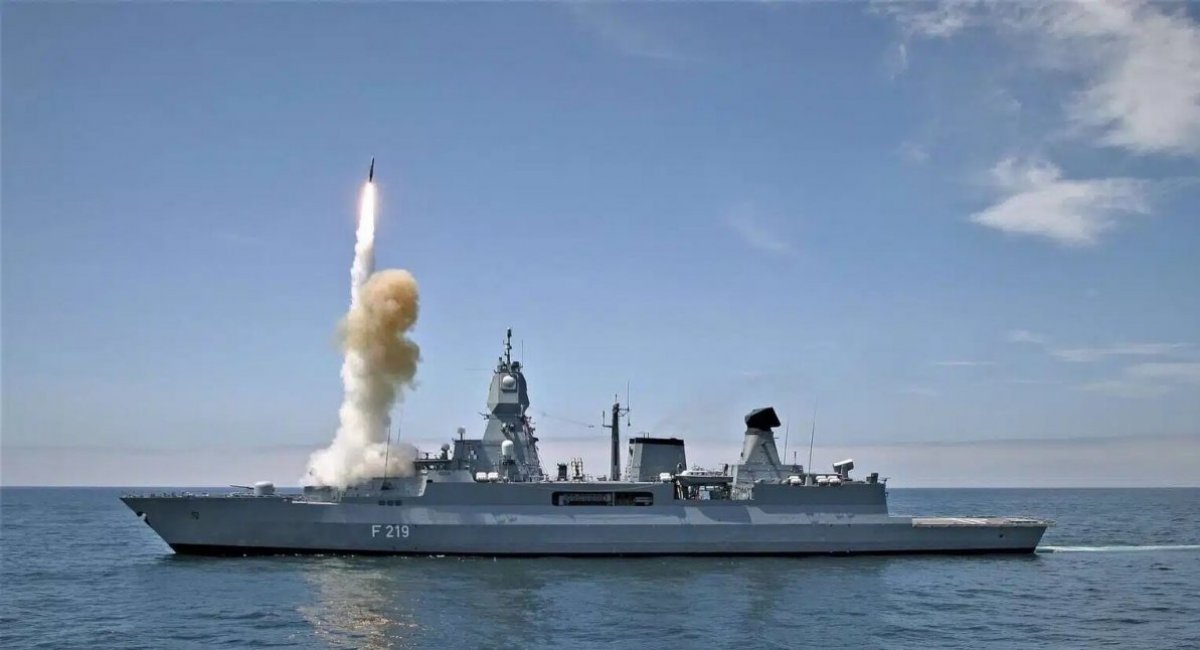
The United States Department of State has approved a major arms sale to Germany, authorizing the transfer of the Standard Missiles and related equipment worth an estimated $3.5 billion. The decision, announced by the U.S. Defense Security Cooperation Agency (DSCA), marks a significant strengthening of Germany’s future air and missile defense capabilities.
According to the DSCA notification, the package includes 173 Standard Missile-6 (SM-6) Block I interceptors and 577 Standard Missile-2 (SM-2) Block IIIC missiles. However, the exact price of each individual missile cannot be determined from the announcement, as the overall cost also covers launch canisters, additional components, technical support, training, and a wide range of associated services. This is common for large foreign military sales, where equipment is bundled with logistics and long-term support contracts.
Read more: From Tomahawk to JASSM-ER: Which US Long-Range Missiles Could Ukraine Receive Next
The DSCA emphasized that the missiles are intended to be deployed on Germany’s future F127-class frigates, which will feature the Aegis Weapon System. These ships are planned to replace the existing F124 Sachsen-class frigates and will be optimized for advanced air defense missions, including intercepting ballistic missile threats. The inclusion of the SM-6 missiles significantly broadens Germany’s ability to counter high-speed, maneuvering and ballistic targets.
The F127 program also envisions arming the ships with anti-ship missiles, reinforcing their role as multi-mission air defense frigates. Integration of the SM-2 and SM-6 missiles will allow Germany to maintain layered defense against aircraft, cruise missiles, and longer-range threats, capabilities that are becoming increasingly critical given geopolitical tensions and russia’s ongoing militarization.
Current German F124 frigates already carry the SM-2 missiles, but the available inventory has long been considered insufficient. Reports last year suggested that Germany may possess as few as 70 long-range SM-2 missiles across the entire fleet, far below what is required for sustained operations or wartime readiness.
It is also important to note that the SM-6 interceptors, in particular, are among the most expensive and advanced naval air-defense missiles in the world. They are capable of engaging aircraft, cruise missiles, ballistic missiles, and even surface targets at extended ranges.
Previous U.S. documentation indicated that SM-6 deliveries typically require 33-36 months, reflecting the missile’s high demand and complex production cycle.
Read more: Why It Is so Important for the U.S. DOD to Modernize the SM-2 Block IIICU Missile