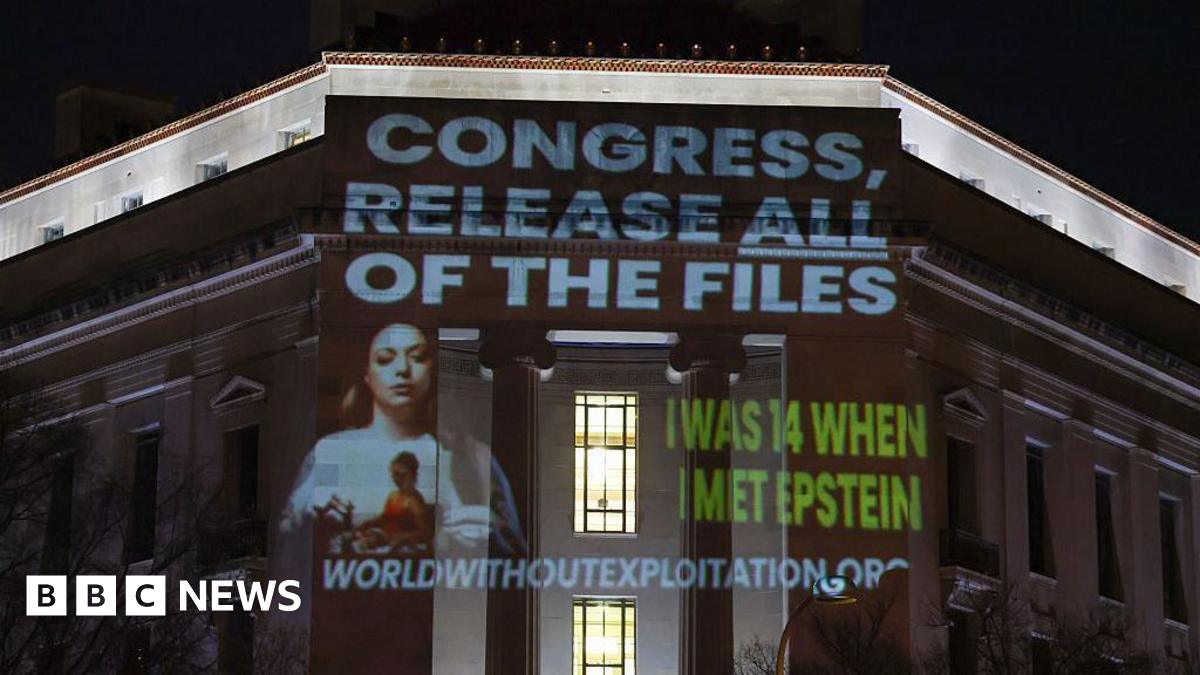
On the campaign trail last year, Trump supported the release of the files, but moved away from that position once in office, provoking frustration from his supporters. The justice department put out a limited batch of documents in February and later said there would be no more releases.
Lawmakers from both parties then began working on a resolution to force the release of all the files. Last week, at the end of the 43-day federal shutdown, Johnson swore in the newest House member, who immediately signed onto the petition to consider the resolution, pushing it over the threshold needed for a vote.
Trump, who had put pressure on fellow Republicans to reject the resolution, performed a U-turn on Sunday by saying he would support it after all.
Speaking to reporters the following evening, he confirmed that he would also sign the resolution into law, assuming it met the approval of both chambers of Congress.
“Sure I would,” he said. “Let the Senate look at it, let anybody look at it. But don’t talk about it too much.” That was because, Trump said, the issue was taking attention away from his administration’s accomplishments.
“We’ve done a great job and I hate to see that deflect from the great job we’ve done,” he said.
Representative Robert Garcia, the top Democrat on the House Oversight Committee that has been investigating the Epstein files, said Trump did not need to wait for the resolution to pass the House and then Senate.
“Let’s be crystal clear: Trump has the power to release all the files today,” he said in a statement on Monday in which he accused Trump of wanting “to deflect and slow down our investigation.”
Representative Thomas Massie, a Republican who drew Trump’s ire by pushing for the release, told CNN he was “a little bit suspicious of this sudden turn of events” but believed the total number of votes supporting the resolution on Tuesday would be “very big”.
“We’re worried that maybe they’ll try to muck it up in the Senate,” he added, referring to the possibility that the Republican-dominated upper chamber would change the resolution once that chamber took it up.
Speaker Johnson said on Monday he had issues with how the measure had been drafted and took “some comfort” that the Senate would “be able to correct some of those concerns that we have, the protection of victims and whistle-blowers and all the rest”.
Changing the measure could slow passage in the Senate. More time could then be required to reconcile the two chambers’ different measures into one final version for Trump to sign.
Attorney General Pam Bondi last week said the justice department was beginning federal investigations into former President Bill Clinton, former Treasury Secretary Larry Summers, and others who were mentioned in documents from the Epstein estate that the House Oversight Committee recently released.
The House resolution currently says Bondi can withhold documents that “would jeopardise an active federal investigation or ongoing prosecution”.