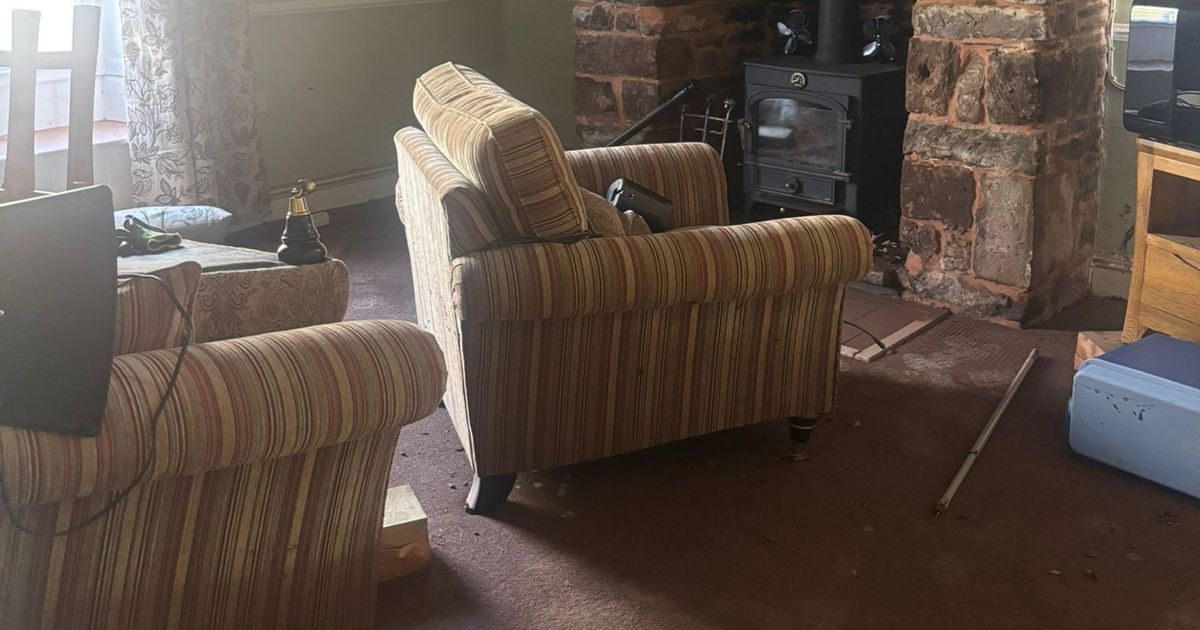
A couple whose home was flooded criticise ‘flood tourists’ for making matter worse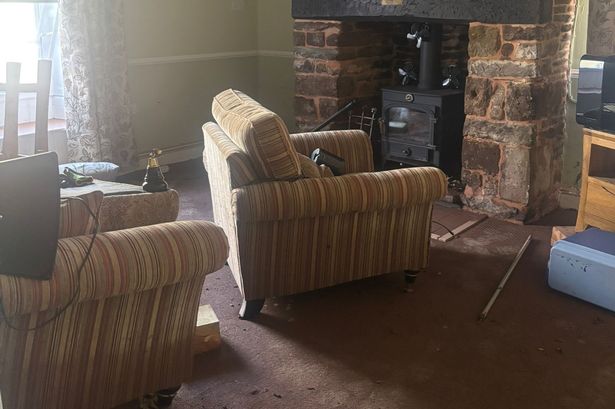 The carpets have been left sodden, and a couple who had moved into their “forever home” have been left heartbroken(Image: WalesOnline reporter)
“We fought so so hard – we thought we had a chance, after the last flood,” said Darren Rockach, who alongside his wife Karen – and many other residents and neighbours – is facing the devastation left behind by Storm Claudia.
For the couple, locals to the small Monmouthshire community of Skenfrith, the storm has turned their dream home into a waterlogged shell. What was once their peaceful forever home, opposite the historic Skenfrith Castle, is now marred by mud, oil and sewage.
Skenfrith, usually known for its tranquillity, its 13th-century castle and sweeping countryside, was overwhelmed as the River Monnow surged through its heart. For the biggest stories in Wales first, sign up to our daily newsletter here
Even days later, disbelief hangs over exhausted residents as they face the long, punishing clean-up from a storm that hit them harder than anywhere else.
Karen and Darren moved to the village four years ago after many years of visiting. They had always known flooding was a part of its history.
But in the time they had lived there, the water had never beaten their carefully planned defences. “We’ve been here for four years,” Karen said candidly. “Last year the defences saved us. In 2019 and 2020 the barriers were really effective. In November they worked again – but this time it was just too much.”
When Storm Claudia loomed, the couple began preparing early in the day. Everyone in the village knew what was coming. Barriers were slotted into place, furniture lifted, pumps checked and rechecked.
Darren moved constantly between the front and back gardens, making sure every piece of equipment was working, hoping they would be able to sleep without worrying about the water creeping higher and higher.
But one thing made the day significantly harder: flood tourists.
“Throughout the day we had all these flood tourists coming in with no respect,” Darren said. “People wanting to get home were driving through flood water, creating wakes that washed through our house and down the village. People were taking photos, not moving on, risking their own lives and risking our lives.” Arguments broke out as he tried to move them along. “They were being idiots,” he said. “Their cars could have become buoyant and bash into the house.”
As the hours passed, the water kept rising. Usually the Monnow floods quickly and drains away just as fast, but this time it rose in a slow, relentless climb.
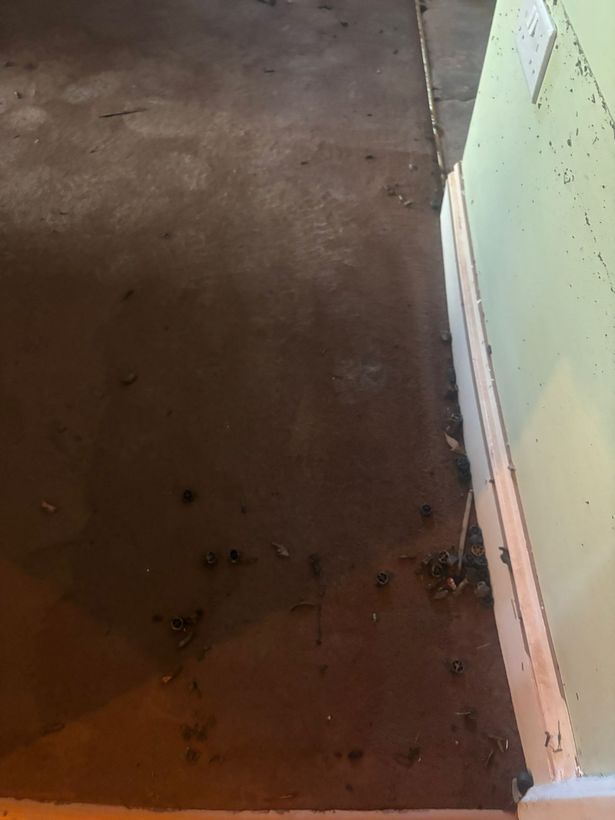 Bits of sewage remain in the living room, from when the septic tank burst(Image: WalesOnline reporter)
The Rockachs’ home, slightly higher than others and fitted with strong flood defences, was one of the last in the village to be reached. Rescue teams were already in the area, helping villagers and retrieving people stranded on car roofs. Darren and Karen remained dry for a while longer, still believing they might escape the worst. But then something changed upriver.
Darren was outside when he saw it forming: a swell of water, almost like a tidal ball, surging toward them. Cars were backed up outside the house because the road further down was already underwater.
One driver hesitated, unsure what to do, and Darren ended up helping haul the car back to safer ground. “They shouldn’t have been here – the road was shut – but people ignored it,” he said. At that moment he realised everything was about to accelerate. “I knew this was going to happen very, very quick now. All those cars, all those people – they were in danger, and they were putting us in danger.”
The cars eventually moved away just in time, because soon after, the river came in force. The Rockachs still had electricity and phones at that point, allowing them to watch the Grosmont River Gauge.
Darren pointed out that if levels continued rising there, the water in Skenfrith would too. Usually when Grosmont drops, Skenfrith follows about an hour and a half later, but the gauge kept rising. Darren raced to put in their final temporary barriers at the front door and the side door into the garage. “I had minutes to spare,” he said.
And then the water came over the wall.
Within less than 30 seconds, both barriers collapsed. “They just caved in,” he said. “And there was water, as you can imagine, like you see on the news. From nothing to wipe out – no restrictions, just water everywhere.”
A tidal wave burst through the front, down the side of the house, and through the back doors – “We were at the bottom of the stairs, watching it tear through the house.
“We really fought. We fought so hard for hours and hours. We were exhausted. We really thought we were going to beat it like last year.”
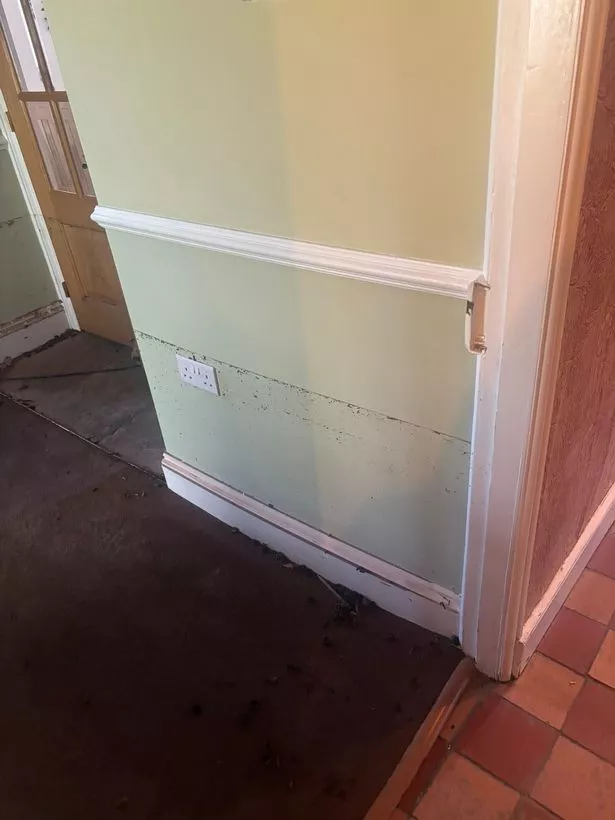 The water raised to unbelievable levels – nothing like the Rockach’s have ever seen before(Image: WalesOnline reporter)
But in an instant, everything changed. The water tore through their home with such force that the couple had no choice but to retreat upstairs. “We just said, you know what, there’s nothing we can do.” They went to bed, overwhelmed and shaken.
The stench of heating oil filled the air, mixed with the smell of sewage, which came from their burst septic tank. “It was stifling,” Darren said. He couldn’t sleep, worried the fumes might harm them. “It sounds stupid, but you never know. I just kept coming down and standing at the stairs – looking at the water that was in the house all night long.”
Over their four years in the home, they had slowly furnished each room with pieces that suited the character of the old house. They had finally reached the point where everything felt complete – the little ornaments, the collections, the touches that made the house theirs.
“We’d just about got there,” Darren said emotionally. Only days earlier, he and Karen had joked about what they would buy if they won the lottery: “We were saying that the house is pretty much everything we wanted, it was perfect.”
Now all of it, the furniture, the décor, the carefully collected pieces, had been wiped out in an instant. The kitchen will have to be ripped out and rebuilt. Some belongings washed away entirely – never to be seen again. “Memories that you think you will have forever,” Darren said, “just gone. Lost.”
Karen said the most painful losses were the irreplaceable ones – items passed down from their parents, treasures of family history that no insurance can replace. And, as Darren pointed out, the water wasn’t just water. It was sewage, heating oil, debris, everything swept up from overflowing septic tanks and broken systems throughout the village. “If it was just water, that’s fine we can deal with that,” he said. “But it isn’t.”
The couple had always believed they could manage flood risk. They purchased the property knowing its history and lived through flooding last November, but even then they didn’t appreciate how deeply it would affect them. Darren had always believed he could outthink the water – build better defences, adapt, prepare.
“I am one of those people who – once I have experienced something, I can do it again.” But Storm Claudia proved there are limits no homeowner can overcome.
Now, with their home destroyed and their belongings ruined, the Rockachs face the painful reality of starting again. Their village, still weary and mud-streaked, carries on in the slow process of recovery. But for Darren and Karen, the sound of the river rising, the sight of the barriers collapsing, and the moment the tidal wave burst into their home are memories that will stay with them far longer than the floodwater itself.
“We fought so, so hard,” Darren said. “We thought we could beat it. But we couldn’t.”