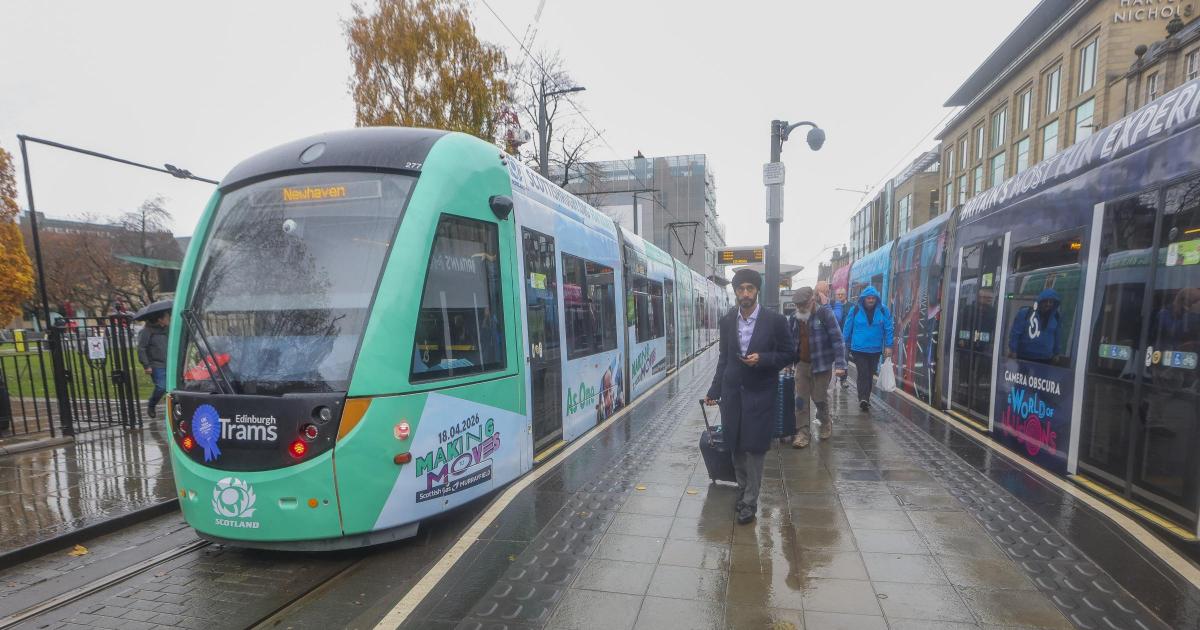
While this marks an significant step toward extending trams to more communities, a final decision remains years away — with millions of pounds and extensive debate inside and outside the City Chambers still standing between this consultation and any project approval.
Read more
The 11,425 survey submissions gathered over the past three months will play a crucial role in shaping that debate, offering the most comprehensive picture yet of public opinion since plans for another tram extension were first floated.
What exactly was consulted on?
People were asked for their views on a proposed north–south tram line from Granton to the Royal Infirmary, which would connect with the existing city centre route and more than double the length of Edinburgh’s current network.
Much of the debate has centred on the northern spur – and whether the Roseburn Path, a former railway now popular for walking and cycling, should form part of the route. But fresh concerns have emerged over whether Edinburgh’s 237-year-old South Bridge – currently the only option for the southern section – can withstand tram construction and operations.
It is not the only bridge in the spotlight. The Dean Bridge in the West End has been floated as an alternative to the Roseburn Path, but many dismiss the idea as logistically impossible without major alterations to an A-listed structure that is both one of the capital’s most iconic landmarks and a vital traffic route already plagued by congestion.
The potential routes on the table are:
- Granton to the city centre via Crewe Toll and the Roseburn Path
- Granton to the city centre via Crewe Toll and Orchard Brae
- City centre to The Royal Infirmary/Edinburgh BioQuarter via North and South Bridges, Newington and Cameron Toll
What happens next?
It will take council officers several months to sift through the thousands of consultation responses.
The initial plan was to launch the consultation in spring this year and present findings in autumn; however, due to the revised timeline a report detailing the feedback will likely go before councillors in mid 2026.
Accompanying this report will be a draft Strategic Business Case (SBC) for the tram extension. This will set out arguments for taking the project forward, including the problems it aims to solve and the expected benefits for the city.
The SBC will outline the possible routes, potential funding sources, and any major risks or challenges.
If councillors vote to proceed, an Outline Business Case (OBC) would then be developed to confirm key elements of the project, including the preferred route and design, updated cost estimates, detailed environmental and social impact assessments, and the proposed procurement strategy.
The final stage before any work could begin would be a Full Business Case (FBC), which provides the detailed plan confirming final costs and funding sources, contractual arrangements, the delivery programme, and the key risks for the council.
More on the future of Edinburgh trams
A February 2024 report estimated the cost of preparing a Full Business Case at £44 million and noted the council ‘has no funding allocated at present for such costs’. The Scottish Government has also indicated it is not in a financial position to support the business case or wider project costs.
With council elections due in 2027, any final decision on the tram extension will come after the vote — making it a likely flashpoint at the ballot box and potentially decisive in whether the project proceeds or is replaced by an alternative transport scheme.