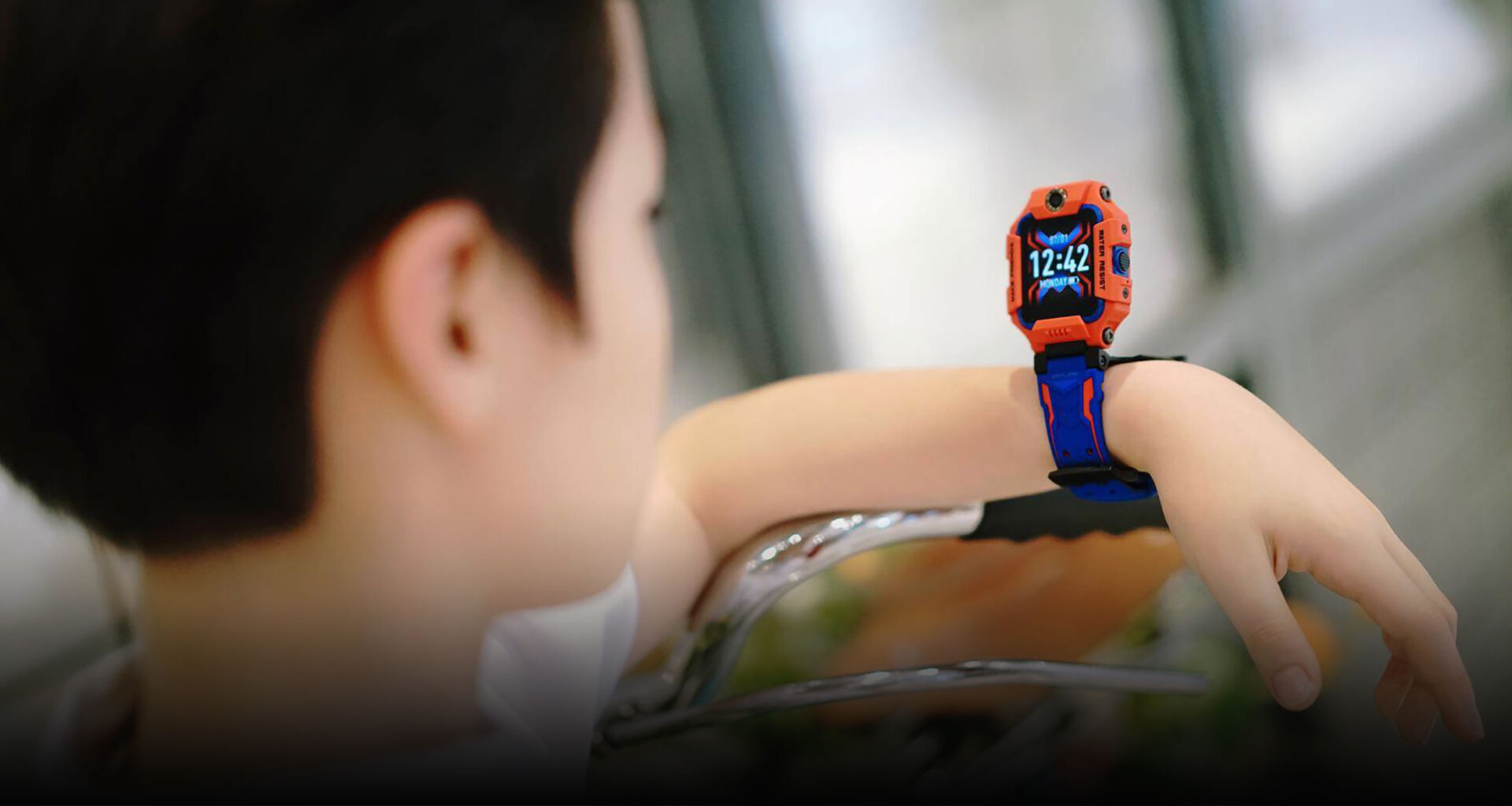
There are approximately 170 million children aged 5 to 12 in China. One in three of them owns a smartwatch.
Originally promoted in the 2010s as an age-appropriate alternative to smartphones for preteens, children’s smartwatches in China have quietly evolved into something far more complex: a platform where social ambition and a gray market intersect.
Xiaotiancai, or Little Genius — the children’s smartwatch brand known overseas as imoo — is facing mounting public scrutiny after Chinese media revealed that several of its built-in features, ranging from collections of “likes” to popularity rankings, have turned a safety-oriented gadget into a driver of peer pressure, online addiction, and the buying and selling of smartwatch accounts and likes among children.
Beyond calls and location tracking, Xiaotiancai smartwatches allow children to add friends and post status updates to earn likes or comments from their contacts, much like Instagram, WeChat, and other social media platforms, except everything happens on a screen the size of an Oreo cookie.
On Xiaotiancai’s largely unmonitored social media feeds, or online “watch circles,” the number of likes on a child’s homepage and the status updates they post serve as a social currency — both online and in real life — fueling competition and increasingly creating real-life social hierarchies and anxiety.
“My school rival has over 5,000 likes on her Xiaotiancai, and she’s always bragging about it. I’ve had my watch for a year and only got 100 likes. Who can help me?” This plea, posted on Chinese social media platform Xiaohongshu in September by a 16-year-old from China’s eastern Shandong province, lays bare the pressure and anxiety children feel in this digital world — where a few taps can dictate social standing and self-worth.
Dozens responded to the post and offered to connect with her on Xiaotiancai. Connecting with most of the people commenting, she gathered 1,000 likes in nine days, spending all her free hours outside of class glued to the screen, she told Sixth Tone.
Within the Xiaotiancai community, accounts with over 600,000 likes are referred to as “big shots.” Not only does this elevate their social status, but it also attracts a large number of followers. Having a “big shot” as a friend has become a form of social capital for many children.
Given that each account has a friend limit of 150, children who don’t “actively” engage in online interactions are considered low-quality friends and often get deleted from contact pages. To make space for active online contacts, real-life, in-person friends may also be sacrificed — only those who diligently give likes and interact stand to retain their friend status.
As these social networks have grown, so too has an underground economy around them. Students are adopting shadowy practices to circumvent the toil of leveling up their accounts by buying and selling high-ranking accounts online. One 12-year-old boy told local media that he recently sold an account with 242,000 likes for 80 yuan ($11).
On Chinese e-commerce platform Taobao, sellers exist catering specifically to Xiaotiancai users. A former online store owner told local media that once the platform discovers them, Xiaotiancai account-boosting shops typically get shut down. “Generally speaking, the user base is very young, so prices can’t be set too high,” he added. “The principle is to make small profits but sell in large volumes.”
Other e-commerce platforms, such as dedicated secondhand market Xianyu, also advertise proxy account management services. Here, children can buy automated likes for their Xiaotiancai posts or pay a fee to outsource their account to someone to boost its popularity.
A week of outsourced account management costs around 30 to 50 yuan. Services promising over a million likes via automated bot-driven tools for liking, group management, and credit collection can cost more than 1,000 yuan.
Some children’s obsession with gaining smartwatch-based popularity and the shadowy marketplace surrounding them has raised concerns among parents.
“Every hour spent on the watch comes at the cost of learning, play, and family time — this isn’t a ‘safety device,’ it’s a thief of childhood,” Beijing-based mother Jin Ceyuan told Sixth Tone.
Responding to public scrutiny, Xiaotiancai explained that their watch’s social features can be disabled. The company, based in southern China’s Guangdong province and sister company of Chinese smartphone brands Vivo and Oppo, leads the country’s smartwatch sector with a 27% market share. It faced public backlash in the past over explicit content on its other electronic products for children, such as tablets.
Legal experts note that such content may lead to legal consequences for the company, given that China’s Law on the Protection of Minors, revised in 2020 to include a chapter on “internet protection,” now requires platforms and products targeted toward children to implement controls to prevent addiction.
Liu Zhen, a child psychologist at the Shanghai Mental Health Center, told Sixth Tone that a coordinated effort is necessary to address the issue. “For adolescents, the desire to gain recognition from peers and a sense of belonging is completely normal,” she said. “Manufacturers or developers of these watches should face stricter regulations, while parents and schools should offer more positive guidance.”
“At its core, this controversy reflects a deeper challenge in education: how to guard against the risks that emerge as education becomes increasingly digital,” Chu Zhaohui, a researcher at the China National Academy of Educational Sciences, told Sixth Tone.
He added that any internet-enabled device should be judged by whether it genuinely supports a child’s social development. “Smartwatches may spark interest in online interaction, but they can hardly match the high-quality communication qualities that can be fostered by face-to-face interaction, such as mutual respect and the ability to read others’ expressions to build real understanding.”
Editor: Marianne Gunnarsson.
(Header image: VCG)