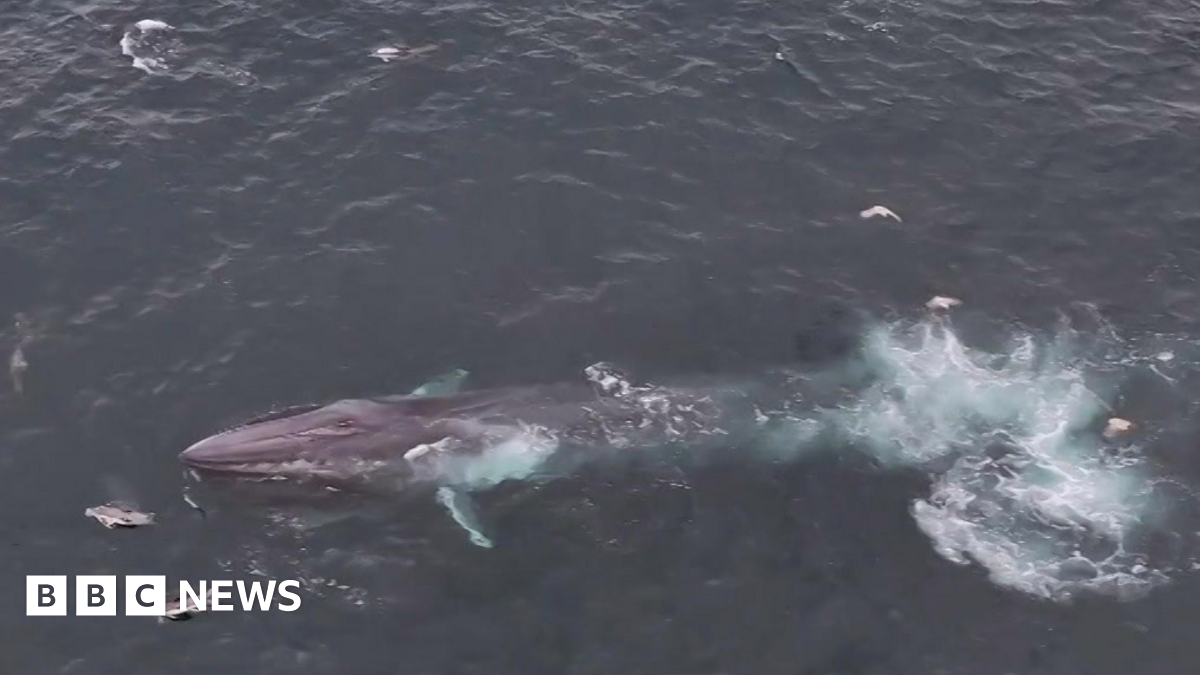
The spread is not limited to south-west England, he said.
“We’ve been seeing an increased number of sightings up in the Hebrides, in Shetland, and also on the east coast of Scotland, from the Firth of Forth up to Cape Wrath,” he said.
Even the North Sea sees occasional visitors, with reports off east Yorkshire near Whitby.
“They do cover the whole sort of UK,” he said, though they are far more common off the west coast, where the continental shelf edge offers rich feeding grounds.
Climate change may also be nudging the trend, he said, though he stressed the main driver was prey availability.
For him, the rise in sightings was a sign of hope. “It’s very pleasing to see,” he said. “It shows how the species has recovered from overexploitation.”
Cam Molland, first mate at AK Wildlife Cruises, said: “It’s a common misconception that if you want to see stunning whales and dolphins, you have to go all over the place, but the amount of cetacean biodiversity that we have in Falmouth Bay is without a doubt world-class.”