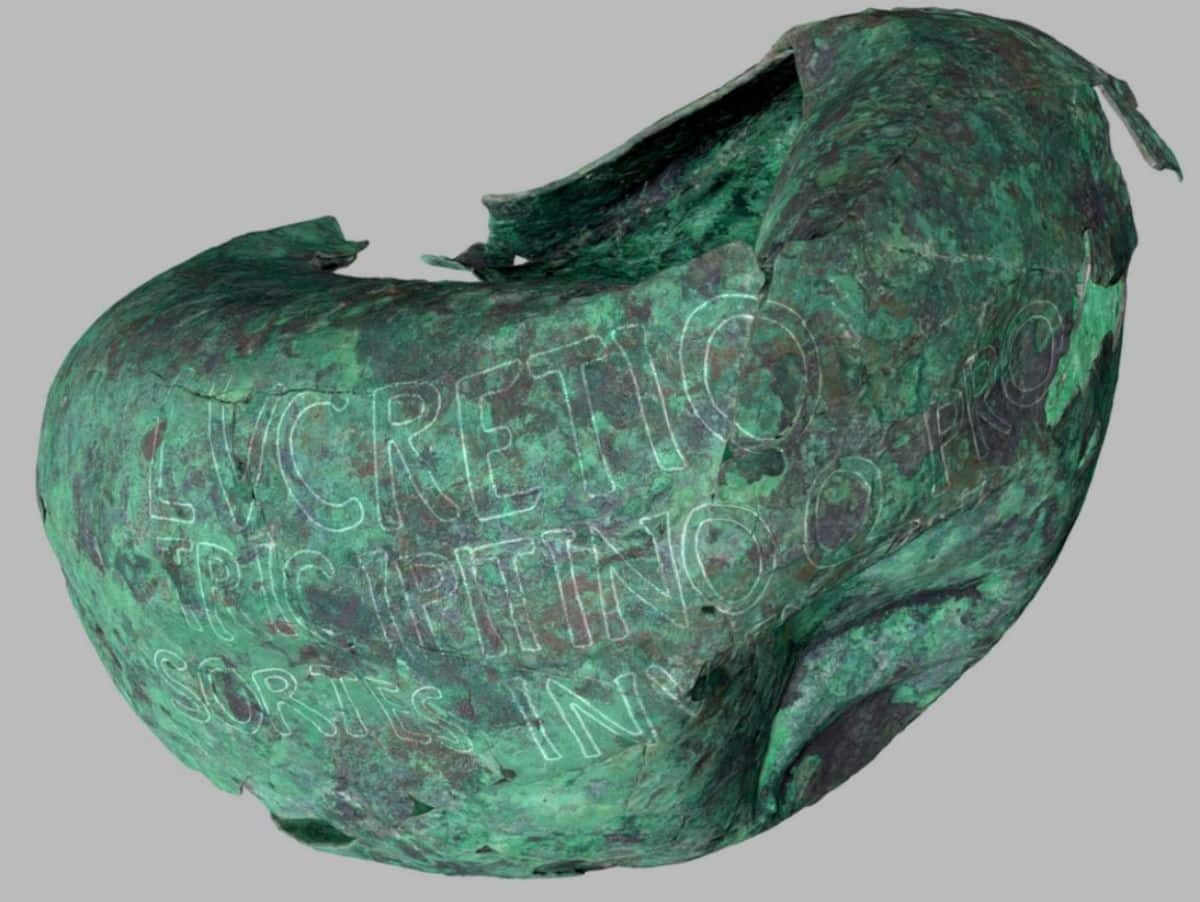
Side view of the situla or bucket from Carthago Nova with the text highlighted. Credit: J. G. Gómez Carrasco / CC BY 2.0
Archaeologists in southeastern Spain have uncovered a rare Roman inscription that names a previously unknown governor of Hispania Citerior, shedding light on a little-documented period of Roman administration.
The engraved text, found on a metal vessel in Cartagena, identifies Spurius Lucretius Tricipitinus, a Roman official who held the extraordinary position of “quaestor pro praetore.”
The vessel, known as a sitella, was used for casting lots, a practice common in Roman public and religious life. The words sortes (tablets) and the governor’s full name are inscribed across three lines on the object’s outer surface.
This Roman inscription links directly to a stone text discovered in the 17th century, which referenced a “quaestor pro praetore” but left the name incomplete. The match in title and context has allowed researchers to confidently identify the man as Tricipitinus.
Rare office and rediscovered identity
Experts from the universities of Alicante, Murcia, and Rovira i Virgili, along with the Cartagena Port of Cultures Consortium and the city council, explained that this is only the second recorded case of someone holding this temporary governing role in the province. The discovery was published in the July 2025 issue of Boletín del Archivo Epigráfico.
Tricipitinus’ family background adds to the find’s importance. The gens Lucretia was a prominent Roman lineage, but the surname Tricipitinus had not appeared in inscriptions since the early fourth century BC.
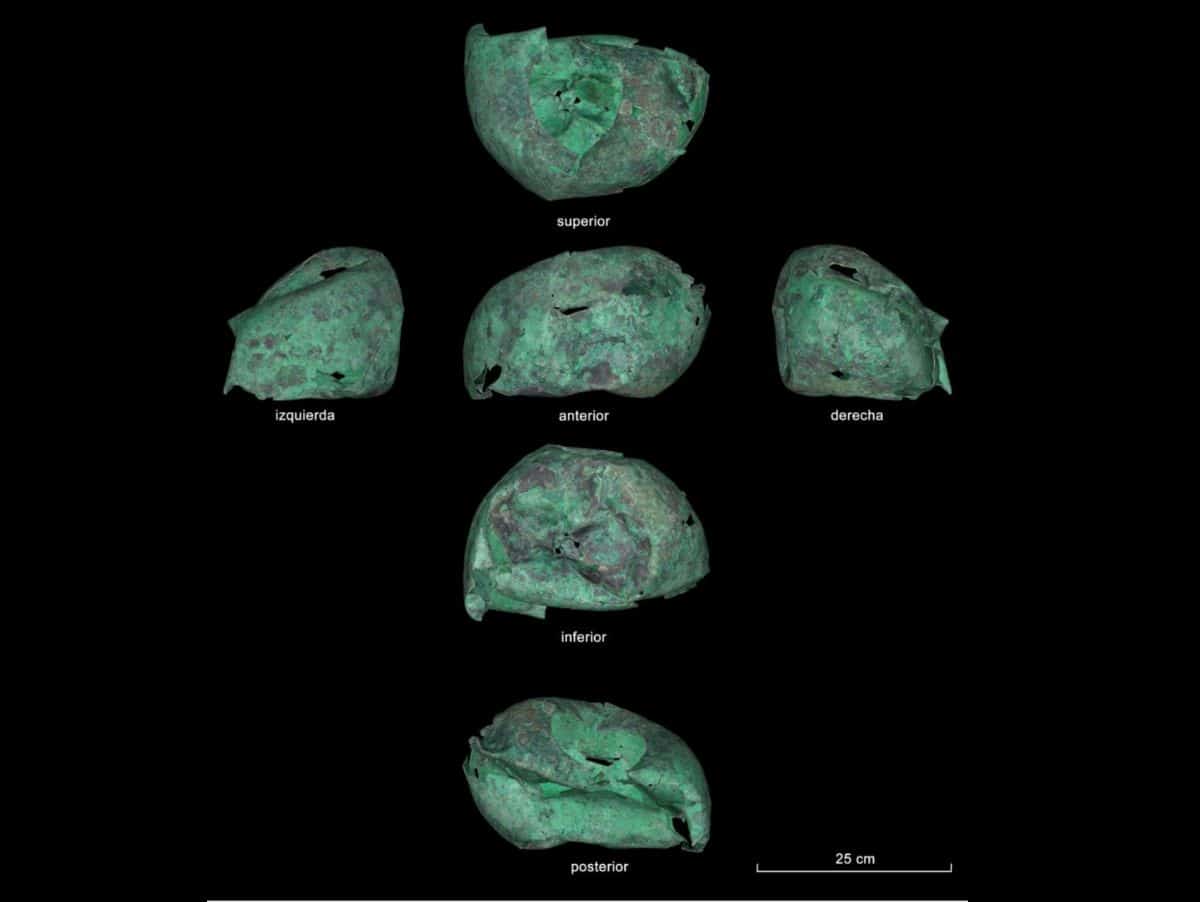
Orthographic views of the metal vessel. Credit: J. G. Gómez Carrasco / CC BY 2.0
Its reappearance in Cartagena suggests a continuation of influence or at least legacy into the late Republic.
Roman inscription links an unknown governor to mining interests
Further evidence connects the governor to local mining. Lead ingots from the Cartagena-Mazarrón area bear the name Spurius Lucretius, son of Spurius, abbreviated identically to the sitella.
Researchers believe the official and the mining figure may be the same person or closely related. This points to what Roman sources described as sors opportuna—governors with business ties to their provinces.
The vessel was found in the ruins of the Atrium Building, a public structure from the 1st century AD later converted into private housing. A fire around 300 AD destroyed the building, preserving the sitella beneath collapsed beams. Though not in its original context, the object survived nearly intact.
Archaeologist José Miguel Noguera described the artifact as key to understanding the political, economic and spiritual networks between Rome and Carthago Nova. The vessel, he noted, not only names an unknown governor but also helps reconstruct a chapter of Roman provincial history long obscured.