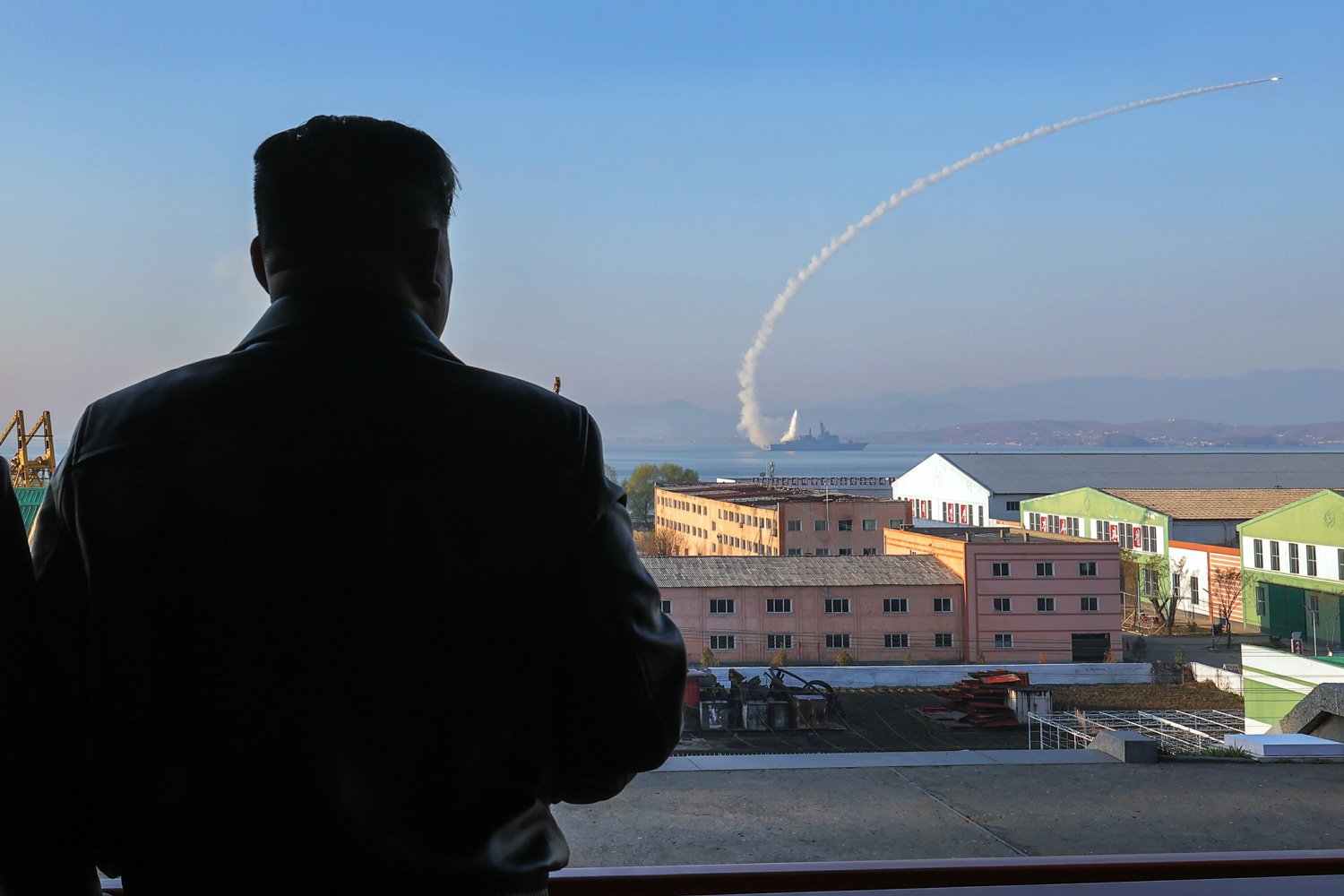
It was October 2001 in Pyongyang. The North Korean Foreign Minister Paek Nam-sun was agitated. He asked me to “please explain” the US Air Force squadron, which had recently flown over the Korean Peninsula to land at Osan Air Base in South Korea. He recalled as a boy seeing US military aircraft arrive to backstop allied forces – including 18,000 Australians – still fighting on the ground at what was to be a turning point in the Korean War.
I tried my best, describing the sweeping re-orientation of US military assets around the globe in the immediate aftermath of the 9/11 terrorist attacks on the United States. The Alaska squadron was deployed, I said, to rebalance after a US aircraft carrier had begun moving from North Asia to the Gulf.
But Paek would not be mollified. To him, all guns were metaphorically pointing at Pyongyang.
Our visit to North Korea came at the best of times. After Australia had decided to renew the bilateral relationship with the Democratic People’s Republic of Korea (North Korea) in 2000, in support of South Korea’s then president Kim Dae-jung’s “Sunshine Policy” and moves by the US Clinton administration to visit the Hermit Kingdom, Australia’s Ambassador David Irvine in Beijing presented credentials in Pyongyang. Our visit was designed to offer further food and energy assistance to North Korea and discuss deepening diplomacy including North Korea’s admission to regional ASEAN-centred forums. I was Irvine’s Seoul-based delegate and North Korean officials were intensely focused on my perspectives from the South.
But a year later, North Korea had been caught out reprocessing nuclear material and soon after openly declared its clandestine nuclear weapons program.
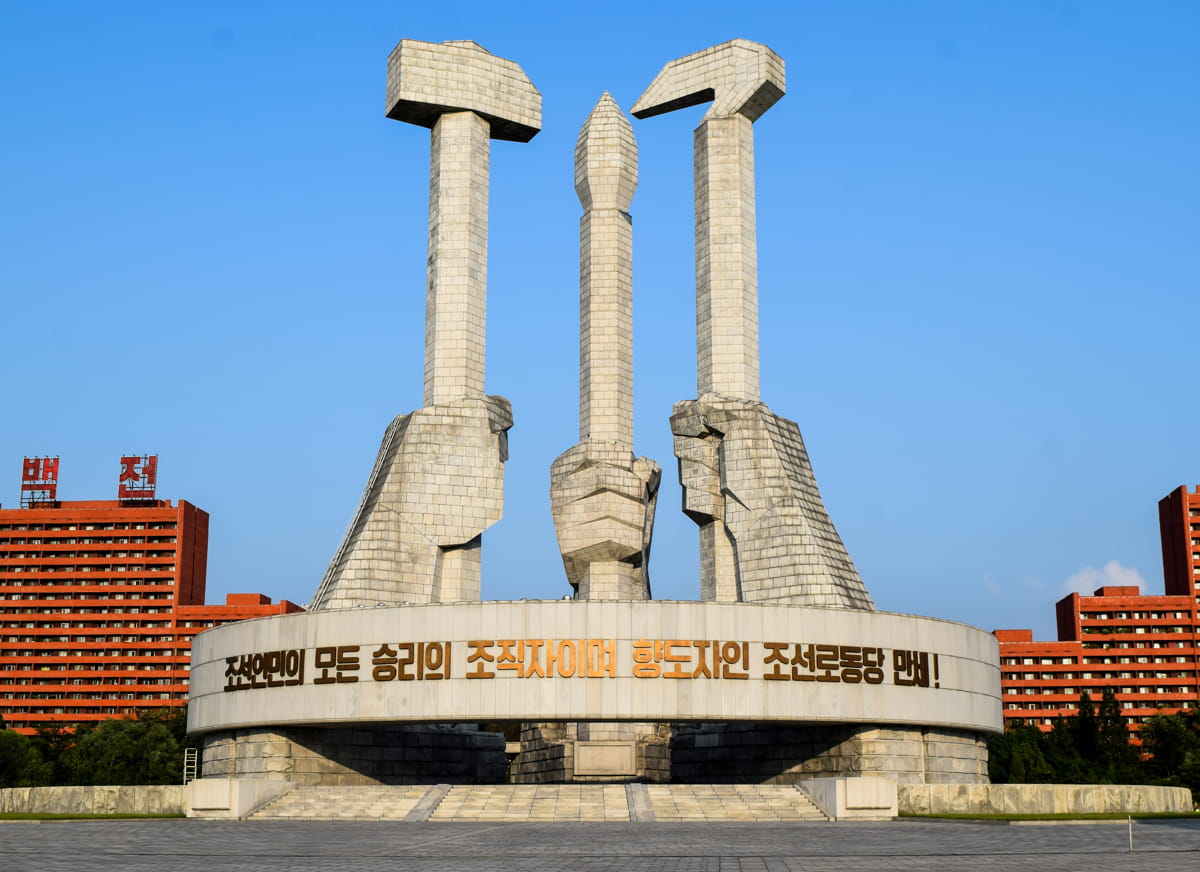
The Monument to Party Founding, Pyongyang, North Korea (Steve Barker/Unsplash)
Twenty years on, and the third generation Kim is now showcasing his now formidable nuclear weapons capability – literally on a stage together with the Asian nuclear powers, China, India and Russia (yes, look it up: Russia has a Pacific coast). He has repudiated 70 years of commitment by both Seoul and Pyongyang to strive for “denuclearisation of the Korean Peninsula”. Beijing has effectively recognised North Korea as a nuclear armed state. Russia has probably encouraged Kim and provided him with nuclear technology since their 2024 renewed defence pact and provision of North Korean troops, ammunition and rockets to assist Russia’s war against Ukraine.
In this Trump era, doubts are arising among commentators in Seoul and Tokyo about US extended nuclear deterrence. Japan’s new conservative Prime Minister Sanae Takaichi is mulling a review of the principles which had elevated Japan to a global leader on nuclear non-proliferation, including a ban on placing nukes on its territory. South Korea’s progressive President Lee Jae-myung has gained traction in acquiring nuclear submarines and polls indicate a majority of South Koreans believe their government should have a nuclear arsenal to repel the North.
Fundamental rethinking – albeit insufficiently urgent – is underway as the world edges towards nuclear breakout and the expiry in February 2026 of the last US-Russia nuclear arms control treaty, New START. Russia’s Vladimir Putin has reportedly proposed extending the treaty’s limits informally and resuming bilateral arms control talks. But experts are sceptical about his intentions amid current confusion over the latest US-Russia Ukraine war deal, and the fact that Putin’s efforts will eschew the verification measures critical to real nuclear warhead draw downs.
Asian partners and allies need to hear the US President say that the nuclear taboo remains cogent.
For decades, US President Donald Trump vowed to rid the world of nuclear weapons. As late as July Trump indicated his desire to maintain the limits set out under New START. But what to make of Trump’s announcement that he will authorise the recommencement of nuclear testing? US Energy Secretary Chris Wright, who maintains the nuclear arsenal, sought to dampen anxious responses by explaining the US was considering “system tests” which involve “non-critical explosions”, not nuclear detonations.
But nuclear experts are on high alert as yet another global norm underpinning the “nuclear taboo”, the Comprehensive Test Ban Treaty, is undermined.
More than two decades after my discussion with the North Korean foreign minister, what are we to make of nuclear ambitions and changing power relativities in our own region?
Paek’s fear back then of US air power illustrated deterrence at its most basic task – a show of power which can change the mindset of an adversary, to prevent or curtail war. Plus, the significance of conventional military “lift” capability in the form of fighter jets, even as we talk nervously about nukes.
Asian partners and allies need to hear the US President say that the nuclear taboo remains cogent as the United States will honour its promise of extended deterrence. Noting that promise does not imply a nuclear strike will be met with a nuclear strike but can and should involve US conventional responses.
Perhaps amid the chaotic White House messaging Trump will revisit his commitment to rid the world of nuclear weapons and use his power and relationships with Putin and Xi – however fraught – to convince them both to reset the global nuclear strategic balance.
Paek’s paranoia – misreading the threat – probably indicated that the Kim regime was moving rapidly towards nuclear weapons, though I did not know that at the time.
But it highlighted a danger even more apparent today, that of potential strategic miscalculation by nuclear-armed adversaries.