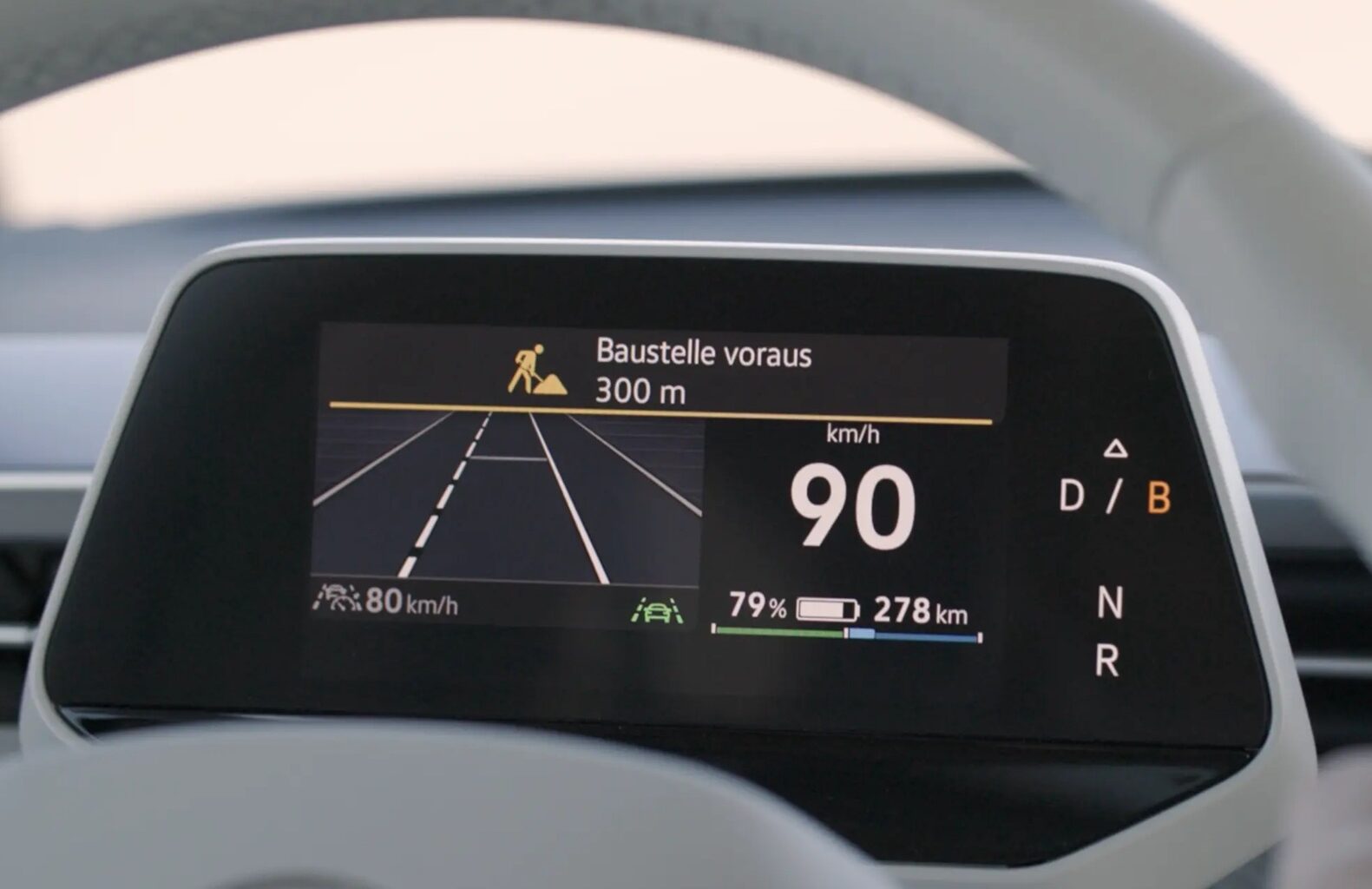
Autobahn – Germany’s highways operator – has rolled out a cooperative ITS (C-ITS) project to make workzones safer.
The country’s 1,200 mobile barrier boards have been equipped with a communication system that alerts drivers when they are approaching a workzone on the motorway.
The driver receives a warning directly on the dashboard display via an ad-hoc WLANp communication system and can react accordingly – for example, by slowing down.
More than 2.3 million vehicles in Europe are equipped with C-ITS technology and can receive signals from the roadworks warning system.
The data is made available to platforms such as the German federal government’s Mobilithek (Mobility Library), where it can be accessed by vehicle manufacturers and other third parties.
“With around 300,000 daily roadworks sites annually, we bear a special responsibility for the safety of road users and our employees,” says Dirk Brandenburger, technical director of Autobahn.
“The C-ITS system makes daily roadworks digitally visible even before they come into the driver’s field of vision.”
Further services will be tested in pilot projects, he adds.
“The fundamental goal is to optimise traffic flow with digital solutions and significantly increase safety for all road users: C-ITS helps to detect hazards in time,” explains Patrick Schnieder, German federal minister of transport.
“With C-ITS, we have brought a key technology for greater road safety to the streets. Cooperative intelligent transport systems are the basis for a new era of transport.”
In other trials, Autobahn is equipping some of its motorway route control and maintenance vehicles with C-ITS components to improve safety.
It is also exploring the potential of probe vehicle data (PVD), which would see Autobahn receiving anonymised vehicle data from C-ITS-enabled vehicles via existing infrastructure.