
We’re hurtling towards the busiest time of the year, and if there’s one thing that can take a back seat when life gets hectic, it’s working out. While taking a break from your exercise routine isn’t always a negative (rest and recovery are as much a part of a well-balanced regime as the hard graft), many of us want to maintain at least some degree of movement between now and spring. That’s where the 15-minute workout comes into its own.
It’s tempting to wonder if it’s even worth lacing up our trainers when we only have a quarter of an hour, but hear this: when it comes to exercise, something is always better than nothing. In fact, according to research published in the European Heart Journal, just 15 minutes of vigorous activity per week (broken up into workouts of as little as two minutes per day) is associated with a reduction in our risk of developing heart disease and certain cancers, as well as lowering all-cause mortality.
“Studies show exercising for 15 minutes per day can help increase longevity,” shares Lannay Dale-Tooze, qualified L3 personal trainer and content writer at Gymshark. “So, even if long runs or hour-long gym sessions don’t fit into your schedule, if you’re able to find 15 minutes to squeeze in some movement, you’ll see those small bursts really do add up.”
Of course, longer workouts are also well worth our time, and in an ideal world, we’d have a decent mix of both longer, endurance sessions and short, sharp efforts. Additionally, the experts note an important caveat: if you’re not working out for long, you’re going to have to work hard. In other words, you’re going to need to feel your heart pumping and lungs complaining to gain significant benefits.
The best exercises to do when you only have 15 minutes
HIIT
Quick biology lesson: the body likes to maintain a stable internal environment (homeostasis). After vigorous exercise, we’re still working hard beyond the session to recover. In a process known as excess post-exercise oxygen consumption (more colloquially known as the afterburn effect), the body continues to burn energy, resulting in a metabolic boost even when you’ve stopped sweating.
“If you only have 15 minutes, the goal is to get your heart rate up into zone two to three so you continue using energy even after you’ve stopped exercising,” advises Dale-Tooze. “Focus on full-body exercises and HIIT-style circuits as they’ll give you the biggest return in the shortest amount of time”.
Not sure where to start? “Workout structure is everything,” advises Rowan Clift, training and nutrition specialist at AI-based fitness and lifestyle coaching app Freeletics. “Start with a quick, dynamic 60-second warm-up to get your body ready; I like high knees, arm circles and dynamic hip mobility.
“Next, choose a format like AMRAP (as many rounds as possible) or short timed intervals. For example, you might do 30 seconds of each movement with 10 seconds rest between them or going through a set circuit three or four times.”
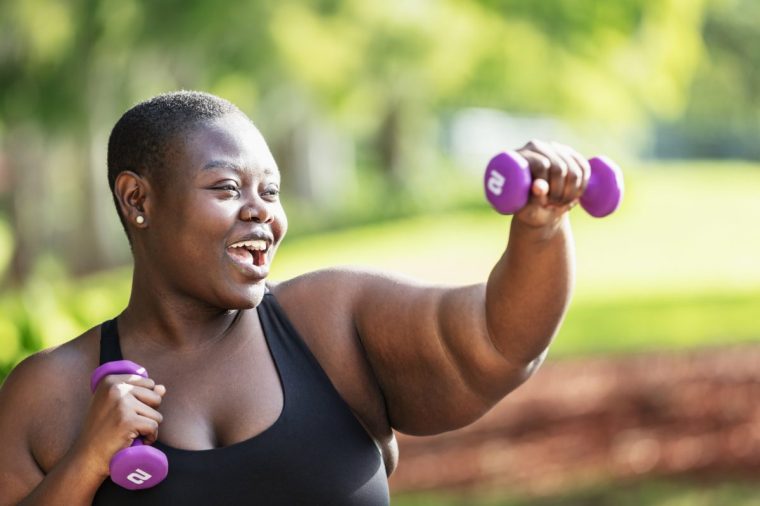 Even after HIIT the body continues to burn energy (Photo: Kali Nine/Getty)
Skipping
If you haven’t picked up a skipping rope since you left primary school, now might be the time. Research shows that despite its simplicity, skipping is an enormously effective way to challenge and improve cardiovascular health and performance, even in professional athletes. The best bit? All you really need is a humble skipping rope and a little bit of space (and perhaps no downstairs neighbours).
“15 minutes is more than enough time to bring some movement back to the body, especially if you’ve been sitting working all day,” notes Dale-Tooze. “You could use this time to shake some tension out, dance around your living room, or try a few jumping movements to get the blood flowing and your energy levels up.”
Strength training circuits
When it comes to bang for your workout buck, strength training is the GOAT. This is because you’ll carry on reaping the gains way beyond your 15-minute workout. Strength training in particular boosts that all-important afterburn effect.
“Research consistently shows that high-intensity interval training (HIIT) and strength training are the most effective at producing a significant afterburn effect compared to steady-state cardio,” shares Dale-Tooze.
“Compound exercises like squats, lunges, push-ups and rows give you the biggest results in the shortest time because they work multiple muscles at once,” says personal trainer at OriGym, Abbie Watkins. “Create a circuit routine made up of compound exercises. Keep rest short and intensity high, for example one minute on and 15 seconds off, before jumping back into the next exercise. For an added challenge, incorporate small versatile pieces of kit like ankle weights, small dumbbells or resistance bands, too.”
Sprinting
Research shows that brief, intense interval exercise improves cardiometabolic health markers (such as insulin sensitivity) just as effectively as more moderate intensity training. So, if you’re after a short, sharp boost, sprint interval training (known as SIT) either on a bike or running, is a great option.
“If you have access to a treadmill, try a quick round of interval sprints: warm-up for two minutes, then complete seven rounds of 30 second sprints, followed by 30 seconds rest,” says Dale-Tooze. “Finish off with a one minute cool down jog. It’s one of the fastest ways to get your heart rate up and maximise your effort.”
Not ready to sprint for 15 minutes? We don’t blame you – and you don’t need to. Just two to three minutes of all-out effort works.
 A quick round of interval sprints is a great option (Photo: Getty)
What to focus on
As well as focusing your workouts on the above, one of the simplest and most effective ways to maximise the benefits of shorter workouts is to use active recovery instead of complete rest, making sure your heart rate stays elevated throughout.
“If you need a breather between sets, march or jog on the spot rather than stopping completely,” advises Clift. “This will keep your heart rate elevated and prevent your body from cooling down. Another tip is to add variety through angles and tempo without changing the exercise. For example, switching from standard push-ups to incline push-ups, or slowing down the lowering phase of a squat challenges your muscles in a new way without costing extra time.”
What not to bother with
In a nutshell, you need to utilise every minute of your 15-minute workout, so now’s not the time for an elaborate array of high-tech equipment or tackling intricate moves.
“Avoid slow isolation exercises, long warmups, or anything that involves complex equipment setup,” advises Clift. “A 15-minute workout is not the time to practice highly technical skills either; instead, stick to accessible, high impact fundamentals.”
Dale-Tooze agrees. “Skip the equipment and go straight for bodyweight exercises. No set-up, no faff, just movements that make the most of your time. Exercises like burpees, squats, push-ups, jumping jacks, high knees and up-and-down planks all work brilliantly, and even a short burst of these will leave you feeling energised.”