
It’s careers day at a school on the outskirts of Bristol, and over two hundred 15- and 16-year-olds are waiting in the sports hall for a presentation.
A man explains how their company is at the forefront of renewable energy. A woman stands beside him, boasting about the opportunities they’ve created for women in science, technology, engineering and maths (STEM).

Reporting on the stories that matter to you. Only with your support.
The man fumbles with the projector. “I’m sorry. I won’t be able to show you the cool pictures of missiles and things,” he says, according to a teacher who was present.
These employees are from Airbus, a company involved in the production of weapons.
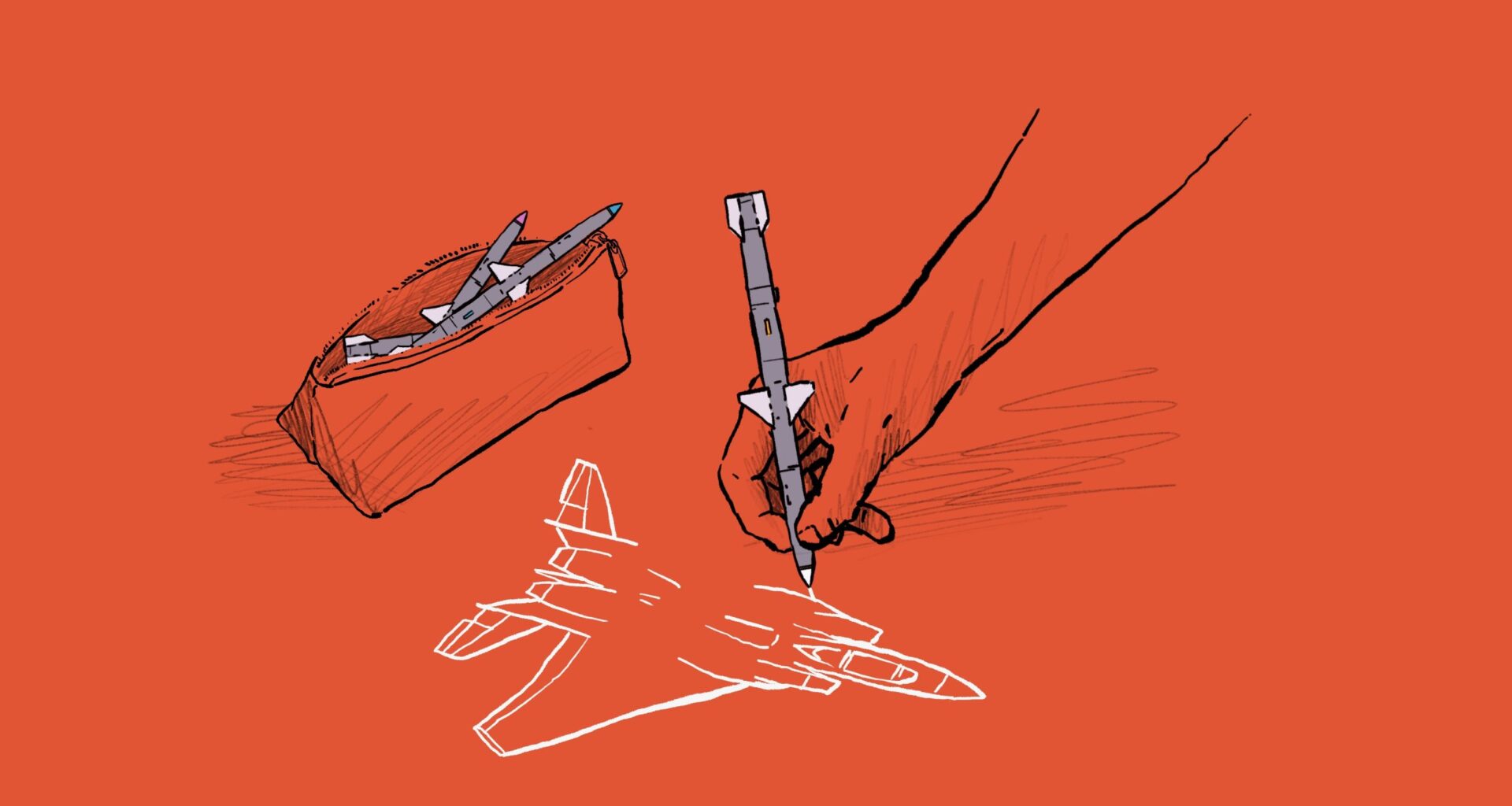
This school is one of many in Bristol allowing companies such as Airbus, BAE Systems, and other arms manufacturers to promote themselves through assemblies, educational resources, and competitions.
Airbus has partnered with at least seven primary schools near Filton. Rolls Royce sponsors Cabot Learning Federation, a trust of over 35 schools. Babcock International, meanwhile, just opened its own welding apprentice school with Weston College.
While arms companies present themselves as promoting STEM careers, speaking to the Cable many teachers raised serious concerns about these companies normalising militarism and complicity in warfare.
The Saudi connection
Back at the careers talk, Airbus staff discuss hydroelectricity and European bases, but not missiles.
Towards the end, one staff member Rick* asked: “Do you sell military hardware to Saudi Arabia?” The Airbus reps were startled. Some of the students laughed. Then silence fell.
“A lot of our students might be interested in working for you now. They need to know what the moral implications of doing that are,” he added.
The Airbus employees glare, and an assistant headteacher steps in to end the assembly.
In fact, Airbus has sold billions of pounds worth of military hardware to Saudi Arabia, including Eurofighter Typhoon jets used between 2015 and 2022 in the bombing of Yemen. According to the Yemen Data Project, nearly 20,000 civilians were killed or injured during this period. Amnesty International reported evidence of war crimes as the strikes destroyed homes, hospitals and schools.
Rick was called into a manager’s office, and told he’d be subject to a formal investigation. During that time, the headteacher even phoned Airbus to apologise.
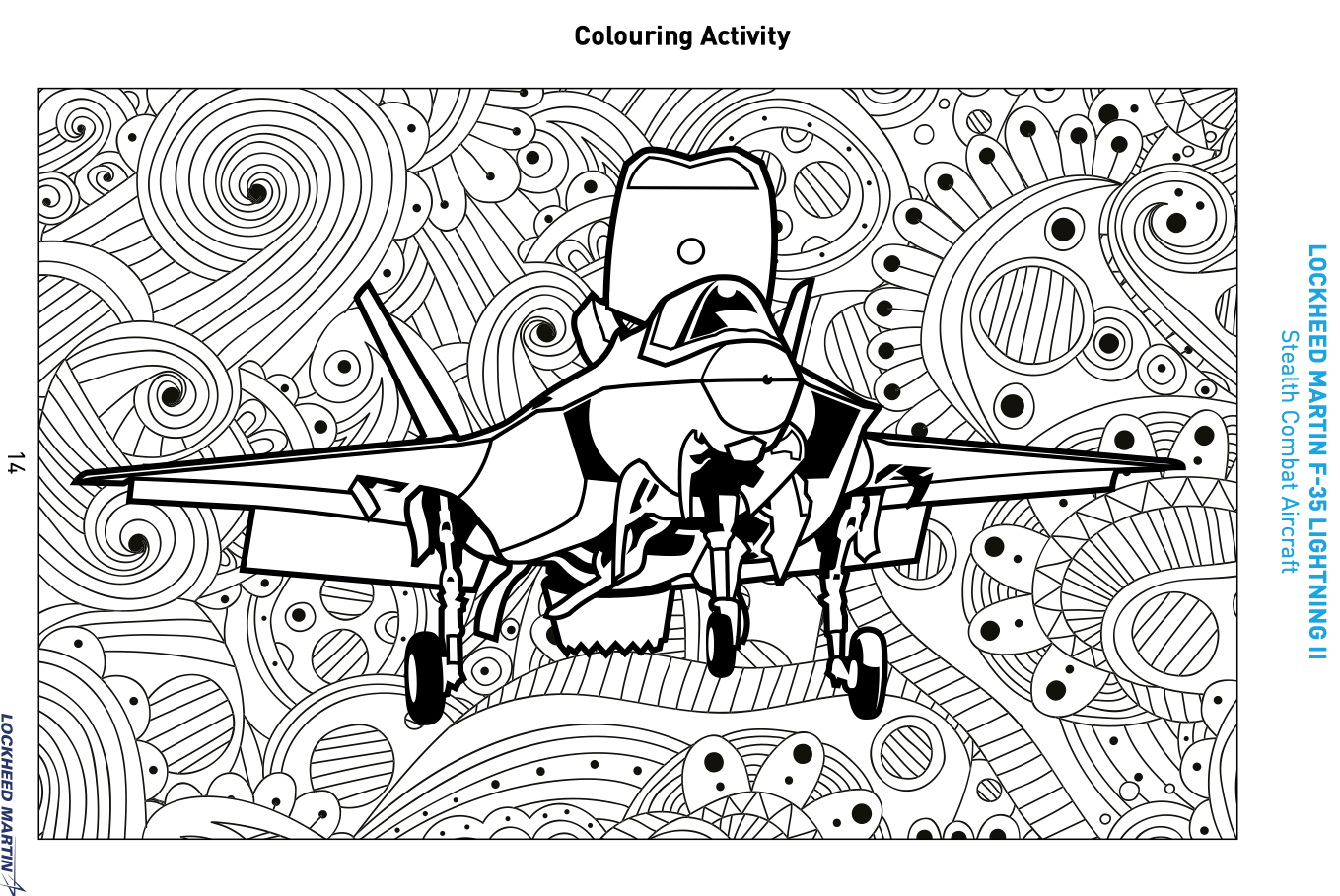 ‘Colour in the fighter jet’: A page from an activity book produced by Lockheed Martin, the world’s biggest arms manufacturer.
Parents were sent letters from the school, to reassure them that the staff member’s views did not reflect the school’s values.
Finally, almost a month later, Rick was asked to meet his line manager.
“I asked what was inappropriate about the question, and it just turned into a fumbling twenty-minute conversation,” he tells The Cable. “He vaguely suggested the concerns could be addressed elsewhere in the curriculum… that students could look up information on Airbus themselves.
“He tried to say my question was inappropriate because it was ‘political’, but war crimes are supposed to transcend politics—they’re meant to be something everyone agrees is morally wrong.”
Devastation in Gaza
British arms companies sell nearly a third of the weapons they produce to countries with poor human rights records, including Saudi Arabia and Israel.
In October 2023, following Hamas’ deadly attack, Israel began its brutal bombing campaign on Gaza. Two years on at least 65,000 Palestinians have been killed, with the UN and other human rights organisations ruling this a genocide.
It’s propaganda work. Companies clean up their image by investing in education.
Faria, Disarm Education
Just months into the bombardment, staff from BAE Systems were invited to St Katherine’s School near Bristol to speak to students. It is one of the UK’s largest arms companies, and one of the main partners in the production of F-35 fighter jets, many sold to Israel.
“It was sprung upon a lot of teachers,” says Alice*, a former St Katherine’s employee. Students weren’t told about the company’s arms involvement or its role in Gaza. “It was a disgrace,” she says.
The school’s careers officers emailed staff, saying the assembly would give year 8 students a chance to explore aeronautics and STEM careers.
Since 2020, BAE Systems has spent over a billion pounds on education and skills development, regularly showcasing their forays on social media. Posts include robot dogs, lightsaber fights, and presenters with names like ‘Mr Magnetic.’
But crucially – as Alice points out: “They don’t mention at all who they are or what they actually do.”
Lack of scrutiny
Nick, a religion and ethics teacher, says the same about Rolls Royce, who recently visited his Filton school. “They don’t talk about weapons. They focus on aerospace, then greenwash it by saying, ‘we’re developing synthetic fuels.’”
He adds that discussing war with students is tricky. “I teach peace and conflict, but if I start talking about missiles, there’s a good chance someone’s dad works at the nearby Ministry of Defence.” And, he knows many of the students will go on to apprenticeships with Rolls Royce or BAE Systems, both of which have bases in Filton.
Faria, from Disarm Education, a campaign set up by educators, parents and students to end arms companies’ involvement in schools, claims these visits often happen without parental awareness, scrutiny or consent.
“Parents need to give consent for sexual health lessons and religious trips, but they don’t have to for arms companies, which is something that we want to raise in the campaign,” she tells the Cable.
“It’s propaganda work. Companies clean up their image by investing in education. Rolls Royce don’t announce themselves as an arms company, they’ll hide it under the veneer of innovation, engineering and technology.”
Some companies go further. French company Thales, a French company, tours their missile simulator around UK schools.
While Lockheed Martin, the world’s largest arms manufacturer, produced an activity book with a ‘colour in the F-35 fighter plane’ exercise for British Science Week.
Unions pushing back
In July, the government proscribed Palestine Action, which had carried out direct action against companies producing arms used by Israel. Open resistance has become riskier, but activists are finding other ways to push back.
In April, Disarm Education affiliated with the National Education Union (NEU), giving members protection to challenge arms industry involvement.
NEU members in the Cabot Learning Federation successfully blocked Labour MP Damien Egan, vice chair of Labour Friends of Israel, from speaking at Bristol Brunel Academy due to his stance on Palestine Action and Israel sanctions.
An NEU member at a CLF school told the Cable how, in September, the union rep at BBA posted about Egan’s visit in a WhatsApp group, sparking a flurry of organising.
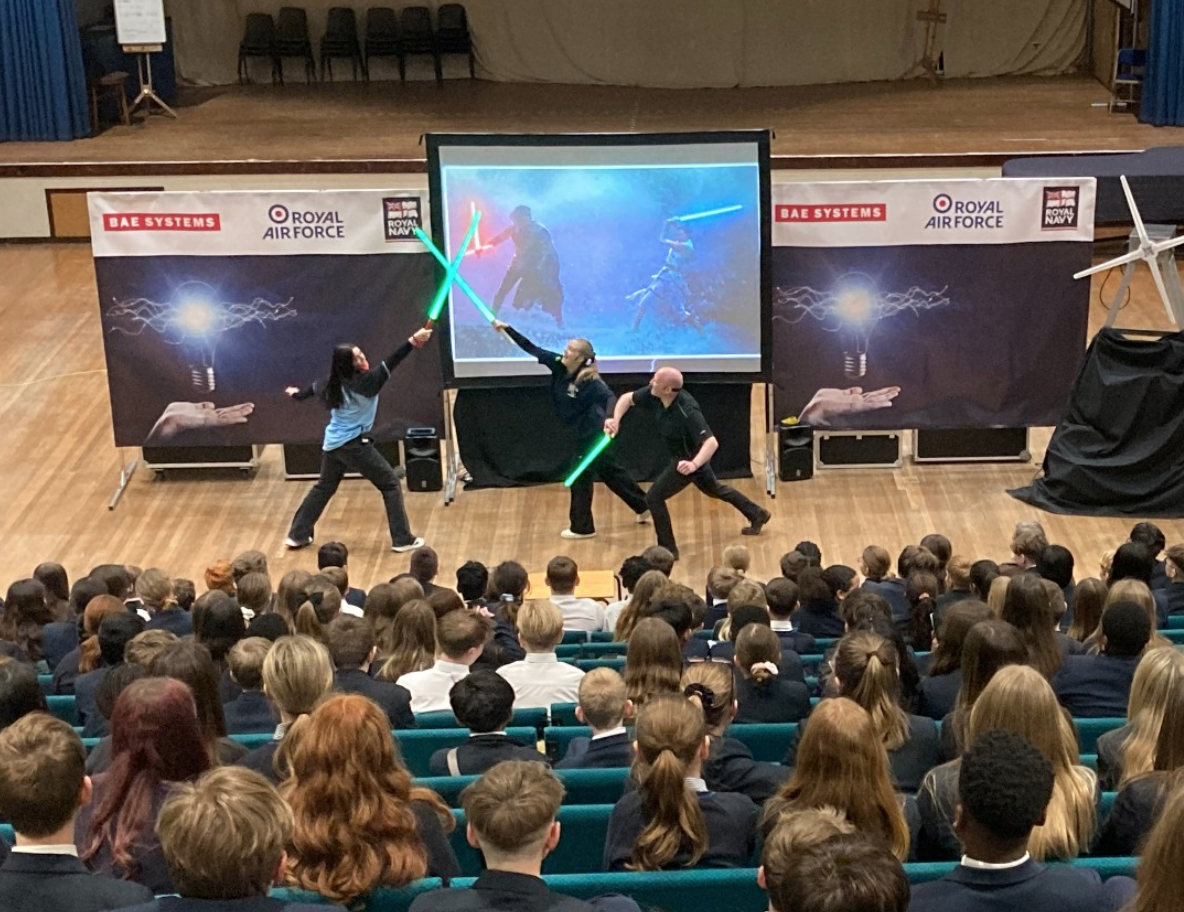 BAE Systems spends billions on education and skills development and showcase their forays, like lightsaber fights, online.
Michaela Wilde, a pastoral support worker at City Academy, recalls staff mobilising fast: “[We had been] talking about things like people wearing keffiyehs to work that day… and the work that members could do with students in preparation for that visit.”
School leaders, aware of the organising, contacted the NEU rep to say the visit was cancelled due to “safeguarding concerns.” Whether this was about protecting children or Egan himself remains unclear.
What is clear is that CLF NEU members aren’t afraid to challenge anyone they see as complicit in the arms trade. In July, they successfully pressured the trust to remove Charlotte Wilson, a representative from Checkpoint Software Technologies—an Israeli-owned security company linked to the IDF—from their summer conference.
CLF schools have also raised thousands for medical aid in Palestine and twinned some schools with counterparts in the West Bank. As Michaela puts it, “If we feel strongly about these things, we will take action.”
Whether other schools’ staff will feel empowered to act remains to be seen. But one thing is certain: arms companies are investing heavily in Bristol’s education system. Faria argues they get a free pass “to reproduce the dominant ideology of increased militarisation in our classrooms,” a reality that keeps her pushing back.
When The Cable reached out to Airbus for comment, the company replied: “Airbus has a significant presence in Bristol, which is home to our largest UK engineering workforce. We are proud of our long-standing engagement with the local community, which includes partnerships with local schools to promote Science, Technology, Engineering and Mathematics (STEM) subjects.
The aim of this outreach is to inspire the next generation of engineers and aerospace pioneers, showcasing the wide range of career opportunities in aviation, space and technology.”
Independent. Investigative. Indispensable.
Investigative journalism strengthens democracy – it’s a necessity, not a luxury.
The Cable is Bristol’s independent, investigative newsroom. Owned and steered by more than 2,600 members, we produce award-winning journalism that digs deep into what’s happening in Bristol.
We are on a mission to become sustainable, and to do that we need more members. Will you help us get there?