MADRID – If you haven’t heard about the Spanish government’s latest policies, it’s probably because there aren’t any.
High-profile court cases have dominated headlines over the past months to such an extent that the political agenda has taken a back seat, with politicians running to catch up with the numerous pending court rulings that will determine the country’s political future.
This week kicked off with the anticipated trial of former Catalan president Jordi Pujol, who governed Catalonia from 1980 to 2003. Following a ten-year investigation, Pujol, a historic figure in Catalonia’s right-wing nationalism, is accused of forming a “criminal organisation” with his seven children to launder millions of euros in bribes over the decades.
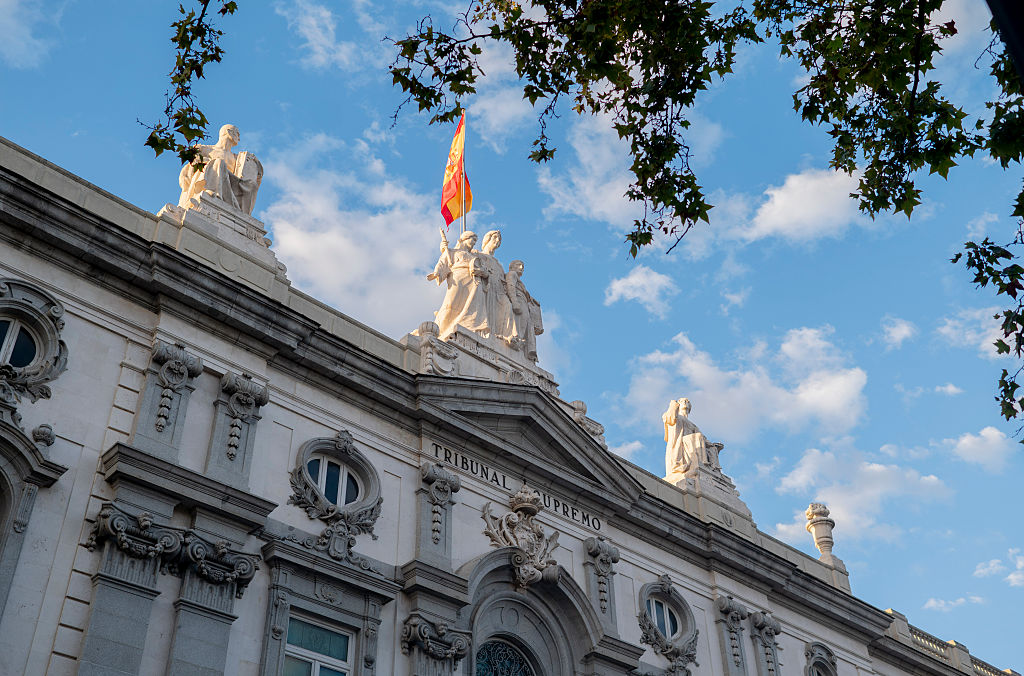
The historic trial began less than a week after the Supreme Court convicted Álvaro García Ortiz, the state attorney general that Prime Minister Pedro Sánchez appointed in 2022, for disclosing confidential information about a court case involving the partner of one of the premier’s main political rivals.
The trial attracted extensive media attention, as Sánchez and his ministers controversially defended García Ortiz’s innocence. Prosecutors interpreted the prime minister’s actions as an attempt to coerce the court.
Unprecedented times
Corruption investigations are not unusual in Spanish politics. Charges of irregular financing, bribery, and cronyism have loomed over the governments led by the ruling Socialist Party (PSOE), starting with the first democratic governments of socialist Felipe González, and the conservative Popular Party (PP) under the leadership of former prime ministers José María Aznar and Mariano Rajoy.
In fact, seven years ago, Sánchez led a no-confidence vote against Rajoy’s corruption-plagued administration, vowing to “cleanse the system” and tackle corruption in the country’s institutions.
However, back in Madrid, there is a general sense that corruption probes have never touched a serving prime minister and his inner circle so closely. Sánchez’s wife and brother both await trials in 2026 over alleged corruption.
In addition, the bombshell kickbacks-for-contracts scheme known as the “Koldo Case” has rocked Sánchez’s PSOE.
Former Sánchez allies and party organisational secretaries Santos Cerdán, José Luis Ábalos, and Ábalos’s personal aide, Koldo García, are under investigation for allegedly setting up a criminal network worth millions of euros to secure commissions on face mask contracts during the pandemic.
The plot extended to the public works sectors, leading Supreme Court judge Leopoldo Puente to open a separate line of investigation into rigged construction tenders in September. Recent evidence from the Civil Guard revealed the prime minister’s allies also operated outside Spain, with potential operations in Morocco and Gabon.
Spanish magistrates warned that the real concern is the government’s escalating public attacks on judges conducting high-profile corruption probes. Sánchez and his ministers have repeatedly alluded to a “political war” waged by reactionaries against Spain’s socialist-led coalition.
“Judicial authorities have always been criticised for not acting as they should, but never in such a systemic and open way,” magistrate Alejandro González told Euractiv.
Magistrate Fernando Portillo agreed, accusing government officials of casting doubts on the independence of the Spanish judiciary, which “not only normalises but legitimises attacks on the country’s judges and prosecutors.”
“We are facing an unusual moment,” González said, adding that Sánchez’s government “is setting a very dangerous precedent.”
Mounting troubles
Meanwhile, several turbulent cases have rocked Spanish politics but received less international media attention, including the “Leire Díez case.”
Last week, a Madrid court began a trial centring on Díez, an ex-socialist official under investigation for allegedly staging a smear campaign against Civil Guard agents and prosecutors probing the prime minister’s inner circle.
Prosecutor Ignacio Stampa, who testified as a victim in the trial, provided the judge with recordings in which Díez claimed that the premier had given direct orders to “clean up” after prosecutors began investigating his wife in 2024.
Similarly, socialist lawmakers have been embroiled in the “Mediador Case,” concerning the alleged manipulation of public works contracts in the Canary Islands, which involved EU funds.
However, beyond the courts, the fact remains that the Spanish government cannot legislate after Sánchez’s Catalan ally Junts broke with his party last month.
For the third year in a row, the government will forgo presenting a new general budget and instead extend the 2023 spending plan.
Major judicial and fiscal reforms are also blocked, the government cannot govern, and the question that remains is not how long, but how the prime minister will manage to stay afloat until the 2027 elections.
(cm, cs)