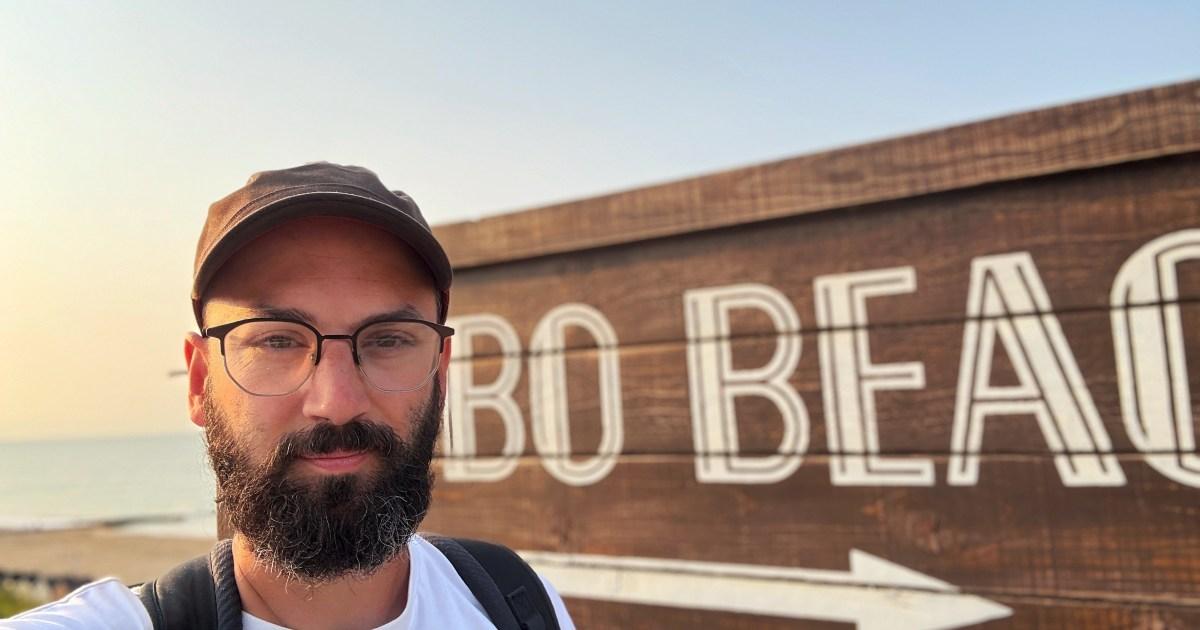
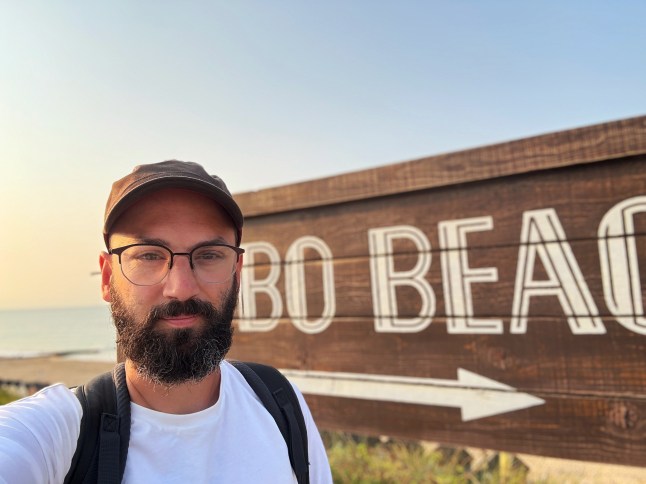
Mike suffered a sudden mental health crisis after no history of mental illness (Picture: Mike McAdam)
Mike McAdam had always enjoyed good mental health until, at the age of 32, a sudden and all-consuming flood of depression hit him like a tsunami.
‘I had no history of mental health struggles and to this day I still don’t know why it happened. I had everything you could have wanted; I was married, I had a really good job, I owned a house, had a dog. But I just felt heavy,’ Londoner Mike explains.
It began in January 2017 when, on what was supposed to be a life-changing three-week trip to Australia and Thailand, Mike inexplicably felt incredibly sad.
He didn’t tell his then-wife, as he himself didn’t understand what was happening. Instead, Mike brushed it off, expecting the gloom to disperse.
However, when he got back to the UK, his mental health deteriorated further.
‘I was going through the motions of being a human being, but wasn’t responsive. I was just despondent. Like an empty shell,’ Mike tells Metro over Zoom.
In a bid to fill the gnawing hole inside, the local government worker began spending money on things he couldn’t afford and didn’t need – buying a car, redecorating the house, filling his closet with clothes and photography equipment – which in total cost £50,000 more than he had. Still, he felt nothing.
At work, Mike struggled to concentrate, while at home he lost his appetite and could barely sleep.
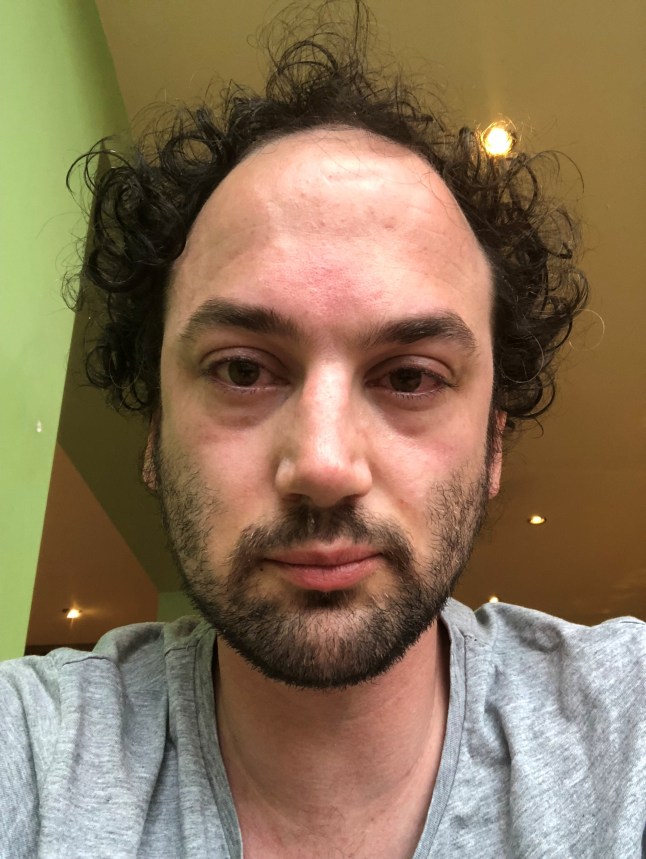
Mike was at his lowest in 2018 (Picture: Mike McAdam)
‘I couldn’t get out of bed. I felt lost and heavy. As the days went on I got lower and lower. I felt chained down, like I was at the bottom of an ocean. It was confusing, because I didn’t know where these feelings came from,’ he remembers.
Initially, Mike was reluctant to see a doctor. He felt guilt and shame at feeling so bad for no apparent reason. ‘If I didn’t know why I was feeling like this, how could anyone help me?’ he reasoned.
However, his wife, friends and family pressed him to get support, and after four months, Mike saw his GP, who prescribed sleeping pills and anti-depressant sertraline. The medication – while effective for many – seemed to have no effect.
Feeling desperate, Mike was advised by his doctor to sign up with the NHS local talking therapies. After a call where he told the assessor he was feeling suicidal, he was advised that his case was too serious for their help. However, when Mike went back to his GP he was told his case was not serious enough for secondary care psychological intervention.
Staying in a psychiatric ward was the worst experience of Mike’s life (Picture: Getty Images)
Fearing he was falling through the gaps, he went to his local A&E and was eventually transferred to a psychiatric ward for a week.
‘It was the worst experience of my life,’ Mike remembers. ‘The ward was a horrific place. There wasn’t enough staff, you have to sleep with a light on, you can’t close the bathroom door and you have people checking on you every hour.
‘You are surrounded by people who are really unwell. But for me; it was the lesser of two evils; it keeps you there.’
Six months after he initially fell ill, Mike felt like he could no longer cope with living and wrote a suicide letter to his family. Written in the past tense, he explained that he was sorry he had to end his life, that he wasn’t strong enough to hold on, and it wasn’t their fault.
What Mike didn’t realise was that by writing that letter, it helped him understand how bad he was feeling – and, more importantly, that he actually wanted to live.
‘I didn’t want to die by suicide. So I told my mum and wife I had written it. It made us all realise how desperate a position I was in,’ he explains.
To help him with his recovery, Mike’s mum paid for him to go to a private psychiatric hospital. Amid the nerves at signing in, Mike at last felt some hope.
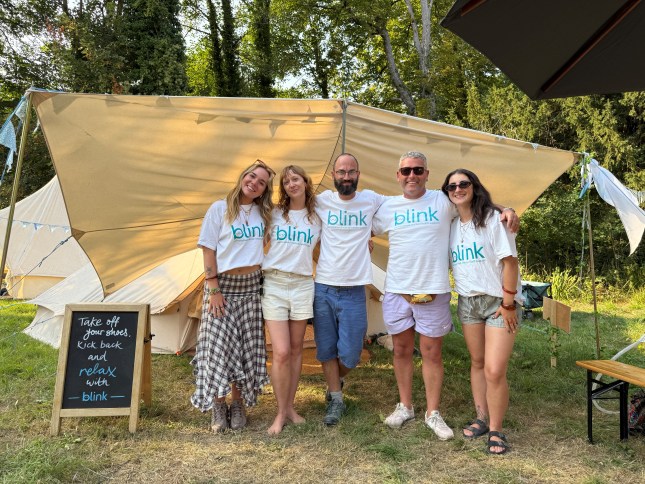
In 2021, Mike founded the mental health charity Blink, through which he helps others (Picture: Mike McAdam)
‘I can’t thank my mum enough, because the inpatient care there was completely different to the NHS,’ he remembers. ‘The rooms were like a hotel, with en suites, really nice beds and 24-hour care.’ Mike was also finally able to see a psychiatrist- something that hadn’t happened previously – who diagnosed him with bipolar disorder type 2.
After four weeks he was ready to leave the hospital and started on the bumpy road to recovery.
‘Looking back, I believe that if I got the right help sooner – and equally as importantly – if I reached out for help sooner, I may not have ended up where I was,’ he says, adding that he feels ‘one thousand times better’ than he did – but also makes sure he takes care to manage his mental health.
Sadly, his marriage didn’t survive his breakdown, but he credits his former wife for giving him ‘amazing support’, which along with the love and care of his friends and family, kept him alive.
‘I feel so much better now. I have been back to work full time for years and I managed to keep the house,’ Mike adds. ‘I’m paying off my debt and there will still be times when I have crashes and times over the past few years where I have needed help, but overall I am doing really well.’
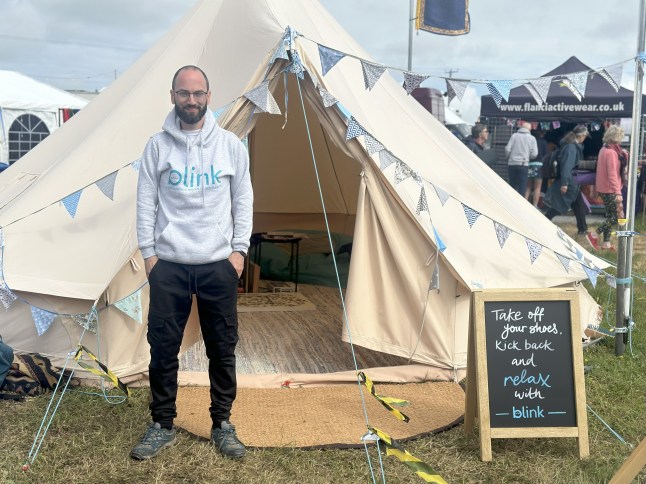
Mike takes the charity to festivals across the UK, such as Camp Wildfire (Picture: Mike McAdam)
Mike also helps other people now, facilitating free one-to-one therapy from accredited psychotherapists, psychologists, and counsellors. In 2021, he founded the mental health charity Blink to provide accessible, personal, and timely support.
The charity sets up pop-up clinics at festivals such as Wilderness and Download, and this year’s Camp Wildfire, an immersive weekend event near London that blends community and connection through shared group experiences.
Nestled among the trees, Blink offered festival-goers a space to unwind in the chill-out tent or take part in a free, private therapy session in a separate tent.
‘When I set up Blink, I didn’t realise the power of single-session talking therapy. People give us amazing feedback. It’s really changing lives,’ Mike explains.
Mike, who now stays well with exercise, sleep, rock climbing, photography and board game clubs, says he wants to share his story as a message of hope; so that people can understand that no matter how desperate you feel, you can find happiness again.
‘There is so much stigma around suicide, and I want to be open and honest about how I felt,’ he says.
‘There were times when I didn’t see a way out. But I never ever imagined in a million years that I would feel how I am now, and that I would get better, and feel okay. That’s why I really want to encourage people who are struggling to ask for help and to keep fighting.’
Arrow
MORE: The unexpected age you ‘become an adult’ now — and 9 signs to prove it
Arrow
MORE: ‘Rogue’ surgeon with more than 200 victims to face public inquiry
Arrow
MORE: A thud in the night started the worst 18 minutes of my life
Comments
Add Metro as a Preferred Source on Google
Add as preferred source
The Slice
Your free newsletter guide to the best London has on offer, from drinks deals to restaurant reviews.