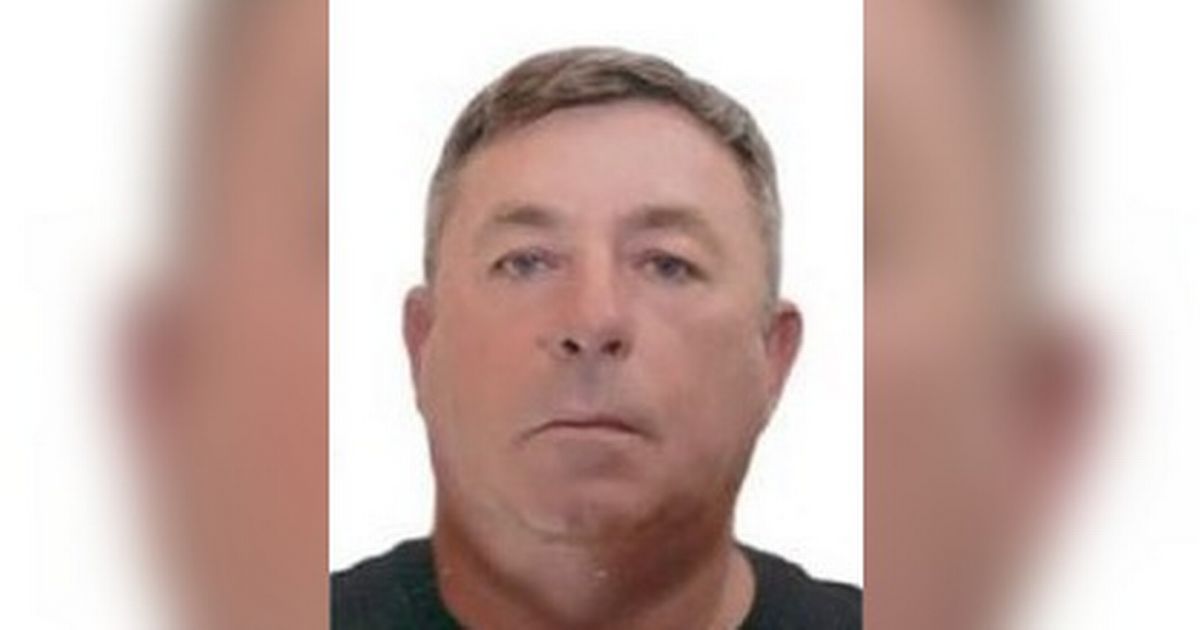
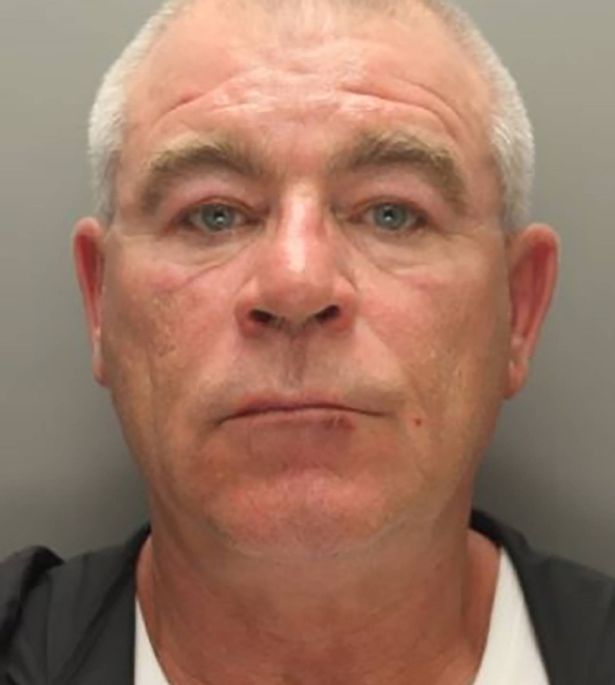
The Huyton Firm co-leader remained on the run for five years after his younger brother Vincent was caged Francis Coggins, co-leader of the Huyton Firm with his brother, Vincent(Image: NWROCU)
Huyton Firm boss co-leader Francis Coggins was caught after Dutch police found him drunk in the street and learnt his identity. The 60-year-old had been in the coastal town of Zandvoort in the Netherlands, where he met, negotiated and bought class A drugs at source with international suppliers before shipping them into the UK using an elaborate and sophisticated scheme which took advantage of the UPS network.
He remained on the run for five years after his younger brother Vincent, 59, who focused on the gang’s domestic operation, supplying cocaine and heroin across England, Wales and Scotland, was arrested and jailed in 2020. But Liverpool Crown Court heard this morning, Thursday, November 27 that Francis Coggins was eventually caught after he was arrested for being drunk and disorderly by the Dutch National Police in the Netherlands.
A source close to the case said he was “collapsed” in the street. And the National Crime Agency (NCA), who assisted investigators from the North West Regional Organised Crime Unit (NWROCU), the force pursuing the wanted man on a trade and cooperation agreement warrant, said he was arrested outside a residential property.
He made his first appearance at a court in Amsterdam to begin the process of extradition to the UK on June 4. He was brought back to the UK in late August after consenting to extradition and in September pleaded guilty to a series of drugs charges.
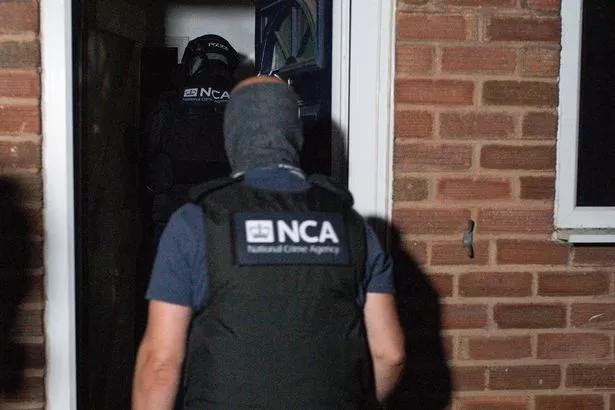 Coggins was brought back to the UK following work from the NCA, Dutch Police and NWROCU
These were two counts of conspiracy to fraudulently evade the prohibition on the importation of controlled class A drugs (heroin and cocaine) between May 2019 and October 2020; two counts of conspiracy to supply class A drugs (heroin and cocaine) between March and June 2020; and two counts of conspiracy to supply class A drugs (heroin and cocaine) outside the jurisdiction of England and Wales, namely in Scotland, on those same dates.
Francis Coggins, most recently of The Spinney in Stockbridge Village, sent cocaine and heroin from mainland Europe to North Wales using a system where the drugs were packaged and placed into parcels which would have UPS waybills attached. The packages were sent using genuine account numbers, predominately for unsuspecting clothing company G-Star Raw, with the waybill marked that the receiver would pay the costs of shipping.
The parcels were then addressed to real homes in the area covered by UPS’s Deeside depot in North Wales, but were intercepted by a corrupt worker who then passed the drugs onto couriers to be distributed to other UK gangs. Over just a year Francis Coggins imported over a tonne of class A drugs with a minimum wholesale value of over £16m.
Alex Langhorn, prosecuting, told Liverpool Crown Court: “The OCG which were engaged in sourcing, storing and supplying wholesale, multi-kilogram quantities of cocaine and diamorphine, more commonly known as heroin. They sold to people locally on Merseyside, across the country, and up to Scotland.
“Francis Coggins, based in the Netherlands, organised the importation of drugs being supplied by the group…Vincent Coggins, although kept up to date with when importations were due to arrive, was focused on the domestic operation, the supply of cocaine and diamorphine in England and Wales.
“Francis Coggins was also involved in this aspect of the business and negotiated directly, and via others like Paul Fitzsimmons and Edward Robert Jarvis, deals for the supply of cocaine and diamorphine, approving the giving of credit and the prices to be charged.”
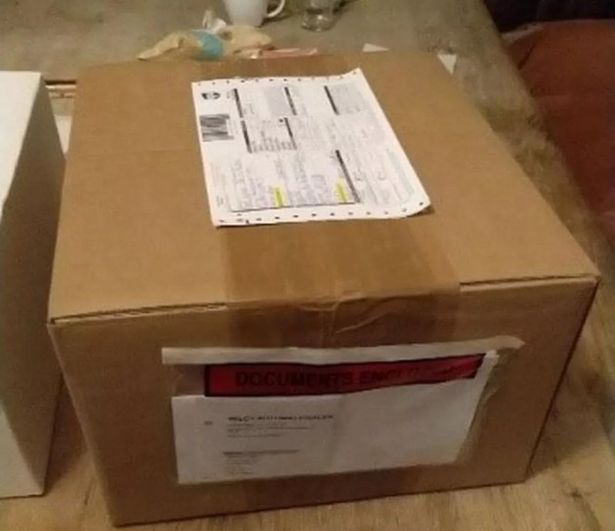 One of the packages sent via UPS and containing class A drugs(Image: North Wales Police)
Prosecutors said the two brothers were “equals, each with their own areas of responsibility, albeit those working for them in the United Kingdom, such as Mr Fitzsimmons and Mr Jarvis, appeared to have deferred to Francis Coggins as to the prices which should be charged”. Messages showed both of the Coggins brothers were referred to as “gaffa” or “headmaster” by other members of the gang.
Using the encrypted platform the Coggins gang arranged and carried out multiple deals involving huge sums with other criminal organisations. During a three-month period in the spring and early summer of 2020, during the first covid lockdown, they supplied in the region of 350 kilos. The gang held huge amounts of cash, with police identifying they collected over £880,000 over just a two-week period.
But on May 23, 2020, one of the gang’s stash houses, on Croxdale Road West in West Derby, was raided and £1m of cocaine was robbed. The court heard in the following days “it was Vincent Coggins who took the lead in seeking to identify the culprits and recover the money”, blackmailing and threatening the family he believed responsible for the robbery to hand over money and property.
Mr Langhorn told the court: “Vincent Coggins was the driving force behind the conspiracy to blackmail, and whilst Francis Coggins did not encourage his brother to use violence, nor did he dissuade him from doing what they considered necessary to recover the drugs counselling him on how they might identify those responsible. He was also kept up to date by others about what had occurred and what was known about the robbery.
“It would seem that whilst he wanted to know what was going on he was content to let his brother deal with the issue, not least as in the context of messages being exchanged about new information someone had been able to find on their police records for them Francis Coggins asked his brother, ‘how man more peopled we terrorism there all terrified off you really (sic)’.”
In mitigation, Sam Blom-Cooper, defending, told the court that his client’s responsibility in the “bleak coastal town” in the Netherlands was the “physical handling of drugs, inspection of drugs, giving customers an idea of the quality of drugs and putting the into the UPS system in the Gibney scheme”.
 Vincent Coggins(Image: PA)
Mr Blom-Cooper put to the court that his client fell below Vincent Coggins in the crime group hierarchy. He said: “The overall decision maker was Vincent Coggins. Vincent Coggins himself says ‘boss of the Huyton Firm, aren’t I’. If there was a case of joint decision making it is not a comment he would have made. It is clear he is at the pinnacle of the group.”
Mr Blom-Cooper added: “[Francis Coggins] is physically there, he is exposing himself to a level of risk that Mr Gibney (who organised the North Wales importation plot) and Vincent Coggins did not do. You don’t have Vincent Coggins engaging physically with the drugs in the same way Francis Coggins is…he is there on his own because part of his role is to roll his sleeves up and deal with the drugs physically.”
But Judge Robert Trevor-Jones told Francis Coggins, who appeared to the court via video link from HMP Manchester, disagreed with the mitigation and said his position was at the head of the crime group with his younger brother.
Sentencing, the judge told him: “In conclusion, you were directing or organising the buying and or selling of these drugs on a commercial scale. You had substantial links and influence on others in a chain and you had an expectation of a substantial financial advantage.”
Francis Coggins, who wore a grey prison-issue sweatshirt and glasses and sported greying, brown hair, was sentenced to 18 years in prison.
The dad, who was supported in court by a large number of his family, muttered “thank you” after learning his sentence.
Vincent Coggins and eight other members of the crime group, including Jarvis, money man Fitzsimmons, enforcer Paul Woodford and drug dealer Michael Earle were arrested in June 2020 as part of an investigation by the North West Regional Organised Crime Unit (NWROCU), codenamed Operation SubZero.
The gang were sentenced to a total of more than 150 years in prison, including Vincent Coggins, who was handed 28 years for the drug conspiracy and the blackmail plot.