Germany is negotiating another purchase of Arrow 3 missile defense systems from Israel Aerospace Industries, according to a November 20, 2025, report from the Israeli business outlet Globes. The talks point to Berlin’s determination to reinforce long-range protection for both national territory and NATO forces.
Germany is pursuing a follow-on acquisition of Arrow 3 surface-to-air interceptors from Israel Aerospace Industries, a move first reported by the Israeli newspaper Globes on November 20, 2025, and described as part of Berlin’s ongoing effort to build a credible layered missile defense network. German officials have signaled that strengthening long-range intercept capacity remains a priority as planners assess evolving regional threats and integration requirements for NATO-facing systems.
Follow Army Recognition on Google News at this link
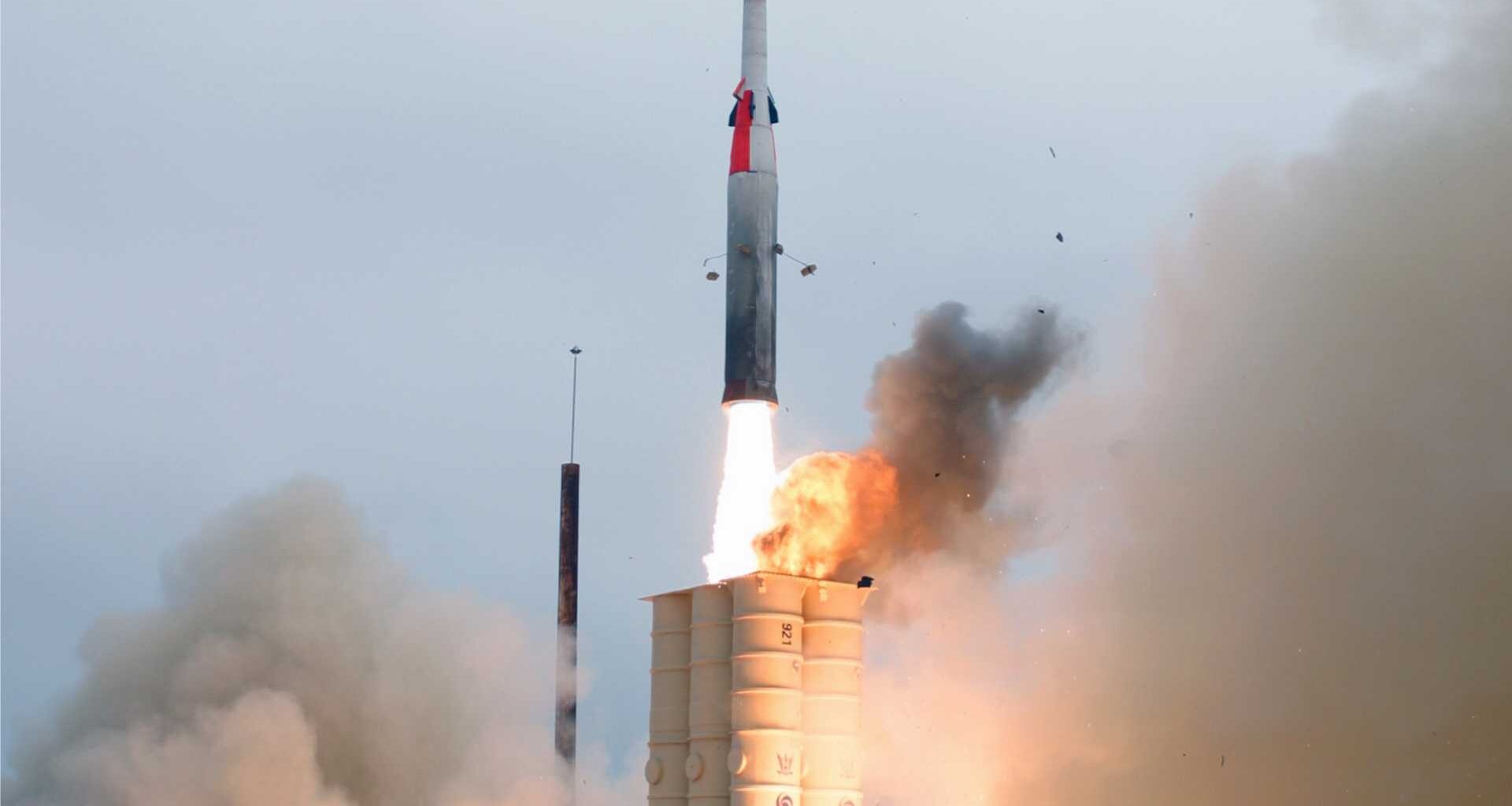
Israel’s Arrow 3 air defense system, developed by Israel Aerospace Industries in cooperation with the U.S. Missile Defense Agency, is designed to intercept long-range ballistic missiles in space using hit-to-kill technology. (Picture source: Wikimedia)
This development follows Germany’s initial acquisition of the Arrow 3 air defense missile system in August 2023, under a landmark 3.5 billion U.S. dollar contract that remains the largest defense export in Israel’s history. That agreement marked Germany as the first international operator of Arrow 3, a system jointly developed by Israel and the U.S. Missile Defense Agency. Because of its U.S.-funded components and joint development status, the export required formal approval from Washington, underscoring the strategic sensitivity of the sale.
Under the original deal, Germany secured launchers, command-and-control units, the EL/M-2080S Super Green Pine radar system, and a first batch of interceptors. These systems are scheduled for deployment across German Air Force installations by the end of 2025, with integration into NATO’s broader missile defense architecture already underway. German defense firms, including MBDA Deutschland and IABG, are directly involved in the integration process to ensure full interoperability with NATO command systems.
The current negotiations aim to expand Germany’s interceptor stockpile and increase the operational readiness of the Arrow 3 system in scenarios involving saturation or repeated missile attacks. This effort aligns with Berlin’s leadership role in the European Sky Shield Initiative (ESSI), a NATO-supported framework designed to establish a multi-layered, continent-wide missile defense network. Within this layered structure, Arrow 3 provides the upper-tier capability, complementing shorter-range systems such as IRIS-T SLM and Patriot PAC-3.
Arrow 3 is engineered for exo-atmospheric interception and can neutralize ballistic missiles in space at altitudes above 100 kilometers. It employs a hit-to-kill kinetic mechanism that relies on direct impact, rather than an explosive warhead, to destroy its target. This design minimizes debris risks and reduces the potential for collateral damage. With a reported engagement range of up to 2,400 kilometers, Arrow 3 provides defensive coverage far beyond national borders and can intercept a range of threats, including intermediate- and intercontinental-range ballistic missiles, even those equipped with nuclear, biological, or chemical payloads.
The system’s fire control is guided by the Super Green Pine radar, with targeting data processed through a highly advanced battle management system. Currently, Arrow 3 is the only operational Western missile defense system that combines this altitude, range, and precision on a single platform. It is not just a tactical asset but a strategic shield intended to dissuade adversaries from launching long-range attacks.
In parallel with these talks, Germany is reportedly considering extending its lease on IAI’s Heron TP unmanned aerial systems, which have been used to strengthen the Bundeswehr’s intelligence, surveillance, and reconnaissance capabilities. Nevertheless, the centerpiece of the negotiation remains the Arrow 3 interceptor system, reflecting NATO’s growing urgency to prepare for high-end threats emerging from Russia, Iran, and other adversarial states.
If finalized, the new agreement would trigger an expanded production phase at IAI’s missile manufacturing facilities in Be’er Yaakov, with Boeing expected to increase output of U.S.-built components such as propulsion systems and kill vehicles. The deal would also deepen bilateral defense cooperation between Germany and Israel and could open the door for additional European nations to join the Arrow 3 program.
At a time of escalating missile threats, renewed great-power rivalry, and fast-developing strike technologies, Germany’s move to increase its Arrow 3 air defense missile system inventory signals more than just a defense procurement. It marks a strategic pivot in Europe’s security architecture, placing Berlin at the center of NATO’s long-range missile shield and reinforcing its role as a leading contributor to continental defense.