In Steven Spielberg’s film Raiders of the Lost Ark, a market crowd parts as a swordsman appears, skilfully swinging his shining blade, trying to show Indiana Jones he will need some artistry to beat him.
But, so the story goes, there was a problem: Harrison Ford, in the role of Jones, had dysentery that day. So, rather than expend precious energy by taking on his adversary with his whip as the script suggested, it was much simpler to pull a gun from his holster and shoot him, which is what he did.
That was Liverpool a couple of months ago, when opponents realised that rather than waste time trying to take on the Premier League champions in a battle of artistry, they could just take a direct route to inflict damage. Having lost nine of the past 12 matches across all competitions, if the swordsman remains in Liverpool, he is rather less confident. It now feels like is standing there, shoulders slumped, his arms by his side, waiting to be taken down.
Liverpool are not just being beaten these days: they have conceded 10 goals in three, scoring only once (Dominik Szoboszlai’s effort in the 4-1 defeat to PSV on Wednesday). Defeats are always difficult to accept at a club where expectations are enormous but the last two have been humiliations, in front of their own crowd, at Anfield, where the fate of all managers (or a head coach in this case) still tend to be determined, regardless of what people are saying on the internet.
Frustration has been aimed at players and the person leading them but, so far, it has not manifested into the kind of groundswell where Arne Slot’s position has been questioned loudly enough to influence decisions at executive level.
Memories are not short in this part of the world, for good and bad, and, only in May, Slot was parading the club’s 20th domestic league title across the same pitch where everything is currently so painful.
The logic could be this: what do Liverpool want to achieve? To win the league, of course. Well, they have someone in charge who delivered that for only the second time since 1990 earlier this year, having previously done similar at Feyenoord, where his 2023 Dutch Eredivisie title was that club’s second since 1999.
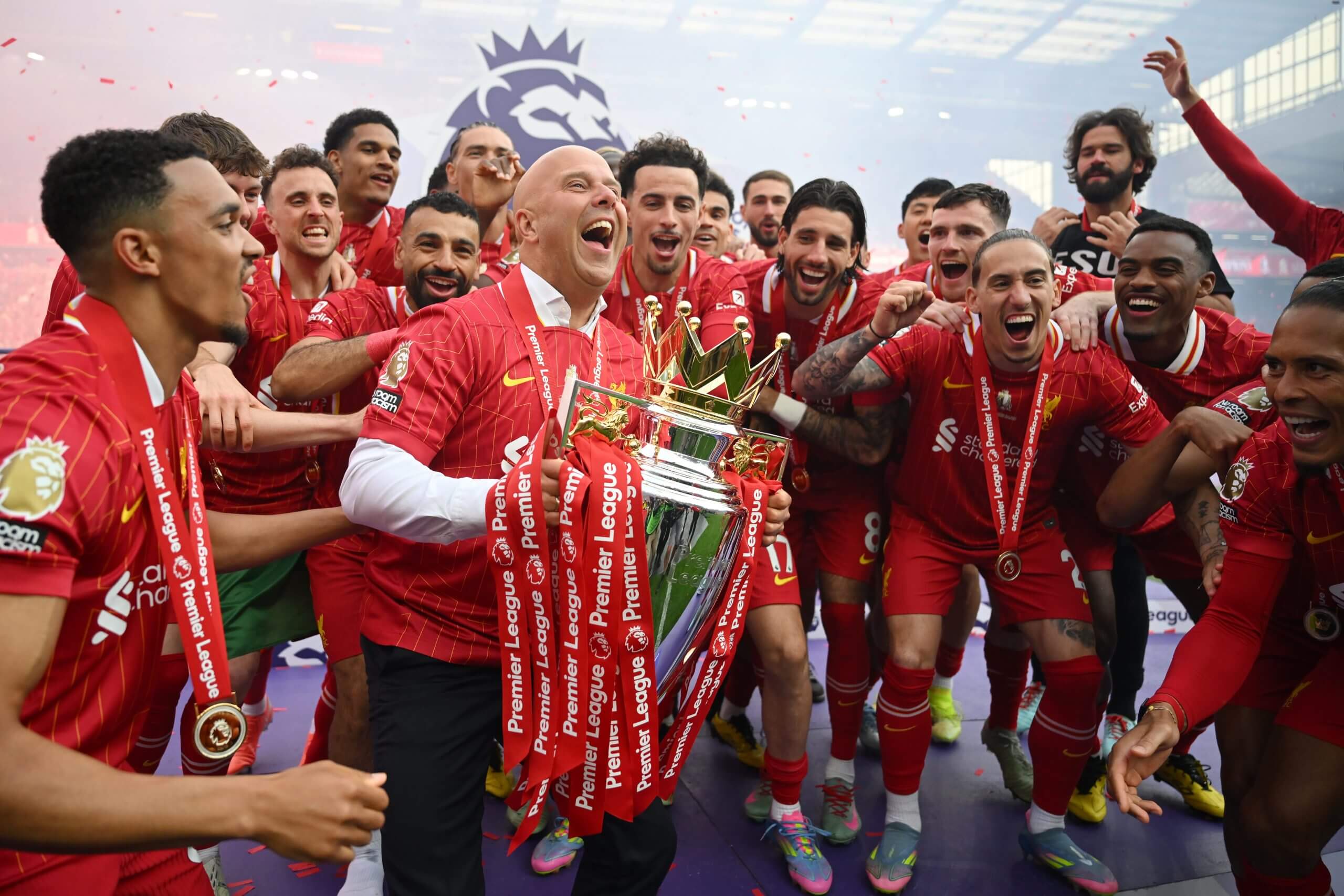
Arne Slot was celebrating Liverpool’s Premier League title win as recently as May (Michael Regan/Getty Images for the Premier League)
Some of his critics have suggested that Slot benefited from inheritance. All of the regulars in the squad last season were, after all, bought in the Jurgen Klopp era, but it seems ridiculous to use winning the league against Slot, particularly when Klopp was unable to achieve the feat with exactly the same group of players. Before Klopp’s “reboot”, as he called it, he was the manager who in 2020 delivered Liverpool’s first league title in 30 years. There is, therefore, an understanding of how difficult it is to be officially recognised as the best team in the country.
Liverpool are miles away from being that again, and attitudes would harden if their relegation form moves them towards the Premier League’s murkier depths come the New Year. They are currently seven points above the drop zone.
More likely is a situation where they are adrift of the top five (the likely cut-off for Champions League qualification) but, despite currently being 12th, they are just five points off Chelsea in second. Slot’s team are helped in that this is a volatile season where no team other than Arsenal (who Liverpool beat at Anfield in August) have been that consistent.
There are no indications that Liverpool, or more specifically, their owners, Fenway Sports Group, which is heavily influenced by the organisation’s CEO of Football Michael Edwards, are going to intercept a problem before it becomes a far more serious one. Yet their record shows they are prepared to act if they think the team is heading in the wrong direction and there is no way back.
If you take out Klopp’s reign, FSG have sacked three managers in six years. The moods around each of those separations were different: in 2015, Brendan Rodgers may have stayed longer if Klopp was unavailable; three years earlier, fans were not calling for Kenny Dalglish to depart because of his legendary status, but most conceded it was probably the right decision to let him go.
In early 2011, Roy Hodgson’s reign ended quicker than any manager in Liverpool’s modern history, and it would have been earlier if it were up to the majority of supporters. Hodgson stands alone in that sense because while Liverpool’s fanbase is ambitious and febrile, there has never really been a culture of going for managers. This is mainly because, for such a long time, as the club became English football’s dominant force, there was no need for one.
Broadly, the culture around managers has changed since that era. In 2007, Jose Mourinho proved it simply was not good enough to deliver successive titles to a club that had previously not won one in 50 years when he left Chelsea by “mutual consent”. Despite Chelsea winning the title again in 2010, Carlo Ancelotti was removed at the end of the next season. In his second spell at Stamford Bridge, Mourinho was sacked in 2015, the same year he won a third Premier League title and barely four months after signing a four-year contract.
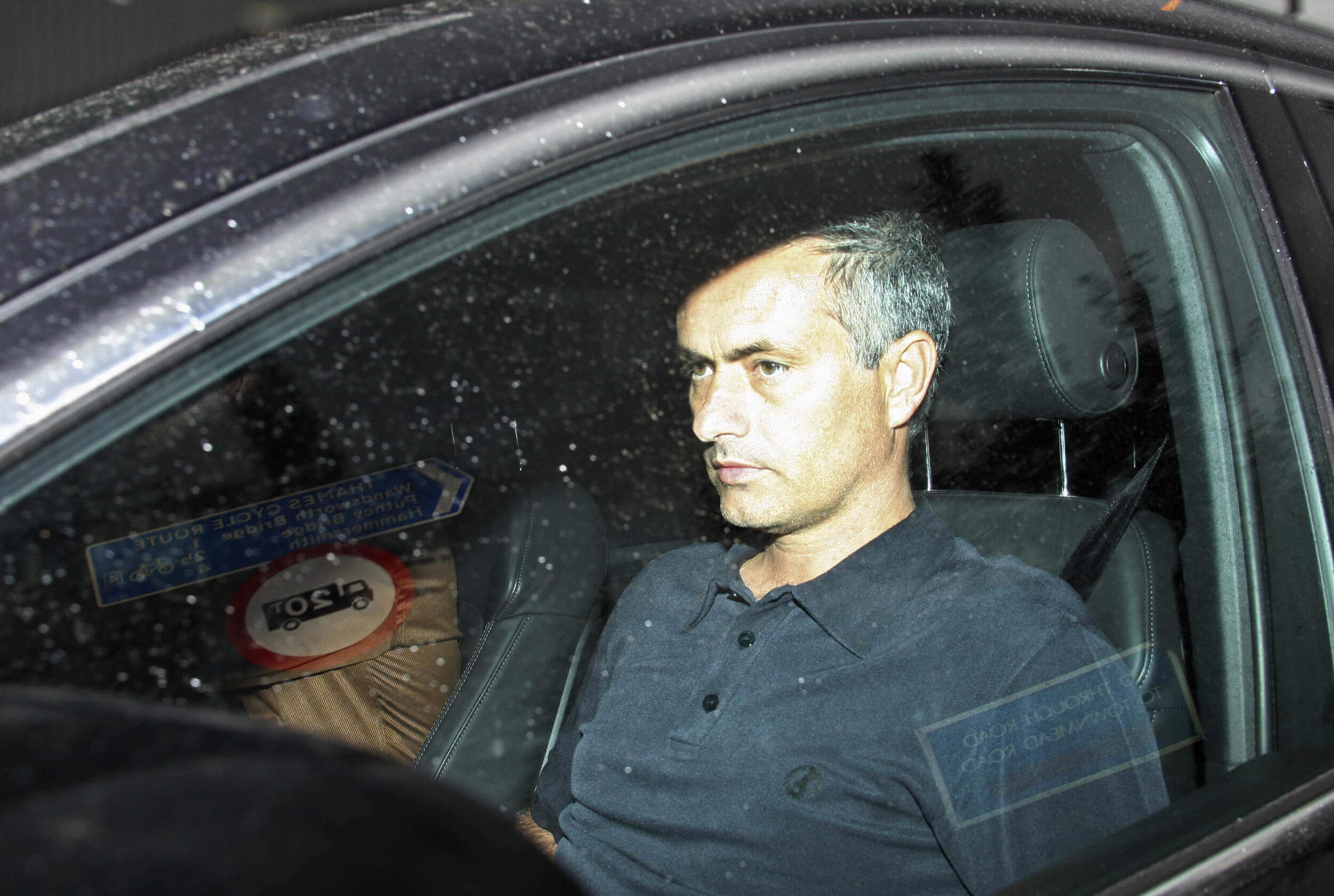
Jose Mourinho on the night he was sacked by Chelsea for the first time in 2007 (Shaun Curry/AFP via Getty Images)
In 2016, Claudio Ranieri made Leicester City champions for the first time in their history on the back of one of the most improbable sporting miracles ever witnessed, but that was not enough to spare him from the sack the following February, with his team one place above the relegation zone. Chelsea then succeeded Leicester as title holders but Antonio Conte was dismissed a year later after failing to qualify for the Champions League.
Owners now tend to act when money is at stake (Leicester), or when egos clash and relationships break down (Chelsea). At Liverpool, the financial implications for not being in the Champions League are real. There are also egos to consider but the context is otherwise unique and replacing Slot would challenge the idea that the club is especially different to any other these days, and shatter any illusion that ‘You’ll Never Walk Alone’ might have meaning, especially in periods of distress.
Never before has a Liverpool manager delivered a title and the afterglow been so short that he was sacked the following season. Then again, never before has a title-winning manager had to confront the death of an active player, like Slot has with Diogo Jota.
His passing should not be an excuse for performances or defend Slot absolutely but it should always be there when evaluating the club’s campaign, influencing the discussion. Regardless of how this season finishes, it will always be remembered as the one which Liverpool entered without their No 20.
The summer of 2025 should have been glorious. But the admissions of Paul Doyle in a Liverpool court room earlier this week reminded everyone how terribly it began and, with Jota then taken away so suddenly, Liverpool’s acceleration into the transfer market was a welcome distraction. Yet, on a much colder assessment, the squad has gone from being balanced and reasonably deep, to top-heavy and thinner, albeit with arguably more talent.
Richard Hughes is also responsible for planning. The sporting director who hired Slot will always be able to say the decision was a masterstroke given how quickly he brought success to Liverpool. Perhaps he concluded that the achievement bought time, that changes were necessary and this season would be harder than many assumed anyway.
Surely not this hard, though.