Airbus said on Friday it had ordered immediate repairs to 6,000 of its A320 family of jets in a recall affecting more than half of the global fleet – with airlines from the US to South America, Europe, India, Australia and New Zealand warning of flight delays and cancellations.
The setback appears to be among the largest recalls affecting Airbus in its 55-year history and comes weeks after the A320 overtook the Boeing 737 as the most-delivered model. At the time Airbus issued its bulletin to the plane’s more than 350 operators, about 3,000 A320-family jets were in the air.
The European Union Aviation Safety Agency (EASA), which is the main certifying authority for A320 aircraft, issued the instruction on Friday night as a “precautionary action”.
The fix mainly involves reverting to earlier software and is relatively simple, but must be carried out before the planes can fly again, according to the bulletin to airlines seen by Reuters.
The world’s largest A320 operator, American Airlines , said some 340 of its 480 A320 aircraft would need the fix. It said it mostly expected these to be completed by Saturday, with about two hours required for each plane.
Other airlines said they would take planes briefly out of service to do the repairs, including Germany’s Lufthansa, India’s IndiGo and UK-based easyJet.
Colombian carrier Avianca said the recall affected more than 70% of its fleet, prompting it to close ticket sales for travel dates until 8 December.
In Australia, Jetstar cancelled domestic flights, while ANA Holdings – Japan’s biggest airline – says it cancelled 65 flights on Saturday after the Airbus A320 recall forced it to ground some aircraft.
The carrier, along with affiliates such as Peach Aviation, is the biggest operator in Japan of single-aisle Airbus aircraft, including the A320.
The Guardian understands that only three of BA’s short-haul aircraft are affected and it does not expect any operational impact while these are undergoing the software updates.
EasyJet had said it was expecting some disruption on Friday evening but later confirmed it was planning to operate as normal on Saturday as it had already completed the software update on many required aircraft.
A spokesperson for Gatwick airport said a small number of its airlines were affected, while Heathrow said it was not seeing an impact as of late Friday night.
Airbus said in a statement that a recent incident involving an A320-family aircraft had revealed that intense solar radiation may corrupt data critical to the functioning of flight controls.
“Airbus acknowledges these recommendations will lead to operational disruptions to passengers and customers,” it said.
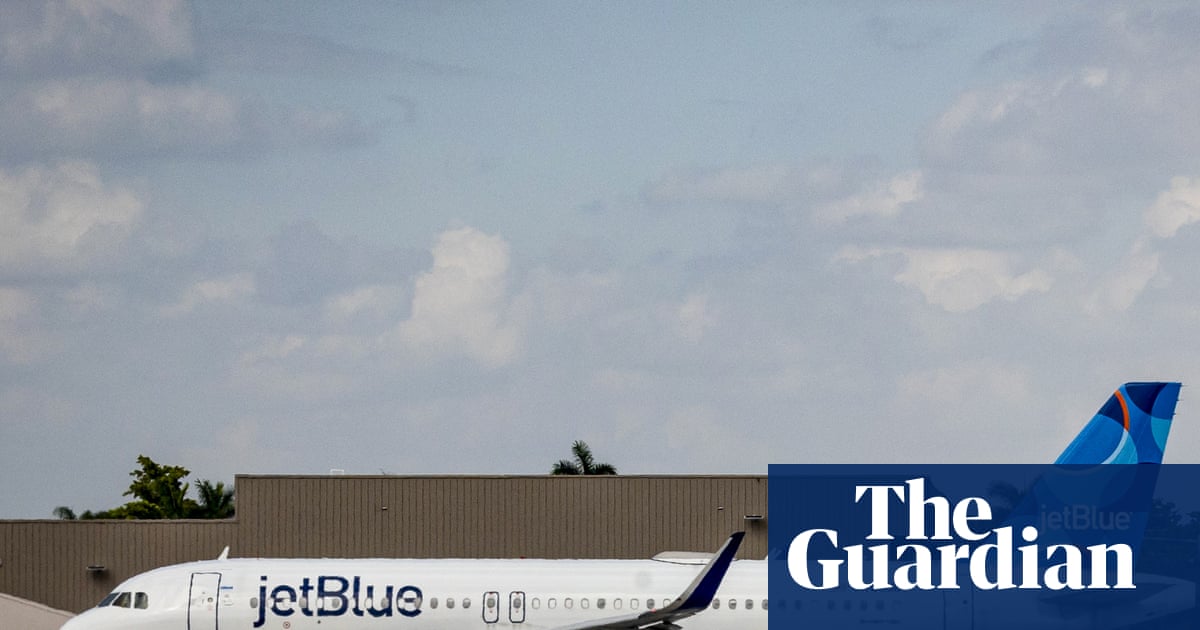
Industry sources said the incident that triggered the unexpected repair action involved a JetBlue flight from Cancún, Mexico, to Newark, New Jersey, on 30 October, in which several passengers were hurt after a sudden drop in altitude.
JetBlue and the Federal Aviation Administration (FAA) had no immediate comment.
The bulletin seen by Reuters traced the problem to a flight system called ELAC (Elevator and Aileron Computer), which sends commands from the pilot’s side-stick to elevators at the rear. These in turn control the aircraft’s pitch or nose angle.
The computer’s manufacturer, France’s Thales, said in response to a Reuters query that the computer complies with Airbus specifications and the functionality in question is supported by software that is not under Thales’s responsibility.
For about two-thirds of the affected jets, the recall will result in a relatively brief grounding as airlines revert to a previous software version, industry sources said.
But it comes at a time of intense demands on airline repair shops, already plagued by shortages of maintenance capacity and the grounding of hundreds of Airbus jets due to long waiting times for separate engine repairs or inspections.
Hundreds of the affected jets may also have to have hardware changed, threatening much longer waits, the sources said.
American Airlines and Hungary’s Wizz Air said they had already identified which of their aircraft would need the software fix. United Airlines said it was not affected.
Wizz Air said “some flights over the weekend may be affected” and passengers who booked via the website or app would be told about any changes.
A spokesperson said: “The safety of our customers, crew and aircraft is always our number one and over-riding priority. We apologise for any inconvenience caused by circumstances outside of our direct control.”
Jet2.com said it was “installing software updates on a very small number of aircraft” but there would be no impact on its schedule, while Irish carrier Aer Lingus said it was not expecting major operational disruption.
The UK’s transport secretary, Heidi Alexander, said: “The good news is it seems the impact on UK airlines seems limited, with a smaller number of aircraft requiring more complex software and hardware changes.”
There are about 11,300 A320-family aircraft in operation worldwide, including 6,440 of the core A320 model, which first flew in 1987.
Launched in 1984, the A320 was the first mainstream jetliner to introduce fly-by-wire computer controls.
It competes with the Boeing 737 MAX, which suffered a lengthy worldwide grounding after fatal crashes in 2018 and 2019, blamed on poorly designed flight-control software.
Demand for the two main brands of workhorse jets has surged in recent years as economic growth led by Asia brought tens of millions of new travellers into the skies.